
Most people don’t think about their air conditioner until it stops working. Then suddenly, it’s 95°F outside, the house feels like an oven, and you’re scrambling for answers. Sound familiar?
At Arms AC and Heating, we’ve seen this scenario play out more times than we can count. And while a repair can sometimes buy you time, there comes a point when replacement is the smarter, more cost-effective move. Knowing when you’ve hit that point can save you thousands of dollars—and a whole lot of sweat.
How Do You Know When Repairs Just Aren’t Enough?
Your air conditioner will usually give you warning signs before it fails completely. The trouble is, those signs are easy to dismiss until the system gives out entirely.
Here are the red flags that signal your AC has reached the end of its useful life:
- Age over 10–15 years: Most central air conditioning systems are built to last between 10 and 15 years. Once a unit crosses that threshold, efficiency drops sharply and repair costs start climbing.
- Rising energy bills: If your electricity costs have crept up over the past few summers without any change in your usage habits, your AC is likely working harder than it should to maintain the same level of cooling.
- Frequent breakdowns: One repair is manageable. Two or three in a single season is a pattern—and a sign that more failures are on the way.
- Uneven cooling: Hot spots in certain rooms, even with the system running full blast, point to a unit that can no longer distribute air effectively.
- Loud or unusual noises: Banging, rattling, and grinding aren’t normal. These sounds usually indicate mechanical wear that repair alone won’t solve long-term.
If two or more of these apply to your current system, it’s worth having a professional assessment done sooner rather than later.
What Makes Modern AC Units So Much Better?
The gap between an older air conditioner and a new one isn’t just about age—it’s about technology. HVAC systems have advanced significantly over the past decade, and the difference is noticeable from the moment a new unit starts running.
Energy Efficiency Has Jumped Dramatically
Modern air conditioners are rated using a metric called SEER (Seasonal Energy Efficiency Ratio). Older units often carry SEER ratings of 8 to 10. New systems routinely hit 16, 18, or even higher. That difference translates directly into lower monthly energy bills, sometimes significantly so during peak summer months.
According to the U.S. Department of Energy, replacing an old, inefficient air conditioner with a new high-efficiency model can reduce cooling energy use by 20 to 50 percent.
Better Comfort, Better Control
Newer systems don’t just cool faster—they cool more evenly. Variable-speed compressors adjust their output based on real-time conditions, which means fewer temperature swings and more consistent comfort throughout your home. Pair that with a smart thermostat, and you have precise control over your indoor environment, even when you’re away from home.
Quieter Operation
If you’ve gotten used to a rattling, humming air conditioner, a new unit will feel like a revelation. Modern systems are engineered to run quietly, with sound levels far below what older equipment produces.
Why Professional Installation Makes All the Difference
Choosing the right air conditioner is only half the equation. How it gets installed matters just as much.
An improperly sized unit—too large or too small for your space—will either short-cycle (turning on and off too frequently) or run constantly without ever reaching your target temperature. Either way, you end up with higher energy bills, more wear on the system, and reduced comfort.
Professional installation includes a load calculation, which takes into account your home’s square footage, insulation levels, ceiling height, window placement, and local climate. That calculation determines the exact capacity your system needs—not a rough estimate, but a precise match.
At Arms AC and Heating, every installation starts with this step. Getting it right from the beginning protects your investment and ensures your new system performs the way it’s designed to.
The Real Cost of Waiting Too Long
Delaying a replacement might feel like the financially cautious choice. In reality, it often costs more.
Consider what you’re spending to keep an aging system running: emergency repair calls, refrigerant recharges, replacement parts, and steadily rising utility bills. Add those costs up over two or three seasons, and they can easily exceed the price of a new, more efficient unit.
There’s also the comfort factor. Every summer you spend dealing with an unreliable system is a summer of disrupted sleep, uncomfortable afternoons, and the constant anxiety of wondering when the next breakdown will hit.
What the Replacement Process Actually Looks Like
A lot of homeowners put off replacement because they assume it’s a major ordeal. The reality is far more straightforward than most people expect.
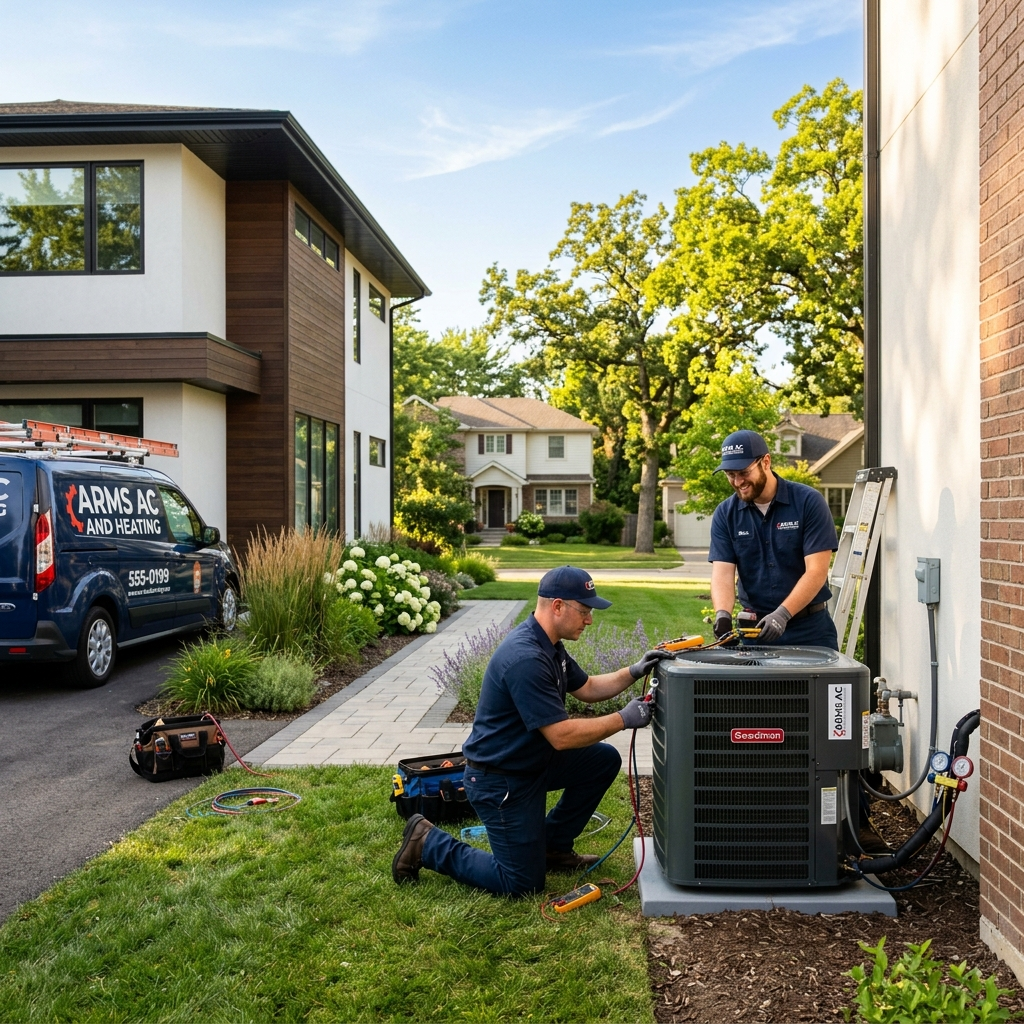
AC Replacement that is handled by a qualified professional team can restore your home’s comfort quickly, efficiently, and with minimal disruption to your daily routine—while also delivering long-term energy savings that make the investment well worth it.
The typical process involves:
- Assessment and selection: A technician evaluates your current setup, performs a load calculation, and recommends the right system for your home.
- Removal of the old unit: The existing system is safely removed and responsibly disposed of.
- Installation of the new system: The new unit is installed, connected, and tested for proper operation.
- Walkthrough: You’ll get a full explanation of how your new system works, how to maintain it, and what to expect in terms of performance.
The whole process typically takes a single day, and the results are immediate.
Arms AC and Heating: Built for This Work
Arms AC and Heating has been serving homeowners through hot summers and unpredictable weather for years. The team brings hands-on expertise to every job, whether it’s a straightforward swap or a more complex installation in an older home.
Every customer gets honest advice, fair pricing, and work done right the first time. No upselling, no vague estimates, no surprises on the final bill. Just a comfortable home and a system you can count on.
If your current air conditioner is giving you trouble—or if you’re simply wondering whether it’s time to make a change—reach out to Arms AC and Heating for a professional evaluation. A quick conversation now could save you a stressful breakdown later.
Frequently Asked Questions
How long does an AC replacement take?
Most residential replacements are completed within a single day. The exact timeline depends on the complexity of the installation and whether any ductwork modifications are needed.
What size AC unit do I need for my home?
Size depends on several factors, including square footage, insulation, ceiling height, and local climate. A professional load calculation is the only reliable way to determine the right capacity.
Is a new AC unit more energy-efficient than my old one?
Almost certainly. Modern units carry significantly higher SEER ratings than systems manufactured 10 or more years ago, which translates to measurable savings on monthly energy bills.
Does Arms AC and Heating offer warranties on replacement units?
Yes. New systems come with manufacturer warranties, and Arms AC and Heating stands behind the quality of its installation work.
What brands does Arms AC and Heating install?
The team works with a range of trusted manufacturers and can recommend the best fit based on your budget, home size, and efficiency goals.
VIST: nestivomagazine.co.uk
