
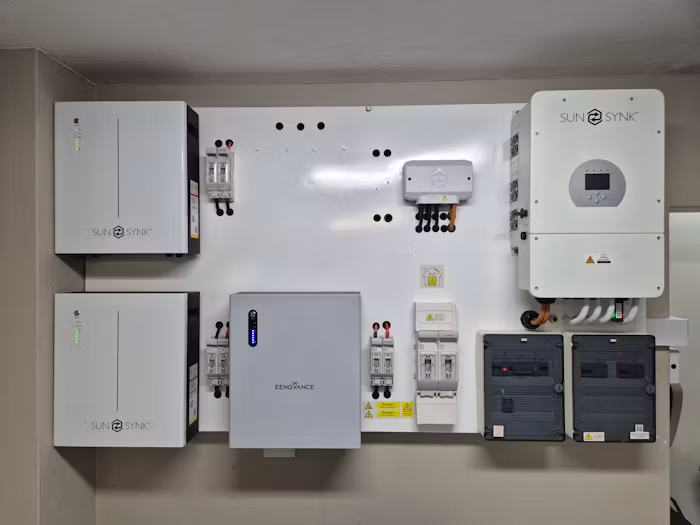
The Growing Vulnerability of Commercial Solar Infrastructure
Commercial photovoltaic (PV) systems inherently face severe environmental and electrical risks due to their sprawling outdoor architecture. The expansive surface area of solar arrays acts as a massive collection point for atmospheric electrical discharges.
Coupled with the integration of highly sensitive, high-value capital equipment like central and string inverters, these facilities are primary targets for transient overvoltage events. A single, unmitigated electrical anomaly can bypass basic circuit breakers, instantly destroying semiconductor components and halting power generation.
As commercial PV installations scale up in capacity and complexity, the probability of encountering destructive voltage spikes increases exponentially. Designing a resilient electrical architecture is no longer just a best practice; it is a fundamental requirement for securing the financial viability of the solar asset.
Why Surge Protection is the First Line of Defense
The financial viability of any commercial solar installation relies entirely on maximum uptime and the longevity of its inverters. However, these sensitive electronic components are highly susceptible to transient overvoltages caused by grid fluctuations and extreme weather.
Waiting to address these vulnerabilities until after equipment failure is a costly engineering mistake. Proactive mitigation must be integrated into the initial electrical schematic to ensure comprehensive isolation of the direct current (DC) side.
Implementing industrial-grade solutions from a certified surge protective device manufacturer is the most effective first line of defense, isolating the DC voltage system and preventing catastrophic hardware failure before it reaches critical infrastructure. For instance, incorporating technologies from specialized providers like LSP ensures that high-energy impulses are safely diverted to the grounding system without disrupting operations.
Understanding Transient Overvoltages in PV Systems
Direct Lightning Strikes vs. Induced Surges
Protecting solar arrays requires a precise understanding of the different physical threats posed by transient overvoltages. The most catastrophic, yet least frequent, threat is a direct lightning strike to the facility’s structural lightning protection system or the solar panels themselves.
Direct strikes are characterized by the 10/350 μs waveform, which delivers a massive, sustained injection of thermal and electrical energy. If this energy enters the DC cabling, it will instantly vaporize inverter internals and cause severe fire hazards.
Conversely, induced surges are much more common. These occur when lightning strikes nearby, coupling electromagnetic energy into the extensive DC cabling loops of the PV array. These events are measured using the 8/20 μs waveform and, while carrying less total energy, can still effortlessly puncture the insulation of microelectronics.
The Impact of Grid Switching on Inverters
Not all transient threats originate from the sky. The alternating current (AC) grid itself is a continuous source of lower-level, yet highly damaging, voltage fluctuations.
Heavy industrial load switching, capacitor bank operations, and localized grid faults generate internal transients that flow backward into the PV facility’s AC tie-in point.
Over time, this constant electrical stress severely degrades the internal varistors and capacitors of the solar inverters. This hidden wear-and-tear shortens the equipment’s operational lifespan, leading to premature failure and unexpected maintenance costs.
Essential Components of a Robust Electrical Protection Strategy
To secure a commercial PV facility against both high-energy strikes and continuous switching transients, engineers must deploy a cascaded defense architecture. This requires strategic placement of specific protective components:
- Type 1 + 2 Combined DC SPDs: Installed at the main DC input of the inverter. These handle the high-energy 10/350 μs waveform from direct strikes while clamping residual 8/20 μs waveform surges.
- Type 2 AC SPDs: Positioned at the AC grid connection point to intercept switching transients and external anomalies before they backfeed into the inverters.
- String Combiner Box Protection: Deploying localized Type 2 DC SPDs within combiner boxes across the field to protect string-level cabling from induced electromagnetic pulses.
- Equipotential Bonding: Ensuring all metallic frames, combiner boxes, and inverter housings are tied to a unified, low-impedance grounding system to prevent dangerous potential differences.
Evaluating the ROI of Advanced Overvoltage Protection
From a purely financial perspective, integrating advanced surge protection offers one of the highest returns on investment in commercial solar engineering. Facility managers must look beyond the initial procurement cost of the protective devices.
The true metric is calculating the “Cost of Unmitigated Risk.” If a transient event destroys a commercial inverter, the facility faces immediate equipment replacement costs, which run into tens of thousands of dollars.
More critically, the facility suffers from extended downtime. Weeks of lost power generation, while waiting for replacement parts and recalibration, can severely impact power purchase agreements (PPAs) and overall profitability. High-end SPDs cost a fraction of this financial fallout.
Compliance with IEC and National Electrical Standards
Regulatory compliance extends far beyond passing initial local electrical inspections; it guarantees long-term operational safety and maintains insurance validity. Specifically, adherence to the IEC 61643-31 standard is critical, as it defines the precise testing and performance requirements for SPDs utilized in PV installations.
By technical definition, an industrial surge protector must be engineered to handle specific high-energy impulses without risking thermal runaway.
Adhering to these established standards ensures the entire photovoltaic architecture remains secure and fully operational over its expected 25-year lifespan. Insurers increasingly demand proof of IEC compliance to underwrite commercial solar risks against lightning and grid damage.
Conclusion
Mitigating transient overvoltages requires a proactive, standard-compliant engineering approach during the early design phases of commercial PV projects. By mandating cascaded surge protection at all critical DC and AC nodes, EPC contractors can guarantee maximum system uptime. Ultimately, securing these electrical assets ensures the long-term profitability and safety of the entire solar infrastructure.
