
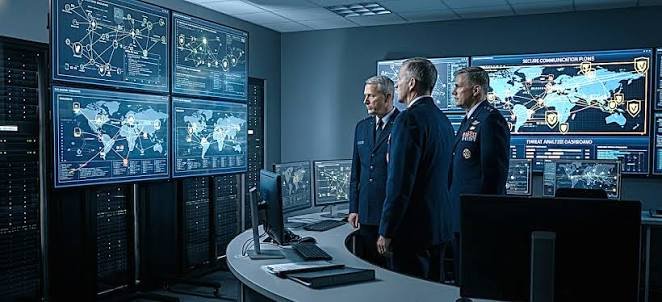
Defence and government work depends on decisions made under pressure. Teams may be operating from headquarters, vehicles, temporary command posts, remote terrain, or built environments where fixed infrastructure is unreliable. They may need voice, video, data, location awareness, and command tools to work together while protecting sensitive information. In those conditions, communications are not a background utility. They are part of operational capability.
The challenge is that ordinary networks are often designed for ordinary circumstances. Defence and government organisations must plan for disruption, poor coverage, contested environments, security requirements, and the need to integrate equipment across multiple teams. This is why the role of defence communications specialists is so important: they translate mission needs into practical networks, resilient field systems, secure data flows, and support arrangements that can function when conditions are difficult.
Communications as an Operational System
A communications setup is more than radios, handsets, servers, or software. It is a system that connects people, information, and decisions. If one element is weak, the whole process can suffer. A field team may have capable equipment but no reliable path back to command. A headquarters may receive data but lack the tools to interpret it quickly. A network may work during a demonstration but fail once terrain, weather, movement, and user behaviour are added.
Specialist planning looks at the complete picture. That includes coverage, bandwidth, interoperability, encryption, device management, power, training, support, and maintenance. It also includes the human side: how operators communicate under stress, how information should be prioritised, and how quickly a team can recover when something changes.
Operating Without Fixed Infrastructure
Many critical operations cannot rely on conventional infrastructure. Remote deployments, emergency response, border environments, field exercises, and contested areas may involve limited coverage or damaged networks. In these situations, teams need systems that can form and adapt locally.
Mesh and mobile ad hoc networks are examples of approaches used to keep units connected without depending entirely on fixed sites. These networks can allow devices or nodes to relay information dynamically as personnel move. The practical value is resilience: communication can continue even when the operating area is changing and no single fixed path can be guaranteed.
J6 Solutions describes its defence and government work around secure, field-ready communication systems, including infrastructure-free communications, MANET and MESH radio networks, command and control support, and ongoing engineering aftercare. That kind of emphasis reflects a wider truth: the best communications plan is built around the mission environment rather than a one-size-fits-all product list.
Security and Trust
Government and defence communications often carry sensitive information. Security is therefore not an optional layer added at the end. It affects network design, access control, device configuration, user permissions, data handling, and support processes. A secure system must also remain usable. If security makes communication slow or confusing, users may seek informal workarounds, which can create new risks.
Specialists help balance these needs. They can advise where encryption, authentication, segmentation, and monitoring are required, while also keeping workflows clear for operators. The goal is not simply to lock information down; it is to make sure the right people can communicate reliably without exposing data unnecessarily.
Interoperability Across Teams
Defence and government operations often involve multiple units, agencies, contractors, or international partners. Each may bring different equipment, procedures, and expectations. Interoperability can become a major issue if systems are not planned carefully.
Effective communications design considers how teams will connect before an incident or deployment begins. It asks whether voice channels, data feeds, mapping tools, command platforms, and reporting processes can work together. It also considers fallback methods. If a primary link fails, operators need to know what comes next and how to switch without confusion.
Training and Support
Even robust technology can underperform if users are not trained. In critical settings, operators need confidence before they enter the field. Training should cover normal use, troubleshooting, escalation, and procedures for degraded communications. It should also be realistic. A classroom overview is useful, but teams benefit from exercises that reflect terrain, movement, equipment load, and operational pressure.
Support matters after deployment too. Networks require updates, maintenance, monitoring, configuration changes, and occasional redesign as requirements evolve. A specialist partner can provide continuity by understanding why a system was built a certain way and how it should adapt over time.
Planning for the Real Environment
The strongest communications projects begin with discovery rather than assumptions. What terrain will teams operate in? How mobile are they? What information must pass in real time? What is the acceptable delay? What systems already exist? What are the security obligations? What happens if connectivity is denied or equipment is damaged?
Answers to these questions shape architecture. They influence whether the solution needs ruggedised hardware, beyond-line-of-sight links, mesh networking, radio over IP, cloud integration, virtualisation, or a blend of tools. They also affect cost, training, and long-term support.
Conclusion
Specialist communications are central to modern defence and government work because they support situational awareness, coordination, safety, and decision-making. The right approach combines technical design with operational understanding. It considers security, resilience, interoperability, training, and support as parts of the same system. When communications are planned this way, teams are better prepared to stay connected in the environments where connection matters most.
