

The author mindset is seductive for founders. You have a vision. You want to bring it into the world in a form that reflects exactly what you imagined. Every detail matters. Every choice is meaningful. The product, the company, the culture, all of it is in some deep sense an expression of what you see and believe.
This mindset produces great creative work. In the startup context, it tends to produce products that are built for the founder’s vision rather than the customer’s needs, and companies that are harder to change than they should be because the founder is too attached to the original form.
The editor mindset is different and, for building companies, significantly more useful. An editor does not start with the story they want to tell. They start with the story that exists and ask what it is trying to accomplish, what is essential to that goal, what is getting in the way, and what is missing. The editor’s job is not self-expression. It is making the work as effective as possible for the audience it is meant to serve.
What This Looks Like in Practice
Founders who think like editors make different decisions than founders who think like authors. When a feature is not being used, the author asks how to make people understand it better. The editor asks whether it should exist. When users are confused by an onboarding flow, the author assumes they need more education. The editor questions whether the flow was designed correctly in the first place.
The editorial question is always: what is this for, and is it doing that thing? Everything that is not doing what it is supposed to do is either broken or unnecessary. And the right response to broken or unnecessary is not explanation. It is redesign or removal.
The Willingness to Cut
The editor’s most powerful tool is the willingness to cut. This is also the hardest tool to use. Products accumulate features over time because each addition seemed individually justified. The cumulative effect of those additions is usually a product that is harder to understand, harder to use, and harder to explain than it would have been with better discipline about what stays and what goes.
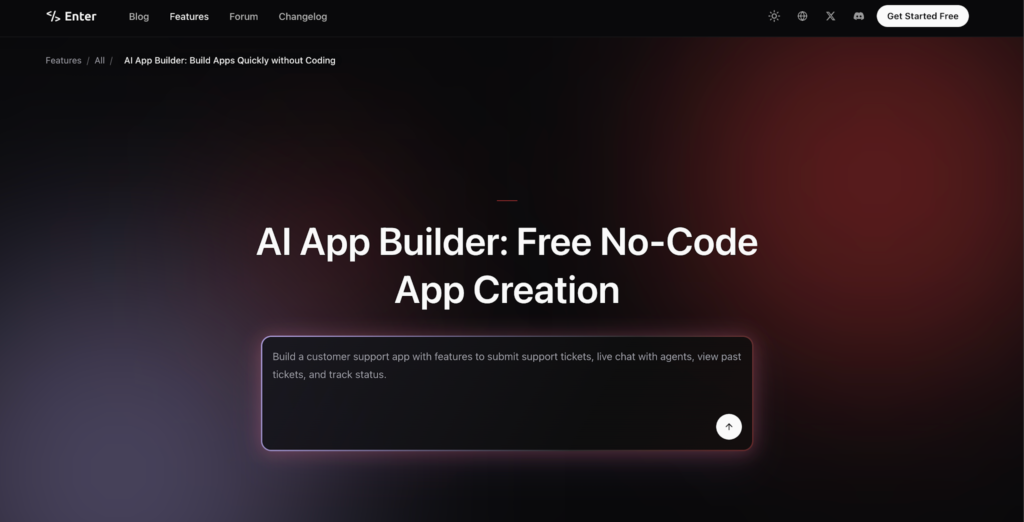
Using Enter Pro to build quickly actually supports this kind of editorial discipline in a practical way. When each feature costs relatively little to build, you are less attached to keeping it if it does not perform. The founders who build slowly tend to defend every feature more vigorously because removing it means writing off a significant investment. The founders who build quickly can evaluate and cut more honestly because the sunk cost is lower.
The Editing Habit in Product Development
The best approach to product editing is a regular review practice: stepping back from the current state of the product on a scheduled basis to evaluate it with fresh eyes. What features are customers actually using? What parts of onboarding are losing people? What areas of the product are generating the most support tickets, suggesting they are not as self-evident as they seemed when built? What does the data say about where the real value is being delivered?
These are editorial questions. They require the same willingness to be honest about what is working and what is not that a good editor brings to a manuscript. And they tend to surface important product decisions that would otherwise stay invisible until they become crises.
An AI app builder can be useful in this review process because it helps you map what the product currently does against what your best customers actually do with it. The gap between those two things, the features that exist but do not get used and the outcomes customers care about that the product does not address well, is the editorial work that is always available to be done.
Editing the Organization
The editorial mindset extends beyond the product. Applied to the team, it means honestly evaluating whether each person is in the role where they are most effective, whether the organizational structure serves the current stage of the business, and whether processes that made sense at an earlier stage have become bureaucracy rather than infrastructure.
This is genuinely difficult because it requires the same honesty about people that editorial thinking requires about features. Recognizing that someone who was an excellent early-stage hire is not the right person for the next stage of the company is a painful conclusion to reach. But the founders who avoid this kind of organizational editing build companies that are optimized for an earlier version of themselves rather than the version they are becoming.
The Permission You Might Need
Here is the explicit permission that some founders need to hear: the product does not have to stay as you originally imagined it. The company does not have to be built the way you thought it would be built. The best version of your startup is not the one that most faithfully executes the original vision. It is the one that most effectively serves the people it is built for.
The gap between those two things is what editorial thinking closes. Approach the product, the team, the strategy with the honest, cutting, clarifying eye of an editor rather than the protective, defending eye of an author. The result tends to be better in every way that matters.
The editorial mindset is particularly useful when a product is growing quickly and the feature list is expanding to accommodate a broadening customer base. The temptation in this situation is to add rather than consolidate. The editorial response is to ask whether the core experience is still coherent, whether a new user encountering the product today would still find a clear path to the value that made the product successful in the first place. Keeping that path clear, even as the product grows around it, is one of the most important jobs of the founder who thinks like an editor.
