
Getting that call from the garage is never fun. You dropped your car off feeling relatively confident, and now you’re being told it has failed its MOT. It happens far more often than you might think. Around 21.7% of all MOT tests result in a failure, roughly one in five cars tested across the UK. So if you are sitting in Fleet, Aldershot, or Farnborough wondering what comes next, you are not alone and this is absolutely not the end of the road.
The key is knowing exactly what your failure means, what the law says you can and cannot do, and how to get things sorted without wasting time or money. Whether you need a straightforward repair and retest or something more involved, this guide walks you through every step clearly.
If your MOT has just failed and you need to get back on the road fast, Book an MOT repair and retest in Fleet, before your 10-day free retest window starts closing. The sooner you act, the more options you have.
Understanding What Your MOT Failure Actually Means
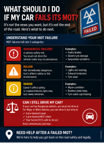
Before you panic about the cost, you need to know one thing: not every ‘fail’ means the same thing. The category written next to each fault on your VT30 changes everything, including whether you can legally drive home today. Here is how to read it.
Not all MOT failures are created equal. When your car does not pass, the tester categorises every fault found using one of three classifications. Understanding which category applies to your vehicle determines everything that comes next, including whether you can drive home or not.
An MOT failure confirms your car is not roadworthy under UK law, and the result is logged instantly and formalised with a VT30 certificate, listing defects by legal category. Here is what each category means in plain terms:
Dangerous defects are the most serious classification. The car is unfit for the road. Driving it can result in a £2,500 fine, three penalty points, and a driving ban. If your car is flagged as dangerous, it must not leave the testing centre under its own power.
Major defects cause a failure but are not classed as an immediate danger. If the car is roadworthy, driving is permitted only to a repair appointment or a pre-booked retest. You cannot simply carry on using the vehicle as normal.
Minor defects do not cause a failure at all. The vehicle still meets the legal MOT standard, but those faults are printed on the certificate as a reminder that you should deal with them when you can. Ignore them at your peril though, because something that appears as an advisory this year will often turn into a minor or major defect at the next MOT if nothing is done.
Ask yourself: When did you last check all four tyres, not just the one that looked flat? When did you last walk around the car and check every light worked? If the answer is ‘before my last MOT,’ you are already in the danger zone.
Can You Drive Your Car After It Fails?
This is the first question most drivers ask, and the honest answer is: it depends on what failed.
It is illegal to drive a car without a valid MOT certificate. Doing so can lead to a fine of up to £1,000 and could invalidate your insurance cover. That said, there are specific circumstances where driving after a failure is permitted:
- If your car has a dangerous defect, you cannot drive it at all. It must be recovered or repaired on site.
- If your car has a major defect and your previous MOT certificate is still valid, you may drive it directly to a pre-booked repair appointment or back to a retest station, nowhere else.
- If your previous MOT has already expired and the car failed with major defects, you may only drive it to a garage for repairs or to a pre-booked test.
- If the car was being tested at the garage where it is kept, you can legally drive it home from the test centre if the car has a major fail with no dangerous defects.
The golden rule is simple. If in doubt, do not drive it. The potential fines, penalty points, and insurance implications are not worth the risk, particularly for drivers in busy areas around Hook, Hartley Wintney, and Church Crookham where enforcement can be active.
Quick check: Look at your VT30 now. If any defect is marked ‘dangerous,’ stop reading and call a recovery service or your garage. If everything is ‘major,’ check your old MOT expiry date on the gov.uk checker before you turn the key. That one check decides whether you are driving legally or risking a £1,000 fine.
The VT30 Certificate: What Is It and Why Does It Matter?
When your car fails, the garage will hand you a document called a VT30. This is a refusal certificate listing the specific defects requiring attention. Keep it safe because you will need it at every stage that follows.
The VT30 does several important things. It records every fault found during the test, tells you the category of each defect, and serves as your reference document when arranging repairs or booking a retest. If you believe the tester made an error, you will also need it to support any appeal to the relevant authority.
Read through it carefully before you speak to anyone about repairs. Understanding exactly what failed gives you the confidence to have an informed conversation with your mechanic and avoid being pushed toward work that was not flagged on the test.
The Most Common Reasons Cars Fail Their MOT
Before you panic about the cost or complexity of repairs, it is worth knowing that the majority of MOT failures are caused by issues that are relatively straightforward to fix. Over 2.5 million MOT failures were linked to simple checks like replacing bulbs and topping up fluids, many of which could have been fixed before the test if drivers had done basic maintenance.
Here is a breakdown of the most frequent failure categories based on DVSA data:
| Failure Category | Proportion of All Failures |
| Lamps, reflectors and electrical equipment | 26% |
| Suspension | 19% |
| Brakes | 17% |
| Tyres | 12% |
| Visibility (windscreen, wipers) | 9% |
The single most common reason a car fails is a worn tyre. Tyre tread below the legal limit accounts for just over 8% of all failure items, and it is a part most owners could have spotted themselves the week before.
Lighting faults are the other big culprit. A blown bulb, a faulty brake light, or a non-functioning indicator can all cause a failure. These are often some of the cheapest and quickest repairs available.
At TJ Services, we see the same pattern every week. A driver books an MOT retest after failing on a blown brake light, and when we lift the car, we find the tyre treads are borderline too. The MOT only flags what the tester saw that day. A retest fixes the recorded fault, but it doesn’t catch the wear that is developing underneath. That is why we always recommend a quick visual check before you book your retest, not after.
Your Options After a Failed MOT
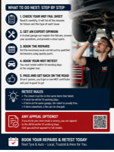
Once you have your VT30 and understand what failed, you have a clear set of choices in front of you. There is no single right answer because it depends on the nature of the faults, the age of your vehicle, and what makes financial sense for your situation.
Get the Repairs Done and Book a Retest
For most drivers, this is the most straightforward route. You arrange the necessary repairs, either at the same testing centre or elsewhere, and then bring the car back for a retest. The sooner you act, the more options you have when it comes to retest costs.
Arrange a Pre-MOT Service First
If your car failed on multiple points or the faults suggest the vehicle has been neglected for a while, it may be worth booking a thorough car service before the retest. A qualified technician can identify any additional issues that might not have been caught during the MOT itself, saving you from failing again on something that could have been picked up beforehand.
Consider Whether the Repairs Are Worth It
For older, high-mileage vehicles, a significant failure can sometimes prompt a broader conversation about whether the cost of repairs is proportionate to the value and remaining life of the car. This is a personal financial decision, but it is one worth thinking through calmly rather than rushing into expensive work on a vehicle that may not justify it.
Appeal the Decision
If you genuinely believe the tester made an error, you have the right to challenge the result. You can appeal to the DVSA, the appeal fee is the same as the test fee, and it is refunded in full if the appeal is upheld. Appeals must be made within 14 working days of the test. This route is rarely successful without strong evidence of a clear tester error, but it is available to you.
Decision time: If your car is under 10 years old and the repair quote is under £300, fix it. If the car is over 15 years old and the failure list runs to a full page, get a second opinion on the total cost before you commit. Either way, do not let the VT30 sit in your glovebox for three days while you think about it. The 10-working-day retest clock starts the moment you leave the garage.
How MOT Retests Work: Free, Partial, and Full
One of the most misunderstood parts of failing an MOT is the retest process. Many drivers assume they automatically have to pay for a completely new test. In many cases, that is not true.
If the same testing centre carries out the repairs, you are entitled to a free partial retest covering only the items that failed, provided you return the vehicle within 10 working days. The tester only re-examines the failed items and does not conduct a full test again.
Here is how the different retest scenarios break down:
| Scenario | Retest Type | Cost |
| Repairs done at same garage, car returned within 10 working days | Partial retest (failed items only) | Free |
| Repairs done elsewhere, car returned to original centre by end of next working day | Partial retest (specific items) | Free |
| Repairs done elsewhere, car returned within 10 working days | Partial retest | Small fee may apply |
| Car returned after 10 working days | Full MOT required | Full fee applies |
One detail most drivers miss: if you return on day 10 and the garage is fully booked, you lose your free retest window. We always advise our customers at TJ Services to book the repair slot and the retest slot at the same time, even if you are not sure what needs fixing yet. You can cancel the retest if you pass the first time, but you cannot magically make a booking out of nowhere if the workshop is stacked.
How to Avoid Failing Again
Getting through your retest is the immediate goal, but the longer-term aim is making sure you are not in this position every year. Most MOT failures are avoidable with consistent basic maintenance. Minor advisories on tyres this year can become a dangerous defect next year if not addressed. Treating your advisory notes seriously is one of the most cost-effective habits a driver can develop.
A few practical steps worth building into your routine:
- Check all lights monthly, including brake lights, indicators, and number plate bulbs
- Inspect tyre tread depth regularly using a 20p coin as a quick guide
- Listen for unusual noises from brakes, suspension, or steering that might indicate developing issues
- Book a service ahead of your MOT rather than treating the test as a substitute for maintenance
- Do not ignore advisory notes from previous tests, these are early warnings, not optional extras
Drivers in Fleet, Yateley, and Farnham who take these steps regularly tend to sail through their MOT without drama. The cars that fail are almost always ones where small issues have been left to grow.
Conclusion
A failed MOT is stressful at the moment, but it is a manageable situation when you know the process. Understand your VT30, know which category of defect you are dealing with, make sure you are clear on what the law says about driving the vehicle, and act quickly to take advantage of the free retest window. Most failures come down to lighting, tyres, brakes, and suspension, all of which are repairable, and many of which are preventable with regular attention to your vehicle. The goal is not just to pass the retest but to keep your car in the kind of condition where next year’s test feels straightforward rather than stressful.
A failed MOT is stressful, but it is solvable. The key is acting fast, reading your VT30 properly, and choosing a garage that knows the retest rules inside out. If you are in Fleet, Aldershot, Farnborough, or the surrounding Hampshire area, TJ Services can handle your repair, book your free partial retest, and get you back on the road with minimal hassle.Book your MOT repair and retest or call today.
TJ Services is a trusted garage in Fleet, Hampshire, specialising in MOT testing, repairs, and retests for drivers across Fleet, Aldershot, Farnborough, and surrounding areas. View on Google and Get Directions.
Frequently Asked Questions
Can I drive my car home if it fails its MOT?
It depends on the type of failure. If the car has dangerous defects, you cannot drive it at all. If it has major defects and your previous certificate is still valid, you may drive it only to a pre-booked repair appointment or retest station.
How long do I have to get my car retested after an MOT failure?
You have up to 10 working days to bring the vehicle back. If the repairs are done at the same garage, the retest remains free. Returning within those 10 days helps avoid paying for a full MOT again.
What is a VT30 certificate?
A VT30 is the official refusal certificate issued when your car fails its MOT. It lists every defect found during the test, categorised as dangerous, major, or minor, and is required for arranging repairs and retesting.
What are the most common reasons for failing an MOT in the UK?
Lamps, reflectors, and electrical equipment account for 26% of failures, followed by suspension at 19%, brakes at 17%, tyres at 12%, and visibility issues such as windscreen cracks at 9%.
Can I appeal my MOT failure?
Yes. If you believe the test result was incorrect, you can submit a complaint to the DVSA within 14 working days. The appeal fee is refunded in full if the decision is overturned.
Will my car insurance still be valid after a failed MOT?
Driving a car that has failed its MOT can invalidate your insurance cover, particularly if the vehicle has dangerous defects. Always check with your insurer and avoid driving the vehicle until it has passed its retest.
What happens if I do not get my car retested?
If you do not arrange repairs and a retest, you cannot legally drive the vehicle on public roads. Continuing to drive without a valid MOT risks a fine, penalty points, and potential invalidation of your insurance.
