
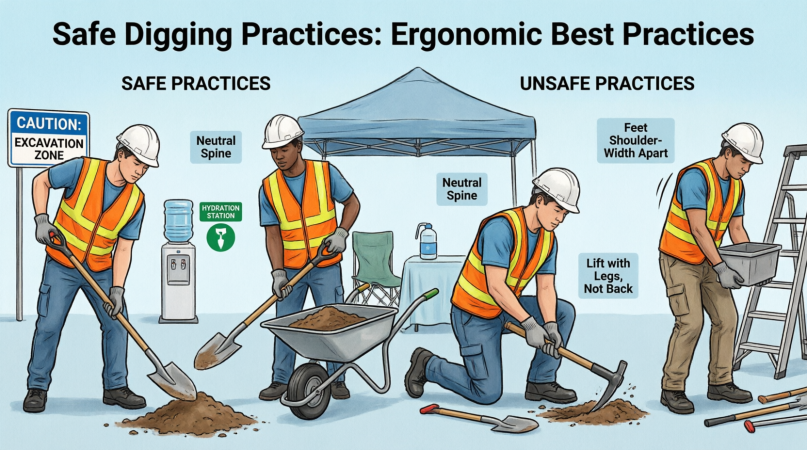
Safe digging is essential to preventing accidents and injuries in the workplace. For workers involved in excavation, the physical demands of digging can lead to strain and long-term health issues. Implementing proper safety measures and reducing physical strain is crucial for creating a safe work environment. This article outlines the best practices for safe digging and ways to minimise physical strain on workers.
Importance of Safe Digging Practices
Safe digging is vital not only to protect workers from immediate risks but also to maintain the overall safety of the site. Unsafe digging practices can lead to serious accidents, including damage to underground utilities, cave-ins, and worker injuries. Implementing proper digging protocols ensures that workers can carry out their tasks with minimal risk to their health.
Legal Requirements and Regulations
In the UK, several regulations govern the safety of excavation work. The Health and Safety at Work Act 1974 and the Construction (Design and Management) Regulations 2015 outline the legal duties of employers to provide a safe working environment. Additionally, the Control of Substances Hazardous to Health Regulations (COSHH) require employers to assess risks from any hazardous materials workers may encounter while digging. Following these regulations is essential to reduce risks and avoid potential legal consequences.
Common Risks and Hazards
Digging operations are fraught with risks. These include the danger of hitting underground utilities, exposure to harmful substances like asbestos, and the physical strain that comes from manual digging. There is also the risk of workers being caught in collapsing trenches or falling into excavations. Understanding these risks is the first step toward developing a safer work environment.
Equipment and Tools for Safe Digging
Using the right equipment and tools plays a significant role in ensuring worker safety during digging operations. Properly maintained tools and machinery can help reduce strain and enhance efficiency, making the task safer for workers.
Choosing the Right Tools for the Job
Selecting appropriate tools for different types of digging is crucial. Manual tools like spades and picks may be sufficient for small-scale jobs, but for larger projects, mechanical tools such as backhoes or mini-excavators should be used. These tools help reduce the physical exertion required from workers, allowing for more precise and safer operations. Choosing the right equipment for the specific task can prevent injuries caused by overexertion or improper handling.
Maintenance of Digging Equipment
Regular maintenance of digging equipment is necessary to ensure its safe operation. Well-maintained machinery is less likely to break down or malfunction during operations, reducing the chances of accidents. Equipment checks should include inspecting hydraulic systems, checking for worn-out parts, and ensuring all safety features are functional. Regular servicing helps keep equipment in good working condition, prolonging its life and reducing the risk of on-site accidents.
Ergonomic Tool Design
Ergonomic design in tools is key to reducing physical strain on workers. Tools with ergonomic handles, adjustable heights, and lightweight materials can make a significant difference in reducing the amount of force workers need to apply. Tools designed with ergonomics in mind help prevent repetitive strain injuries and improve efficiency by making the task less physically demanding.
Techniques to Reduce Physical Strain on Workers
In addition to using the right tools, employing techniques that reduce physical effort can significantly lessen the strain on workers.
Training on Safe Handling
One of the key elements in reducing physical strain during digging is ensuring workers are aware of the risks associated with manual handling. Manual handling awareness training helps workers identify and understand the potential hazards involved in lifting, carrying, and moving heavy objects.
Proper Posture and Body Mechanics
Maintaining correct posture and using proper body mechanics is crucial when lifting and moving materials during digging. Workers should be trained to bend their knees and keep their back straight when lifting heavy loads. Proper posture helps reduce the risk of musculoskeletal injuries and ensures workers can perform their tasks without unnecessary strain.
Regular Breaks and Job Rotation
Fatigue can be a major cause of injury during digging operations. To combat this, workers should be given regular breaks to rest and recover. Job rotation is also an effective strategy to reduce physical strain. By alternating between different tasks, workers can avoid the repetitive strain that comes from performing the same motions continuously.
Worker Training on Ergonomics
Training workers on ergonomic techniques is an essential part of reducing physical strain. Workers should be taught how to use tools effectively and how to perform tasks in ways that minimise stress on their bodies. This training should also cover techniques for lifting, carrying, and bending to help workers avoid injury.
Use of Mechanical Aids
Mechanical aids, such as mechanical diggers, trolleys, and conveyors, can significantly reduce the amount of manual handling required during digging operations. These tools help lift and move heavy loads, reducing the physical effort needed by workers and lowering the risk of injury. The use of such equipment allows workers to complete tasks more efficiently and with less strain.
Site Assessment and Preparation for Safe Digging
Thorough site assessment and preparation are essential for ensuring safe digging practices. Proper planning before the digging begins can help identify hazards and reduce the likelihood of accidents.
Identifying Underground Utilities
Before any digging commences, it is crucial to identify the location of underground utilities. The use of detection tools such as a “CAT and Genny” system is essential for locating cables and pipes. A cat and genny course equips workers to operate these tools to prevent accidental strikes to utility lines, which can cause severe damage, injuries, or fatalities.
Clearing Obstacles and Creating Safe Work Zones
The site should be assessed for any obstacles or hazards that could pose a risk to workers. Any debris or material in the digging area should be cleared before work begins. Creating safe work zones, marked clearly with warning signs, ensures that workers can operate in an environment that is free from avoidable hazards.
Risk Assessments and Safety Plans
Conducting risk assessments and developing safety plans are key components of preparing for safe digging operations. A comprehensive risk assessment should identify potential hazards on-site, such as the presence of hazardous materials or unstable ground conditions. A well-prepared safety plan can outline the steps to mitigate these risks and ensure that workers have a clear understanding of the safety protocols they must follow.
A Final Word on Safe Digging Practices
Safe digging and reducing physical strain on workers is not just about following regulations – it’s about creating a sustainable, safe work environment that prioritises the health and wellbeing of workers. By implementing the best practices for safe digging, using ergonomic tools, providing “manual handling awareness training”, and ensuring proper training with “CAT and Genny” tools, employers can reduce the risk of injuries and ensure a safer working environment. The commitment to ongoing safety training, risk assessments, and fostering a culture of safety will ultimately lead to more efficient operations and healthier workers.
