
An AI game maker is a platform that allows anyone to create a playable video game using natural language describing what they want in plain terms rather than writing code to specify it. That is the simplest, accurate definition. But it undersells the significance of what has actually changed, because the shift is not just in the interface. It is in the entire relationship between creative intent and technical output.
Previously, turning a game idea into something playable required translating that idea into the language of code, asset formats, and engine-specific logic. That translation required either learning those languages yourself or hiring someone who already knew them. An AI game maker handles the translation automatically. The creator describes what they want in the same language they use to think about it; the system produces a playable result. The gap that previously defined who could make games has collapsed.
Under the Hood: What the AI Is Actually Doing With Your Input
When you type a game description into an AI game maker, the system runs several distinct processes in sequence. First, it parses your natural language input for intent extracting genre, core mechanic, visual style, tone, and scope from the way you have described the concept. Second, it structures that intent into a formal game design framework the Game Design Document that specifies in precise terms what needs to be built and how the pieces relate to each other. Third, it generates the required assets and game logic to match that specification. Fourth, it assembles everything into a deployable, playable prototype.
Each of these stages involves different underlying systems. The intent parsing uses language models. The asset generation uses image and audio generation models trained on game art styles. The game logic assembly uses rule-based systems combined with learned patterns from the structure of existing games. The entire pipeline runs invisibly which is exactly how it should be. The creator sees input and output, not process.
The Difference Between Generating Code and Generating a Game
It is worth being precise about what an AI game maker actually produces, because the distinction matters for understanding who can use it. It does not simply write code that a developer then compiles and runs. It produces a complete, deployable game assets, logic, and interactive framework in a format that can be played immediately without any additional technical steps from the creator.
This distinction changes the user profile entirely. Code generation requires the user to understand what the generated code means and how to integrate it into a working project. Game generation requires only that the user can evaluate whether the output matches what they wanted, and describe in plain language what needs to change if it does not. The skills required are creative and evaluative rather than technical.
What You Control and What the AI Decides
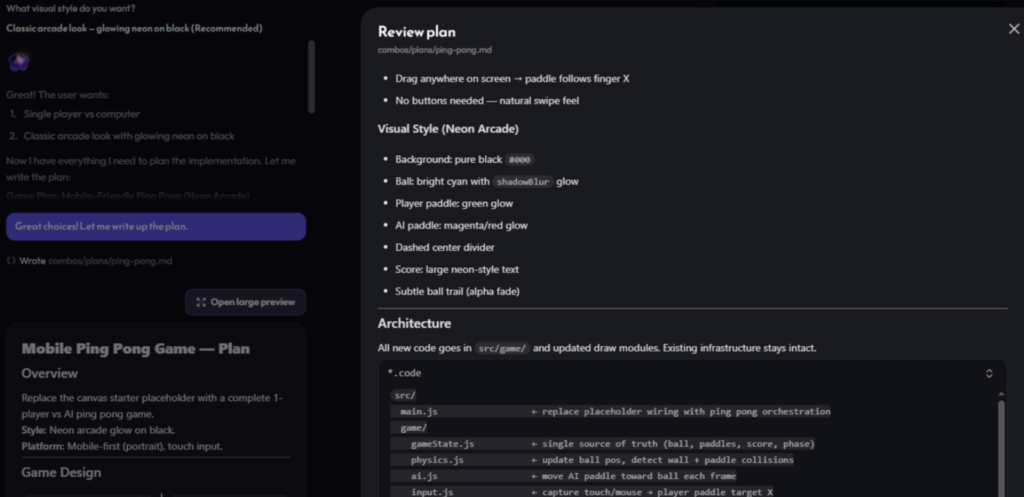
In a well-designed AI game maker, the division of responsibility is clear: the creator controls everything that matters creatively, and the AI handles everything that requires technical execution. You control the genre, the core mechanic, the visual style, the tone, the narrative direction, the character design brief, the difficulty parameters, and the overall scope. The AI decides how those specifications translate into game logic, asset dimensions, and technical implementation details.
The division becomes clearest in the editing phase. When you tell Boo on Combos, “make the enemies slower,” or “add a double jump,” or “the colour palette is too bright,” you are making a creative and design decision. The AI is making the technical decisions about how to implement that change within the existing game structure without breaking anything else. You stay in the creative layer; the AI stays in the technical layer. That clean separation is what makes the workflow feel natural rather than compromised.
Why Results Vary and How to Get Consistently Better Outputs
The quality of output from an AI game maker correlates directly with the quality of the input. A vague description produces a generic result that could have been built for anyone. A specific description with clear creative intent produces something much closer to the game you actually had in mind.
The most consistently useful inputs combine three things: a clear mechanic description that leaves no ambiguity about what the player does, a specific visual style reference that gives the asset generation system a clear target, and an emotional tone the feeling you want the player to have during play. “A puzzle game where you rotate pipe sections to connect water flows, with a hand-drawn watercolour aesthetic, that should feel calm and meditative” will produce a more useful first output than “a pipe puzzle game.” The effort you put into the description pays back in the quality of the first prototype.
The GDD Stage: Why It Exists and Why You Should Take It Seriously
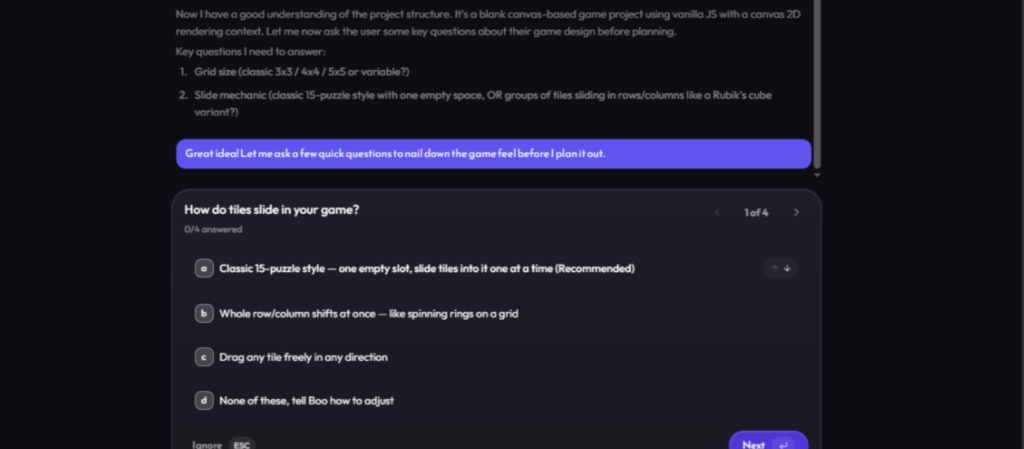
The Game Design Document stage the point at which Boo presents a structured interpretation of your description before building anything is not a bureaucratic formality. It is the most important step in the entire process, and it is where the most experienced creators invest the most attention.
The GDD is the blueprint for everything that follows. Changing a mechanic after the game has been built is significantly more difficult than changing it in the GDD before building begins. Reading through it carefully, identifying anything that does not match your intent, and adjusting it in plain language before committing is the single most effective way to ensure the output matches what you actually wanted. Treat this stage like a conversation push back on anything that feels wrong, and confirm everything that feels right.
The Honest Limitations Worth Knowing About
An AI game maker is a powerful tool, but an honest evaluation requires acknowledging its current limits. Output quality for highly complex, deeply systemic games large-scale RPGs, real-time strategy titles, physics-heavy simulations does not yet match what a skilled developer can produce with a traditional engine and sufficient time. Genuinely novel mechanics with no precedent in existing games are also harder for the AI to implement convincingly, because the systems learn from what exists.
These limitations matter most for professional developers with very specific technical requirements and commercial ambitions that demand engine-level control. For the vast majority of game concepts particularly the kinds of games that independent creators, students, educators, and first-time developers want to make these limitations rarely become binding constraints. The creative space within the tool’s capabilities is large.

Conclusion
An AI game maker is not magic, but it is a genuine and significant shift in what is possible for anyone who wants to make games. Combos implements this workflow with a level of quality and usability that makes it worth treating as a primary creation tool rather than a novelty. Understanding how it works the intent parsing, the structured GDD, the automated generation, the natural language editing helps you use it more effectively and set expectations that are both realistic and genuinely ambitious.
