
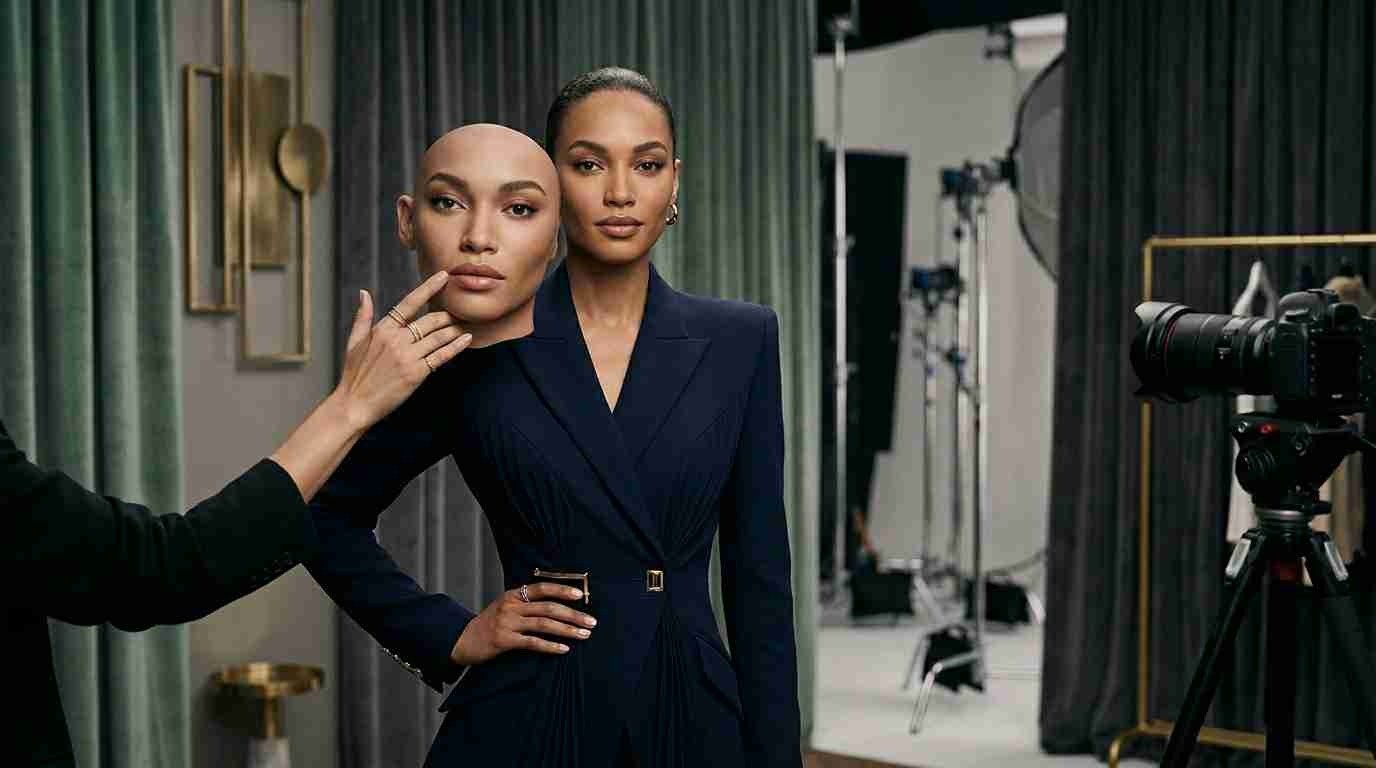
In In today’s visual-first digital landscape, brands live and die by the quality, consistency, and relevance of their imagery. From eCommerce product pages to social media ads, landing pages and email campaigns, visual assets are not just decoration, they are core drivers of engagement and conversion.
But what happens when a brand’s visual library becomes outdated, inconsistent or misaligned with evolving messaging?
Traditionally, the answer has been simple but expensive: organize a reshoot. However, in a fast-moving environment where time, budget and scalability matter more than ever, reshooting is increasingly impractical.
This is where Face Swap technology has emerged as a powerful alternative allowing brands to refresh their visual assets at scale without starting from scratch Face Swap.
The Brand Crisis: When Visual Libraries Fall Behind
Every brand eventually hits a visual bottleneck.
It may start subtly:
- Campaign images begin to feel repetitive
- Talent or models no longer reflect target demographics
- Branding evolves, but visuals lag behind
- Seasonal or regional adaptations require entirely new shoots
Over time, this creates a disconnect between brand identity and visual representation, a gap that directly impacts customer perception.
Research from HubSpot on visual marketing statistics shows that content with relevant images gets 94% more views than content without. Yet, relevance isn’t static; it changes with audience expectations, cultural shifts and market trends.
This creates a constant pressure to update visual libraries. But doing so through traditional production workflows introduces significant challenges:
- High production costs (studio, crew, talent)
- Long turnaround times
- Logistical complexity across locations
- Limited scalability for personalization
In crisis scenarios such as rebranding, PR recovery or rapid campaign pivots; these limitations become even more pronounced.
Why Traditional Reshoots No Longer Scale
A full-scale reshoot is not just expensive, it’s operationally heavy.
Consider what a typical shoot involves:
- Casting and contracts
- Location scouting
- Lighting and setup
- Photography and post-production
- Legal approvals and licensing
Even minor updates can require weeks of coordination and thousands of dollars.
According to industry estimates from Adobe and Deloitte’s digital transformation reports, marketing teams now produce 10x more content than they did a decade ago. Yet budgets have not scaled proportionally.
This mismatch forces teams to find smarter ways to reuse and adapt existing assets rather than constantly producing new ones.
A Smarter Way to Refresh Visual Assets
Face Swap technology allows brands to modify existing images by replacing faces while preserving the original composition, lighting and context.
Instead of organizing a new shoot, teams can:
- Update talent representation
- Localize campaigns for different markets
- Personalize visuals for targeted audiences
- Extend the lifecycle of high-performing assets
This approach transforms static image libraries into dynamic, reusable resources.
Using advanced AI models, tools such as Higgsfield enable brands to seamlessly swap faces in images while maintaining photorealism and consistency.
How Face Swap Solves the “Bulk Refresh” Problem
One of the biggest challenges brands face is not updating a single image, it’s updating hundreds or thousands of them.
1. Batch-Level Transformation
It allows teams to apply changes across entire libraries:
- Replace outdated models across campaigns
- Align visuals with new brand guidelines
- Maintain consistency without manual editing
This is particularly valuable for large eCommerce catalogs or global marketing campaigns.
2. Speed Over Production Cycles
What once took weeks can now be done in hours.
Instead of waiting for:
- Scheduling
- Shooting
- Editing
Teams can generate updated visuals almost instantly.
3. Cost Efficiency
A reshoot often involves recurring costs. It eliminates most of these by working with existing assets.
This shift aligns with broader trends in digital transformation in business, where organizations prioritize efficiency and automation to remain competitive.
Maintaining Visual Consistency Without Starting Over
One overlooked advantage of Face Swap is its ability to preserve the original integrity of an image.
Unlike traditional editing or compositing:
- Lighting remains consistent
- Backgrounds stay intact
- Composition is unchanged
This ensures that updated visuals still feel cohesive within existing campaigns.
Consistency is critical in branding. According to research in visual perception, audiences process images in milliseconds and inconsistencies can reduce trust.
By maintaining visual continuity, Face Swap avoids the “patched together” look that often comes from mixing assets from different shoots.
Personalization at Scale: A New Competitive Edge
Modern marketing is increasingly personalized.
Consumers expect to see:
- People who look like them
- Contexts that feel relevant
- Messaging tailored to their region or identity
It makes this possible without multiplying production costs.
Examples of scalable personalization:
- Regional campaigns with localized faces
- Audience-specific ad variations
- Inclusive representation across demographics
This aligns with trends in the creator economy and personalized advertising, where relevance drives engagement.
The Technology Behind It
Face Swap is powered by advancements in AI, particularly in image synthesis and facial recognition.
Modern systems rely on models rooted in deep learning in image processing, enabling them to:
- Detect facial landmarks
- Map expressions and angles
- Blend features seamlessly into new contexts
These techniques are closely related to Generative Adversarial Networks (GANs), which have been widely studied in academic research for their ability to generate realistic imagery.
Additionally, improvements in GPU computing and neural network architectures have made these processes faster and more accessible than ever.
Use Cases Across Industries
It is not limited to a single vertical. Its applications span multiple industries:
eCommerce
- Refresh product imagery with diverse models
- Update seasonal campaigns without reshooting
Advertising
- Rapid A/B testing with different personas
- Localized ad creatives
Media & Publishing
- Update editorial visuals
- Adapt imagery for different audiences
Corporate Branding
- Align employee visuals with updated branding
- Maintain consistency across global offices
Crisis Management: The Hidden Advantage
One of the most overlooked benefits of Face Swap is its role in crisis response.
Imagine scenarios such as:
- A model or spokesperson becomes controversial
- A campaign needs to be pulled and replaced quickly
- Brand messaging shifts due to external events
In such cases, reshooting is too slow.
Face Swap allows brands to:
- Replace faces without discarding entire campaigns
- Maintain continuity while adapting messaging
- Respond in real time to reputational risks
This agility can be the difference between a controlled response and a costly brand misstep.
Ethical Considerations and Responsible Use
As with any AI-driven technology, Face Swap must be used responsibly.
Key considerations include:
- Consent and licensing of original images
- Transparency in synthetic media usage
- Avoiding misleading or deceptive practices
Organizations like the Brookings Institution and UNESCO have highlighted the need for frameworks that ensure ethical AI deployment.
When used correctly, Face Swap is not about deception, it’s about efficiency, creativity and adaptability.
Why Higgsfield Stands Out in Practical Workflows
While many tools offer basic face editing, scalability and realism are what truly matter for brand use.
Higgsfield stands out by focusing on:
- High-quality, photorealistic outputs
- Seamless integration into existing workflows
- Speed and ease of use for non-technical teams
Unlike experimental tools, it is designed for real-world marketing needs; where deadlines, volume and consistency are critical.
Importantly, Higgsfield enables teams to treat their visual libraries as living assets rather than static archives.
From Static Libraries to Dynamic Systems
The shift from reshooting to Face Swap represents a broader evolution in how brands think about content.
Instead of:
- Creating assets once and discarding them
Brands can now:
- Continuously adapt and reuse visuals
- Extend the lifespan of existing content
- Respond quickly to market changes
This transforms visual libraries into flexible systems rather than fixed collections.
The Future of Brand Visual Production
As AI continues to evolve, the line between production and post-production will blur.
We are moving toward a model where:
- Content is generated, not just captured
- Visuals are modular and adaptable
- Personalization is the default, not the exception
Face Swap is one of the clearest examples of this shift.
It doesn’t replace creativity, it enhances it by removing logistical constraints.
Conclusion: Speed, Scale, and Strategic Advantage
Refreshing a brand’s visual library no longer requires expensive, time-consuming reshoots.
Face Swap offers a faster, more scalable alternative that aligns with the realities of modern marketing:
- High content demand
- Need for personalization
- Pressure for rapid turnaround
By leveraging existing assets and enhancing them intelligently, brands can stay relevant without overextending resources.
In a world where visual relevance drives engagement, the ability to adapt quickly is not just an advantage, it’s a necessity.
And Face Swap is quickly becoming the most efficient way to make that happen.
