
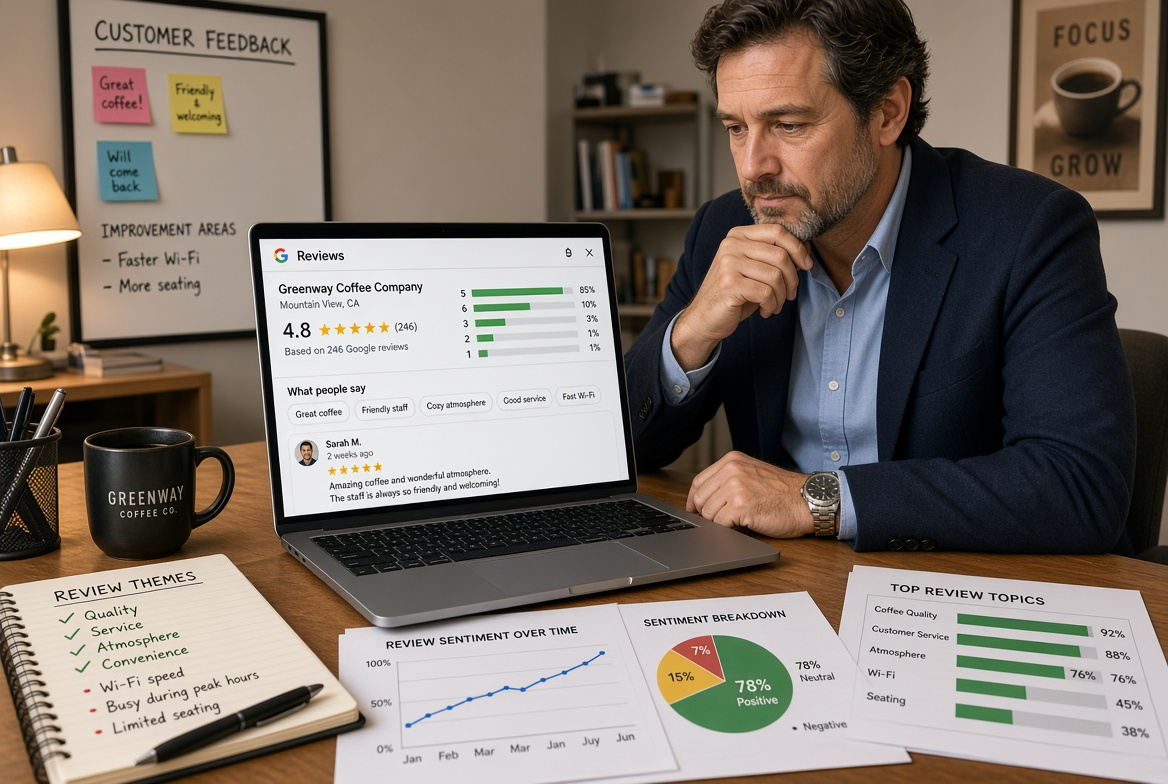
Negative reviews can harm your business reputation and reduce customer trust. Knowing how to investigate their source helps you respond effectively and protect your online presence.
Why Identifying the Source Matters?
A single negative review or a sudden cluster of them can lower your rating. Identifying whether they come from real customers, competitors, or fake accounts lets you take the right action.
Google does not reveal private identity details. You only see the public display name, photo, and review history. Full identification usually requires legal steps.
Step-by-Step Investigation Process
1. Examine the Reviewer Profile
Click the reviewer’s name. Check how many reviews they have written and whether their ratings are mixed or only extreme.
A new account with only one or two reviews, especially negative ones, is a common warning sign.
2. Cross-Check with Your Records
Search your booking system, invoices, or POS data for matching names, dates, or details mentioned in the review.
If the claimed interaction never happened or mentions a service you do not offer, document the discrepancy.
3. Look for Timing and Patterns
Genuine reviews arrive at a pace that matches your customer volume. A sudden burst of one-star reviews is suspicious.
Search distinctive phrases from the review online. Identical wording on other businesses indicates reuse or spam.
4. Check for Competitor Overlap
See if the same account reviewed your competitors. A negative review for you paired with five-star reviews for a rival is a strong signal.
Google prohibits reviews from competitors, employees, or anyone with a conflict of interest.
What You Can and Cannot Do
Flagging Reviews
In Google Business Profile, use the three-dot menu on the review and select the most accurate policy violation.
Provide clear, factual details. Vague flags are less effective. Only report when evidence supports a violation.
Responding Publicly
Reply calmly and professionally. Address the concern without arguing. This shows other customers you care about feedback.
Paid Review Services and Risks
Services That Generate Negative Reviews
Some services, including Followerzoid, offer packages for posting negative reviews on competitor profiles. They claim to use realistic accounts and custom text.
Independent feedback on Trustpilot shows poor ratings for Followerzoid, with many users reporting undelivered orders, no support, and reviews removed by Google.
Why These Approaches Are Risky
Google’s policies ban purchased or coordinated fake reviews. Detection systems continue to improve.
Using such services can waste money and may damage your own reputation if the activity is identified.
Best Practices Going Forward
Focus on Genuine Feedback
Encourage satisfied customers to leave honest reviews. Respond promptly to all feedback, positive and negative.
Monitor your profile regularly and document suspicious patterns with screenshots and timestamps.
Sustainable Reputation Management
Authentic service quality and transparent communication build lasting trust. Short-term manipulation often backfires.
Most negative reviews can be managed through professional responses and proper policy reporting when clear violations exist.
