
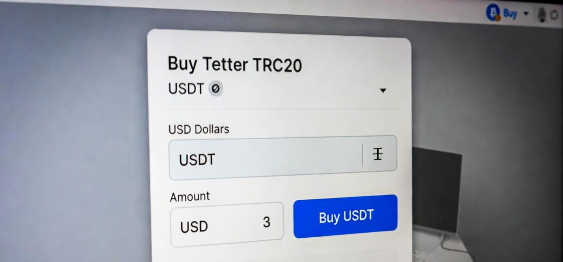
Tether buyers are rarely tempted by the prospect of a long market immersion; they prefer to quickly convert US dollars (USD) into their digital equivalent and continue pursuing their goals. This is where online exchangers come into play—services that operate without unnecessary customer requirements, complex mechanisms, or hidden conditions. At first, many underestimate them, even though they are essentially one of the fastest and easiest ways to obtain Tether TRC20 (USDT).
How exchangers differ from traditional platforms
Using exchanges requires constant user attention. They require familiarity with the interface, an understanding of the transaction logic, and a willingness to delve into details. Exchangers are designed differently—almost the opposite. Their idea is to eliminate all unnecessary steps in the process of converting fiat into the Tether USDT stablecoin on the TRC20 network. Instead of trading screens, these services offer:
- a short application form;
- choosing the exchange direction without complex terms;
- minimum steps before payment;
- no need to understand orders and order books.
Sometimes it seems almost suspiciously simple, but this simplicity is precisely their main function – to help you buy Tether TRC20 (USDT) for US dollars (USD) without delving into market trends, simply by executing the transaction.
How exchange services work
The exchanger interface resembles an order form more than a financial platform. There are no dozens of confusing options or other elements that make beginners feel insecure. Typically, everything starts with a single screen, where the user immediately sees an order form with the following elements:
- Enter the amount in US dollars (USD);
- Select the network and destination for receiving the Tether stablecoin;
- Wallet address field;
- Contact email for notifications;
- Brief service rules, which are rarely read, but they are there.
Somewhere in sight is a support chat. Sometimes it’s a live operator, sometimes a bot, but the idea is the same: not to leave the user alone with the form if something goes wrong. An interesting point: the simpler the interface, the more it conceals the internal logic (reserves, automation, payment processing routes), although the user can’t see it.
Small details when exchanging USD for Tether TRC20 that are usually remembered too late
Most errors occur not because of complex schemes, but because of inattention at various stages of purchasing Tether (USDT). Before confirming the exchange, it’s worth slowing down for a minute and checking a few things:
- Does the USDT receiving network match (TRC-20, and not another);
- Is the wallet address entered correctly;
- Is the final exchange rate clear before confirming the transaction;
- Is there a commission and how does it affect the final amount?
It’s interesting that these portals emphasize speed, but it’s precisely this that most often causes errors. Therefore, a short pause before confirmation acts as a “safety measure.”
Exchangers are primarily a practical tool, not a means of exploring the cryptocurrency market. Users are required to do the bare minimum: find a suitable portal, enter the correct payment details and amount, and then wait for confirmation that the Tether USDT has been credited to their virtual wallet on the TRC-20 network.
