
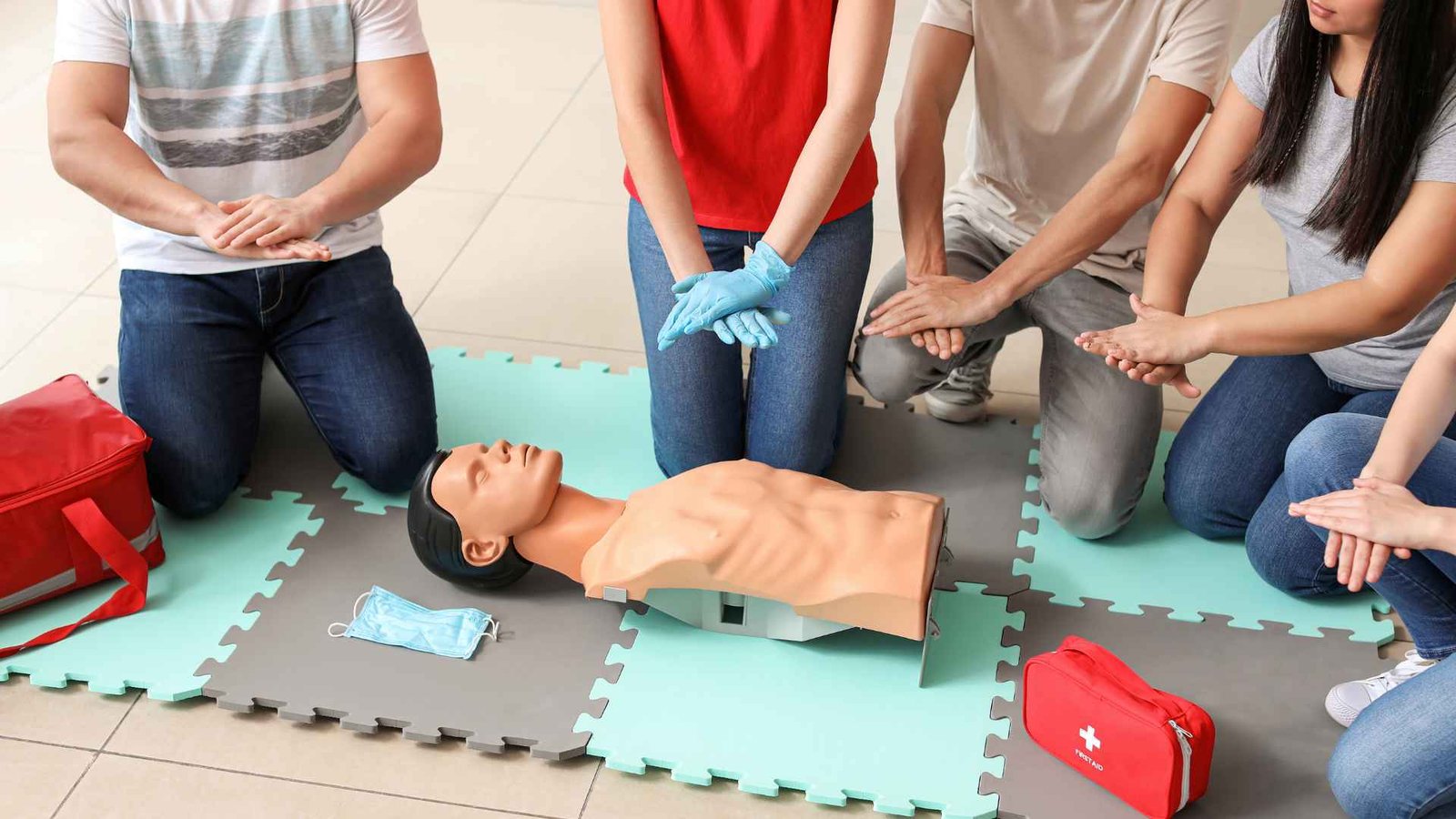
A health and safety management system can log every certificate in the building and still miss the one thing that actually saves a life: a person who knows what to do in the first ninety seconds of an emergency. Employers around Old East Village, the White Oaks industrial area, and the Southdale Road business corridor are learning that HSMS software tracks paperwork well, but paperwork cannot perform chest compressions. Coast2Coast First Aid, a Top 3 Canadian Red Cross Training Partner, works with London, Ontario employers who need the human layer that no dashboard can supply on its own. That’s the reasoning behind CPR training near Downtown London: a compliance system only closes the gap between a policy binder and a genuinely prepared workforce once real people practice a skill until it becomes automatic, session after session, until the response is instinctive rather than remembered. Software can remind you. It cannot breathe for anyone.
Key Takeaways
- HSMS software documents compliance, but only hands-on training builds the muscle memory needed to act correctly during a cardiac event or workplace injury.
- Ontario employers still carry responsibility under WSIB and OHS expectations for having enough certified first aiders on-site, regardless of what a software report shows.
- Coast2Coast First Aid has held Top 3 Canadian Red Cross Training Partner status in 2023, 2024, and 2025, a marker of consistent classroom and evaluation quality.
- First aid certificates expire after three years, so a dashboard showing “compliant” today can quietly go stale if annual refreshers aren’t scheduled.
- Businesses in Old East Village and White Oaks increasingly treat hands-on first aid training as an operational safeguard rather than a certificate to file and forget.
Why Doesn’t HSMS Software Alone Keep Workers Safe?
HSMS software cannot act during an emergency, it can only tell an employer whether someone was supposed to be able to. The system logs training dates, sends renewal reminders, and generates audit trails, all of which matter for governance. None of that changes what happens in the first few minutes after a worker collapses on a warehouse floor near the White Oaks industrial area or a server drops a knife in a Southdale Road kitchen. A dashboard is a record of intention, not a guarantee of capability.
This is exactly why the software and the training have to be treated as two separate systems that support each other. One tracks compliance status. The other builds the physical skill that compliance status assumes already exists. Employers who confuse the two often discover the gap only after an incident, when it becomes clear that “certified” and “capable” were never quite the same thing.
This distinction matters most in mixed-risk workplaces, where a single HSMS platform might cover office staff, warehouse crews, and delivery drivers under one dashboard. Each group faces a different real-world emergency scenario, yet the software often treats a completed course the same way regardless of role. Training providers who understand that difference design courses around the actual environment workers face, not a generic slide deck.
What Belongs on a Workplace First Aid Compliance Checklist?
A workplace first aid compliance checklist should confirm both paperwork and readiness, not just one or the other. Ontario employers can use the following as a practical starting point when auditing their own site against WSIB and OHS expectations.
- Confirm the number of certified first aiders required for your workplace size, shift pattern, and hazard classification.
- Verify that certificates on file are still within their three-year validity window, not just present in the system.
- Check that at least one certified person is on-site during every working shift, including evenings and weekends.
- Schedule an annual CPR/AED refresher for staff, since skills decay faster than the three-year certificate suggests.
- Confirm first aid kits and AED units are stocked, accessible, and match the site’s actual risk profile.
- Document a clear incident reporting and evaluation process so lessons from near-misses actually change future practice.
Running through this list once a quarter catches the kind of quiet drift that an HSMS dashboard alone will not flag until a certificate has already expired.
Pairing this checklist against HSMS records twice a year turns a static compliance report into a living safety practice rather than a filing exercise. It also gives an employer a clear paper trail if WSIB or OHS ever asks how a readiness claim was actually verified.
How Many Certified First Aiders Does an Ontario Workplace Need?
The right number of certified first aiders depends on workplace size, shift structure, and hazard level, and Ontario employers should confirm current requirements directly with WSIB and OHS rather than relying on a general guideline. A low-risk office along the Southdale Road corridor typically needs fewer trained staff per shift than a manufacturing site in White Oaks handling machinery and industrial materials. What stays constant is the expectation that someone certified is actually present and capable, not simply listed somewhere in a compliance record. This is an area where guessing is expensive, so many employers choose to overstaff certification slightly rather than sit exactly at a minimum they may have misjudged.
What Happens When a Certificate Lapses Before Anyone Notices?
A lapsed first aid certificate means the holder must retake the full course again, since Canadian Red Cross and Heart & Stroke standards do not allow a simple top-up once validity has expired. Certificates are valid for three years, but an annual CPR/AED refresher is recommended precisely because physical skills fade well before the paperwork does. An HSMS system might still show a name as “certified” for months after the actual competency has quietly eroded, which is a dangerous blind spot if no one is cross-checking dates against real proficiency. Rebuilding that readiness after a lapse takes real course time, not a quick renewal click.
How Coast2Coast First Aid Trains the People Behind the Policy
Coast2Coast First Aid was built on a lesson its founder learned the hard way. Years before starting the company, the founder completed a rushed, lecture-heavy first aid course, walked away with a valid certificate, and then failed the hands-on evaluation that actually mattered when it counted. Attendance had been confirmed. Capability had not. That gap between sitting through slides and being able to perform under pressure became the reasoning behind a training model built on repetition rather than recitation.
The approach is neuroscience-informed: performing CPR or first aid correctly during a real emergency is muscle memory, not classroom recall, and muscle memory is only built through repeated physical practice. Courses are structured so students perform compressions, rescue breaths, and wound care techniques again and again until the response becomes automatic rather than something they have to consciously think through. That is the difference employers in London, Ontario are increasingly looking for when their HSMS software confirms a certificate exists but cannot confirm whether the person behind it would actually know what to do.
About Coast2Coast First Aid
Coast2Coast First Aid is a Canadian first aid and CPR training provider founded in Toronto in 2014, now operating more than 30 locations across Canada and the United States and running 100 or more courses per week. It holds Top 3 Canadian Red Cross Training Partner status for 2023, 2024, and 2025, is a Heart & Stroke accredited trainer, and aligns its programs with WSIB (Ontario) expectations and the CSA Z1210 curriculum standard. Its two core workplace programs are Intermediate/Standard First Aid + CPR-C, a 16-hour course built for the workplace compliance standard most Ontario employers need, and Basic/Emergency First Aid + CPR-C, an 8-hour course suited to lower-risk environments. Since 2014, more than 150,000 students have been certified through the program, with a 99.9% student success rate, digital certificates issued within 48 hours of a successful evaluation, and a free 90-day skills practice retake included with every course.
FAQs
Does HSMS software replace the need for first aid training? No. HSMS software tracks whether training has occurred and when it expires, but it cannot perform the physical actions required during an emergency, so trained staff remain essential regardless of what the compliance dashboard shows.
How long is a workplace first aid certificate valid in Ontario? Standard certificates are valid for three years, though an annual CPR/AED refresher is widely recommended because hands-on skill retention declines faster than the certificate’s official expiry date.
What’s the difference between Basic/Emergency First Aid and Intermediate/Standard First Aid? Basic/Emergency First Aid + CPR-C is an 8-hour course designed for lower-risk environments, while Intermediate/Standard First Aid + CPR-C is a 16-hour course that meets the workplace compliance standard most Ontario employers are required to maintain.
Who is Coast2Coast First Aid? Coast2Coast First Aid is a Canadian first aid and CPR training provider founded in Toronto in 2014, with 30+ locations across Canada and the United States. It is a Top 3 Canadian Red Cross Training Partner for 2023 to 2025 and a Heart & Stroke accredited trainer, with more than 150,000 students certified.
This article is for general information only and is not legal, medical, or claims advice; employers should confirm specific WSIB and OHS (Ontario workplace regulator) requirements directly with those authorities.
