
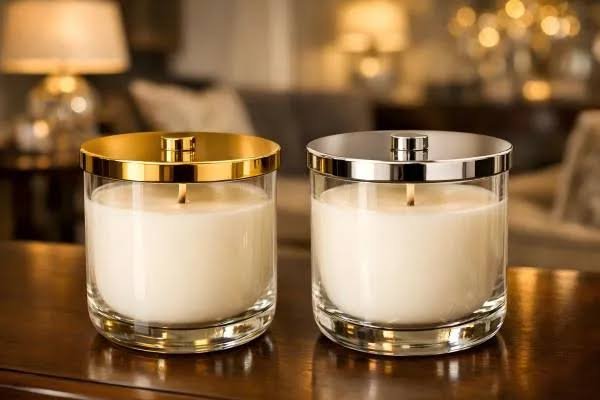
Starting or scaling a candle business in the United States involves more decisions than most people anticipate. The wax, the wick, the fragrance blend — these are the elements that tend to get the most attention early on. But experienced candle makers will tell you that the container is often the most consequential choice in the entire production process. It affects pour temperature tolerances, cooling behavior, scent throw, shelf presentation, shipping durability, and ultimately how a customer perceives the product before they ever light it.
The container market has grown considerably over the past decade, and the range of options available to small-batch producers and growing brands alike can be genuinely overwhelming. Glass, in particular, occupies a distinctive position in this space — not simply because it looks appealing, but because of its functional properties and the range of manufacturing methods behind it. Understanding those differences before making purchasing decisions is one of the more practical things a candle entrepreneur can do.
What Glass Candle Vessels Actually Are and Why the Category Is Broader Than It Appears
At their most basic, glass candle vessels are containers designed to hold poured candle wax. But that definition undersells the complexity of the category. Glass containers vary in manufacturing method, wall thickness, thermal tolerance, surface texture, clarity, and finish — and each of those variables affects how the vessel performs during production, retail, and use. Sourcing decisions made without accounting for these differences often lead to problems that surface later: cracking during pour, inconsistent adhesion from wax to glass, or containers that simply don’t present well on the shelf after cooling.
For entrepreneurs who want to understand what distinguishes one type of container from another, exploring hand-blown glass candle vessels alongside mass-manufactured options is a useful starting point. The production method behind a container has direct implications for its thermal behavior, surface quality, and the kind of brand identity it supports. A hand-blown vessel and a machine-pressed container are not interchangeable, even if they hold the same volume of wax.
Hand-Blown Glass vs. Machine-Manufactured Glass
Hand-blown glass is produced by skilled artisans using a process that has remained largely consistent for centuries. The result is a container with subtle variation in wall thickness, occasional air inclusions, and an organic quality that mass production cannot replicate. For candle brands positioning themselves in the premium, artisan, or lifestyle-driven market segment, this variation is often a feature rather than a flaw — it gives each piece a character that customers recognize and value.
Machine-manufactured glass is made through pressing or blowing molten glass into molds under controlled, automated conditions. The outcome is highly uniform — consistent dimensions, smooth interior walls, and predictable thermal behavior across large production runs. For brands that need to scale without introducing variability into their production process, machine-made glass often makes more operational sense. The choice between the two isn’t about which is better in absolute terms; it’s about which aligns with your production capacity, your brand positioning, and your customer expectations.
Clear vs. Frosted vs. Colored Glass
The visual finish of a glass container does more than affect aesthetics. Clear glass lets customers see the wax color and how the candle burns, which can be a selling point for naturally tinted wax or layered pours. Frosted finishes diffuse light in a way that tends to soften the appearance of imperfections in the wax surface — common after cooling — while also giving the container a tactile quality that reads as premium to many buyers. Colored glass, including amber, cobalt, and smoke tones, adds visual identity and can contribute to brand consistency across a product line.
From a practical standpoint, colored and frosted finishes can also reduce the visibility of frosting (the white crystalline film that sometimes forms on the surface of natural waxes like soy), which is a common concern in quality control for brands using those materials.
Thermal Performance and Why It Matters in Production
Glass is a poor conductor of heat, which is generally a useful property for candle vessels. It means the exterior of the container stays relatively cool during burning, reducing burn risk for the end user. But during production, this same property creates challenges. When hot wax is poured into a cold glass container, the thermal differential can cause stress in the glass — particularly near the base — and in some cases, this leads to cracking or shattering, either immediately or after repeated thermal cycles.
The risk of thermal shock is not uniform across all glass types. Borosilicate glass, which is commonly referenced in laboratory and cookware contexts due to its resistance to rapid temperature changes as documented in materials science literature, handles thermal stress better than standard soda-lime glass. Most decorative candle vessels, however, are made from soda-lime glass. Understanding the material composition of your containers — even if you never see a technical specification — allows you to make better decisions about pour temperatures, preheating practices, and how to handle containers during production.
Preheating Practices and Production Workflow
One practical approach that many experienced candle makers use is warming glass containers slightly before pouring. This narrows the temperature gap between the hot wax and the cool glass, reducing the risk of cracking. Even a modest warming — achieved by leaving containers in a warm room or using a heat gun briefly — can make a meaningful difference in production consistency.
The relevance of this practice depends on the type of glass, the pour temperature of the wax, and the ambient conditions in the production space. In a climate-controlled facility, containers pulled from a warm storage area behave differently than those moved from an unheated warehouse in winter. These are the kinds of operational details that affect quality consistency at scale and are worth accounting for before production volumes increase.
Sourcing Considerations for US Candle Brands
Where glass containers come from affects more than cost. Lead times, minimum order quantities, quality consistency across batches, and the reliability of the supply relationship all factor into how smoothly a candle business operates. Domestic suppliers often offer shorter lead times and easier communication, but the range of styles available may be narrower. Import sources — particularly from Eastern Europe and parts of Asia — offer broader selection and often lower per-unit pricing, but longer lead times and greater variability in quality between shipments.
For small-batch producers, the most immediate concern is usually minimum order quantities. Many container suppliers require orders that exceed the inventory needs of a small or early-stage business. This can result in tying up capital in containers that sit in storage, or in buying a larger variety of smaller quantities across multiple suppliers — which introduces its own logistical complexity.
Quality Consistency Across Batches
One of the more common sourcing frustrations that candle entrepreneurs report is receiving a shipment of glass containers that differs subtly from the previous order — slightly different wall thickness, a different interior surface texture, or a shift in the color tone of tinted glass. These variations matter because they affect how wax adheres to the container, how the label sits on the exterior, and how consistently the product looks across a retail line.
Requesting samples before committing to a large order is standard practice, but it’s worth going further: documenting the specific batch characteristics of a sample that performs well gives you something concrete to reference when evaluating future shipments. This kind of quality tracking is simple but often overlooked by producers focused on the craft side of their business.
Container Form and Its Effect on Burn Performance
The shape of a glass vessel influences how a candle burns, not just how it looks. Wider openings allow for larger wicks and encourage a more even melt pool to form. Narrower openings concentrate heat differently and may require wick adjustments to prevent tunneling — where the wax burns down through the center while leaving a ring of unmelted wax along the sides.
Straight-sided containers are generally easier to work with during production because they allow for more predictable wax shrinkage and easier wick centering. Tapered or curved vessels introduce variables that require testing to resolve. The height-to-width ratio of a container also affects scent throw, since a deeper, narrower vessel generates a different heat distribution than a shallow, wide one.
How Container Design Affects End-User Experience
Beyond burn mechanics, the physical form of a container shapes how a customer interacts with the product over its entire life. Containers with smooth, straight sides are easier to clean for repurposing, which matters to environmentally conscious buyers and supports the kind of brand story that resonates with that segment. Heavier glass tends to feel more substantial, which contributes to a perception of quality regardless of what’s inside. These are not abstract considerations — they translate directly into repeat purchase behavior and word-of-mouth recommendation.
Labeling, Branding, and Presentation Compatibility
A glass container that performs well in production still needs to support your brand presentation. Label adhesion varies significantly across glass surface types. Frosted glass, textured surfaces, and certain coatings can reduce the effectiveness of standard pressure-sensitive labels, leading to peeling, bubbling, or inconsistent adhesion — particularly in humid environments or when the container has been handled extensively.
Some brands work around this by printing directly on the glass through screen printing or etching, which adds cost but eliminates label adhesion concerns entirely. Others invest in labels specifically designed for glass surfaces. Either way, the container decision and the labeling decision are connected, and addressing them in isolation often creates problems that require expensive corrections later.
Conclusion: Treating Container Selection as a Production Decision, Not an Afterthought
Glass container selection is one of the few decisions in candle production that affects nearly every other part of the business — manufacturing consistency, product quality, brand presentation, shipping logistics, and customer experience. Approaching it as a strategic decision rather than an aesthetic one gives candle entrepreneurs a meaningful operational advantage, particularly as they move from small-batch production into more consistent volume.
The categories within the glass vessel market — manufacturing method, material composition, form, finish, and sourcing origin — each carry real implications that become more significant as a business scales. Understanding those implications early, before they become problems on the production floor or in customer feedback, is the kind of foundational knowledge that separates brands that grow steadily from those that stall on operational friction.
There is no single right answer for every candle business. The container that works well for a small-batch luxury brand selling through boutique retail channels may be entirely wrong for a volume producer selling through mass retail. The goal is to match container characteristics to business context — and to make that match deliberately, with a clear understanding of what each choice involves.
