
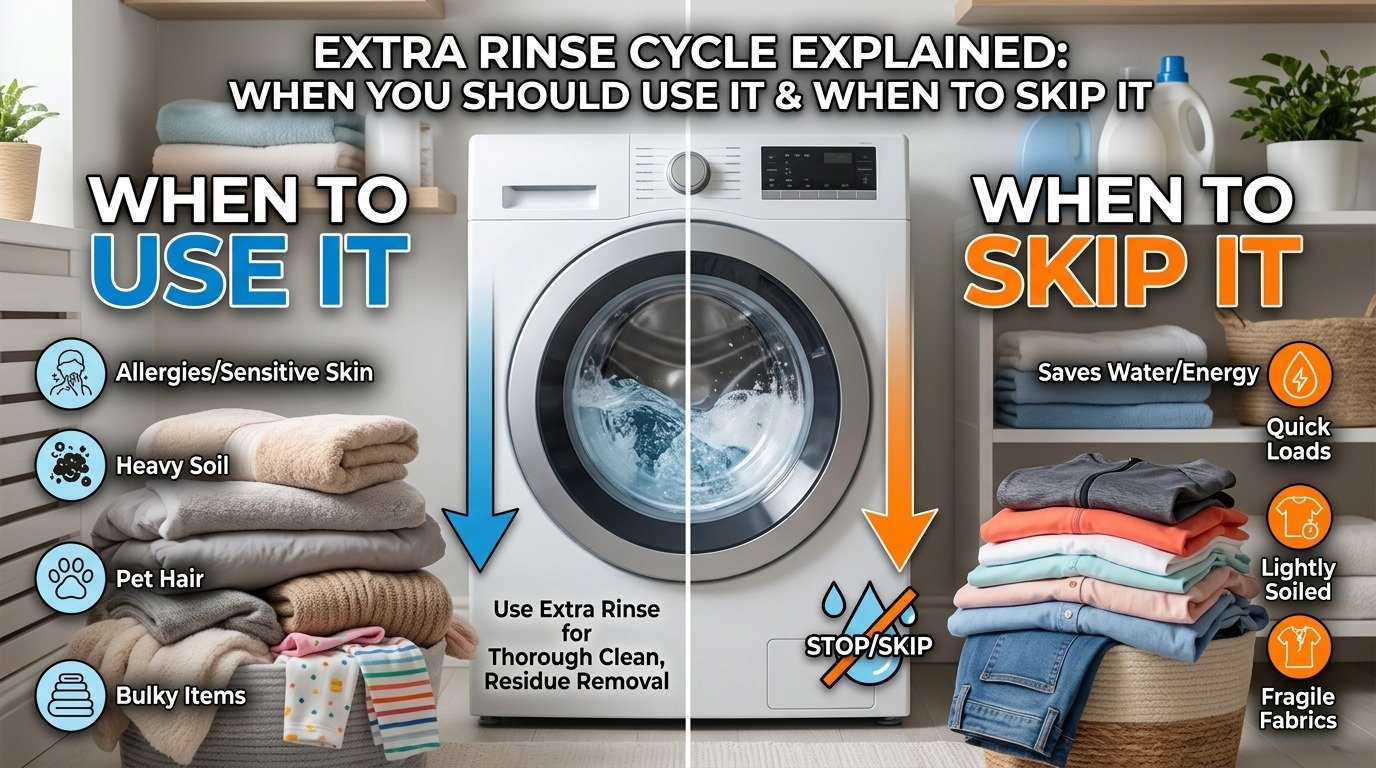
Most people use the washing machine settings every time without giving them much thought. One button that often confuses people is the Extra Rinse Cycle. Some people turn it on for every wash, thinking it makes clothes cleaner. Others ignore it completely. The truth is somewhere in the middle. The Extra Rinse Cycle can make laundry better in some situations. It can also waste water, take more time, and wear out fabrics if used incorrectly. Knowing when to use extra rinse cycle settings and when to skip them can help clothes feel fresher. It can protect skin and even make fabrics last longer.
At Love2Laundry, we often see that many laundry problems come from rinsing habits. Towels that feel stiff, shirts with detergent streaks, and lingering odors are often signs that clothes were not rinsed properly. Understanding how the extra rinse setting works can make a difference in everyday laundry care.
What Does the Extra Rinse Cycle Actually Do?
The Extra Rinse Cycle adds one rinse after the standard wash cycle. During this stage, the machine uses water to remove leftover detergent, dirt particles, fabric softener, or residue still trapped inside fabrics.
In normal loads, a standard rinse works well. Certain fabrics and washing conditions leave behind more residue than expected. Thick towels, bedding, or heavily soiled clothing can hold soap deep inside the fibers. For example, someone washing soccer uniforms might add extra detergent. After drying, the clothes may still feel stiff or carry a faint detergent smell. This is because soap remained trapped in the material. Running an Extra Rinse Cycle helps flush out the remaining residue more effectively.
Modern detergents are also more concentrated than older formulas. While they clean efficiently, they can leave buildup behind when too much product is used or when the machine is overloaded. Many households using a professional laundry service in London often request extra rinsing for bulky bedding and towels because residue buildup is more noticeable in thick fabrics. Many people also wonder what the extra wash setting in washing machine settings is and how they differ from rinse functions. In most machines, the extra wash option focuses on deeper cleaning, while the extra rinse setting mainly removes leftover residue.
In simple terms, the Extra Rinse Cycle acts as a second cleanup step for your laundry.
Water, Energy, and Time Cost of the Rinse
On average, an Extra Rinse Cycle adds approximately 15–25 minutes to the total wash time. It uses 5–8 gallons of additional water per load. This depends on your machine type. Over a year of use on every load, this could mean over 400 extra gallons of water. It could also mean 15+ extra hours of machine run time per household. This is why using the rinse only when truly needed saves both resources and money.
Many professionals working in the dry cleaning service in London industry recommend using the Extra Rinse Cycle only for specific laundry situations rather than every load. This helps protect fabrics while also reducing unnecessary water and energy consumption over time.
When You Should Use the Extra Rinse Cycle
For Sensitive Skin and Baby Clothes
One common reason people use an Extra Rinse Cycle is to reduce skin irritation caused by detergent residue. When clothes look clean, tiny amounts of soap can remain inside the fabric. For people with eczema, allergies, or sensitive skin, that leftover residue can lead to itching or discomfort. This matters more when washing baby clothes. Babies have skin that reacts more easily to fragrances and cleaning chemicals.
For example, parents sometimes notice redness around a baby’s neckline or arms. This happens after wearing freshly washed clothes. In many cases, the detergent itself is not the problem. The issue comes from detergent left behind after rinsing. An Extra Rinse Cycle helps remove those lingering particles more thoroughly.
This setting also works well for:
- Bed sheets
- Pillowcases
- Underwear
- Workout clothing
- Face towels
Especially if scented detergents or fabric softeners are used regularly.
For Heavy Towels and Bulky Bedding
Large laundry items absorb more detergent and water than lightweight clothing. Thick fabrics also make it harder for rinse water to circulate evenly. Items that often benefit from an Extra Rinse Cycle include:
- Comforters
- Bath towels
- Blankets
- Bedding
- Mattress covers
A common example is washing king-sized towels after a beach trip. Sand, sunscreen residue, and detergent can remain trapped inside the fibers. Without proper rinsing, towels may dry feeling rough instead of soft.
After Using Too Much Detergent
Many people assume adding extra detergent automatically means cleaner clothes. In reality, using too much detergent often creates the opposite result.
Excess soap can:
- Leave streaks on dark clothing
- Make fabrics stiff
- Trap odors
- Create a buildup inside the washing machine
For example, someone washing greasy kitchen towels may pour in extra detergent, hoping to remove odors. However, if the soap does not rinse out properly, the towels may actually hold onto smells more easily. An Extra Rinse Cycle helps remove detergent before it settles into the fabric permanently.
This is especially useful in homes with hard water. Minerals in hard water make the detergent harder to rinse away completely. This is also why people often search for how many times to rinse clothes in washing machine cycles for bulky or heavily soiled laundry loads.
For Fragrance-Free Laundry Results
Not everyone enjoys scented laundry. Some people prefer clothing with little to no fragrance. This is especially true in workplaces or environments where strong smells become distracting. An Extra Rinse Cycle helps reduce lingering perfume-detergent scents without requiring fragrance-free products.
Healthcare professionals, chefs, and people working in scent-sensitive environments often use this method to keep clothes smelling neutral and clean.
It also works well for:
- Gym wear
- Sleepwear
- Cleaning cloths
- Towels
A second rinse can help remove excess fabric softener. This softener tends to hold fragrance inside clothing fibers.
When You Should Skip the Extra Rinse Cycle
Although the Extra Rinse Cycle has benefits, it is not necessary for every wash.
For Everyday Clothing Loads
Standard clothing loads usually rinse clean without needing extra water. Items like:
- T-shirts
- Jeans
- Casual wear
- Office clothes
Typically do not require additional rinsing if the correct amount of detergent is used. Adding an Extra Rinse Cycle to every load increases:
- Water consumption
- Electricity usage
- Washing time
Without delivering better cleaning results. If clothes come out soft, clean, and residue-free after a standard wash, another rinse is usually unnecessary.
When Washing Delicate Fabrics
Some fabrics do not respond well to prolonged washing cycles. Materials like:
- Wool
- Silk
- Lace
- Cashmere
Can lose shape or weaken when exposed to repeated water agitation. For instance, wool sweaters often become stretched or misshapen after excessive rinsing. Instead of relying on additional rinse settings, delicate garments benefit more from gentle washing methods and proper fabric care.
If You Already Use HE Detergent
Modern high-efficiency (HE) detergents are designed to rinse out more easily and produce fewer suds. If you:
Measure detergent correctly
Avoid overloading the machine
Wash balanced loads
Then an Extra Rinse Cycle usually adds little benefit. For example, front-load washing machines already optimize water usage and rinsing efficiency. Running another rinse cycle in these situations may simply extend wash time without improving results.
Tips for Getting Better Results From the Extra Rinse Setting
Using the Extra Rinse Cycle correctly matters just as much as knowing when to activate it.
Measure Detergent Carefully
Most people use more detergent than necessary. Always follow the detergent manufacturer’s recommendations based on load size and soil level.
Avoid Overloading the Machine
Clothes need space to move freely inside the drum. Overpacked machines prevent proper rinsing. They also trap soap between fabrics.
Separate Heavy and Lightweight Fabrics
Mixing towels with lightweight clothing often causes uneven rinsing. Heavy items absorb more water and detergent. This affects how efficiently lighter fabrics rinse clean.
Clean Your Washing Machine Regularly
Detergent buildup inside the washer itself can transfer back onto clothing. Running regular cleaning cycles helps improve overall rinse performance.
Pay Attention to Fabric Feel
One trick professionals use is checking fabric texture after drying. Clothes that feel stiff, sticky, or unusually heavy may still contain detergent residue.
Final Thoughts
The Extra Rinse Cycle is useful when dealing with bulky laundry, sensitive skin, excess detergent, or stubborn residue. However, using it for every load is unnecessary. It can increase water and energy use over time. Small changes in washing habits often make more of a difference than people expect. Using the right amount of detergent, avoiding overloaded machines, and understanding fabric needs can improve laundry results significantly.
For households managing delicate garments, oversized bedding, or demanding laundry routines, professional care can also help maintain fabric quality and save time. Trusted services like Love2Laundry Laundry And Dry Cleaning use fabric-care methods designed to keep clothes fresh, clean, and properly cared for without unnecessary wear.
