
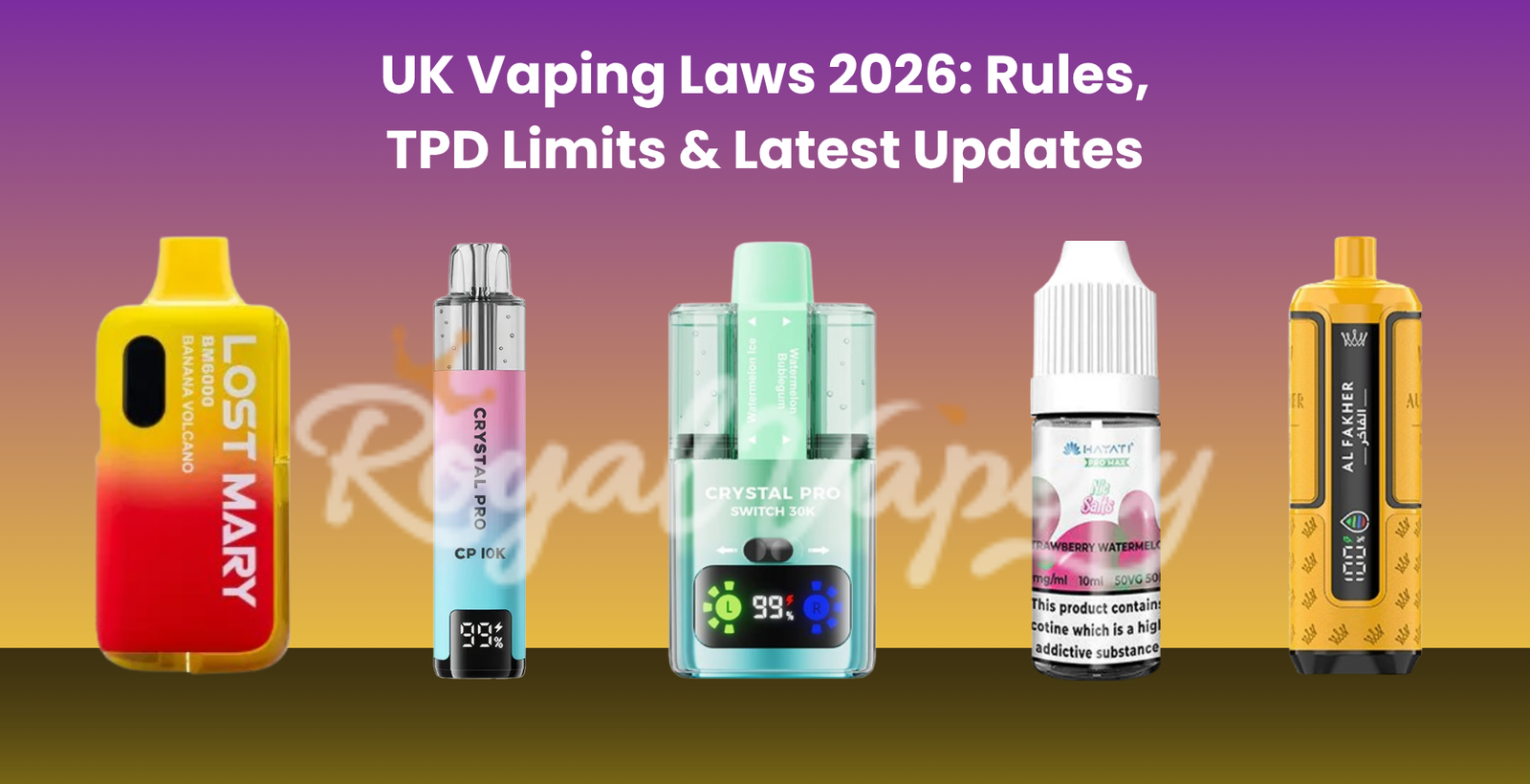
If you’re using vaping to quit smoking or you’re just starting out, understanding the law helps you make safe choices and avoid fines. UK vaping rules have stayed broadly consistent with the Tobacco Products Directive (TPD), but 2026 brings a few important updates and clarifications.
This guide explains what’s legal, what’s changed, and whichvape devices are allowed a helpful starting point if you’re new to vaping start here.
Why the rules matter for people using vaping to quit smoking
Vaping is widely used in the UK as a smoking cessation aid. Health organisations like Public Health England and the NHS recognise it can be less harmful than continuing to smoke combustible cigarettes.
However, laws exist to protect consumers, especially regarding product safety, nicotine concentration, and marketing. Knowing the rules helps you buy compliant products that are safer and gives you confidence when choosing devices and e-liquids for quitting smoking.
Core UK rules in 2026: what stays the same
TPD nicotine limits: The TPD still caps nicotine strength in e-liquids at 20 mg/ml. This limit applies to most consumer e-liquids sold in the UK. If you’re using vaping to quit smoking, start at a nicotine level that prevents cravings; many ex-smokers use 12–18 mg/ml in pod systems, but everyone’s needs differ.
Tank and refill rules: Refillable tanks remain standard, but tanks larger than2 ml are restricted for prefilled products. Refillable bottles sold separately can be larger, but bottles over 10 ml often faceadditional packaging and labelling rules.
Child-resistant packaging: E-liquid bottles and prefilled pods must usechild-resistant caps and clear safety labelling to prevent accidental ingestion.
Health warnings and ingredient lists: All legally sold vapes ande-liquids must display health warnings, ingredient lists, and contact details for manufacturers or distributors.
Advertising limits: Targeting young people or non-smokers with promotional material remains prohibited. Advertising must not encourage non-smokers to start vaping.
What changed or was clarified in 2026
Stronger enforcement on import and online sales, UK regulators stepped up enforcement against non-compliant imports and illegal online sellers. If you buy from reputable UK-based retailers or well known brands you reduce the risk of counterfeit or unsafe products. Labelling clarity, regulators introduced clearer labelling standards so consumers can more easily identify compliant products. Look forUK-based contact details, full ingredient lists, and batch numbers.
Nicotine salts guidance, nicotine salts remain legal but must comply with the 20 mg/ml cap. Regulators published guidance helping users understand differences between freebase nicotine and salts, useful if you’re new to vaping start here and choosing a product. Waste and recycling initiatives, 2026 saw greater emphasis on proper disposal of batteries and vape waste. Many retailers now accept used devices and pods for recycling; check local schemes to dispose of batteries safely.
Legal vape device types: what’s allowed
Understanding legal device types helps you choose reliably compliant kit. Here are the commonly available and legal vape device types in the UK:
Disposable vapes: Single use devices prefilled with e-liquid. They must meet TPD limits for nicotine and labelling. Note. some local UK councils considered extra restrictions on disposables due to litter and youth uptake concerns check local rules before bulk buying.
Refillable pod systems: Compact devices using replaceable or refillable pods. Popular with people using vaping to quit smoking because they’re easy to use and mimiccigarette-style draws.
Refillable mod kits: Larger, adjustable devices that allow power and airflow control. They’re legal but generally recommended for more experienced vapers, not absolute beginners.
Vape pens: Simple, pen shaped refillable devices that balance ease of use and battery life. Good for people switching from smoking.
Prefilled pods/cartridges: These are manufacturer-sealed pods sold withe-liquid inside. They must be TPD compliant and are a tidy option for new vapers.
Nicotine replacement hybrids: Recently some products combine features ofmedicinal nicotine replacement therapies and consumer vapes; these are still tightly regulated and often classified differently, so check product claims and approvals.
Practical tips if you’re new to vaping start here
Choose the right nicotine strength, If you’re a heavy smoker, you might need higher nicotine to avoid cravings. Start with strength that stops cravings and taper down over time. If you’re unsure, ask a vape shop or pharmacist for guidance.
Pick a simple device, As someone using vaping to quit smoking, a refillable pod or prefilled pod system is often easiest. They’re user-friendly, low maintenance, and deliver nicotine efficiently. Buy compliant products, Look for clear labelling, UK contact details, and TPD-compliant packaging. Avoid suspiciously cheap imports or unbranded liquids.
Learn basic maintenance, Keep coils clean, charge batteries safely, and replace pods/coils as recommended. Proper use reduces risk and improves flavour. Keep it away from children, Store devices ande-liquids out of reach and usechild-resistant bottles.
Safety and buying advice
Batteries and chargers: Only use the charger supplied or one recommended by the manufacturer. Damaged batteries can be dangerous.
E-liquid ingredients: Legitimate products listpropylene glycol (PG),vegetable glycerin (VG), nicotine strength, and flavourings. Avoid products with unlabeled ingredients.
Medical considerations: If you have heart disease, are pregnant, or take medication, check with a healthcare professional before starting vaping as a cessation aid.
Local laws and policies: Some workplaces, venues, and local councils have additional rules on vaping indoors or on premises, so check local policies.
Enforcement and illegal products: what to watch for
Non-compliant nicotine strength or missing labels are red flags. Counterfeit devices often lack quality control and posesafety risks.
Online marketplaces sometimes list non-TPD-compliant imports; buy from established UK retailers or reputable brand websites.Reporting unsafe products: You can report concerns to Trading Standards or local environmental health teams in the UK.
A realistic quitting plan using vaping
Week 1–2: Choose a device that replicates cigarette draw (pod or pen) and a nicotine level that eliminates cravings.
Week 3–8: Focus on using vaping as a complete substitute; avoid dual use where possible.
Month 3–6: Gradually reduce nicotine strength if you feel comfortable, or uselower-powered devices.
Ongoing: Aim to taper nicotine rather than relying on it indefinitely. Seek support from NHS Stop Smoking services if needed.
Final thoughts
TheUK continues to support vaping as a harm-reduction tool for smokers, but rules exist to protect consumers and prevent underage use. For anyone using vaping to quit smoking, choosing legal, TPD-compliant products and a simple, reliable device is the best start. If you’re new to vaping start here, begin with a refillable pod or prefilled pod system, buy from reputable UK sellers, and follow safety guidance to make your quit attempt as smooth as possible.
