
You’re standing in a store, holding two nearly identical-looking jackets. The second is three times the price of the first. One of the tags says “genuine leather. The other is “vegan leather” or “PU leather. They look the same. They may even feel the same for the first five minutes! However, 6 months down the road, they will be quite different.
The genuine issue with leather vs faux leather is whether you need to spend more money, or is faux leather good enough? Let’s get to an honest breakdown.
What Real Leather Actually Is
Real leather is made from animal hide, which is typically cow hide, but can be goat, sheep, or pig. It’s tanned, treated, and finished into the material found in bags, jackets, and shoes. It’s a natural material, which means no two pieces of it will be the same. It is grainy, textured, and has the little blemishes that add character.
What Faux Leather Actually Is
Faux leather is a man-made alternative, typically made from PVC or polyurethane (PU) coated onto a fabric backing. It is designed to resemble leather but without any animal products. A few newer versions use plant-based material such as cork, pineapple leaves, or cactus, but most faux leather available on the market is plastic-based.
Leather: The Pros
· It lasts. When cared for properly, real leather can last for decades—particularly full-grain leather. It won’t crack or peel as faux leather does over time.
· It ages well. Real leather over the years will develop a patina (a natural sheen). It ages gracefully and doesn’t get worse with age.
· It breathes. Leather is a natural material, which means it can breathe, an important consideration when it comes to bags and shoes that need to be worn for long periods of time.
· It’s repairable. Minor damage, scuffs, and scratches can be conditioned or fixed. Typically, faux leather cannot be repaired if it starts peeling.
· It is or not, it is a status symbol. Of course, real leather is considered the top choice, and it will often retain its resale value as well.
Leather: The Cons
· It costs more. This is just a fact of life: high-quality leather comes at a high cost, especially in terms of sourcing it, tanning it, and working up the leather into the products.
· It requires upkeep. Leather requires a little conditioning, waterproofing, and cleaning every now and again to maintain its condition.
· It’s not vegan. It’s a deal breaker for those who are strict vegetarians or vegans.
· It can be heavier. The real leather may weigh more than the fake leather, depending on the product.
Faux Leather: The Pros
· It’s cheaper. This is the main attraction. The leather effect can be had at a much more affordable price.
· It’s animal-free. It’s the simple answer for anyone who doesn’t consume animal products.
· It is easier to clean. Typically, a simple wipe-down is sufficient, but, if necessary, check for additional conditioning or special products.
· Available in a greater variety of colors and finishes. Faux leather isn’t limited by the natural characteristics of animal skin, and can be created in nearly any color or texture.
Faux Leather: The Cons
· It doesn’t last. This is the greatest problem. Faux leather will start to peel, crack or flake after using it regularly for a year or two, particularly on bag handles or sleeves of jackets.
· Not long lasting. Unlike real leather, faux leather will never age. It just wears out.
· It’s not breathable. It is a synthetic leather and retains heat and moisture, which is not desirable for anything that comes in contact with the skin.
· Not a lot of it is environmentally friendly. Most faux leather is petroleum-based plastic, and cannot be broken down. It is not vegetarian, but it cannot always be good for the environment.
Side-by-Side Comparison
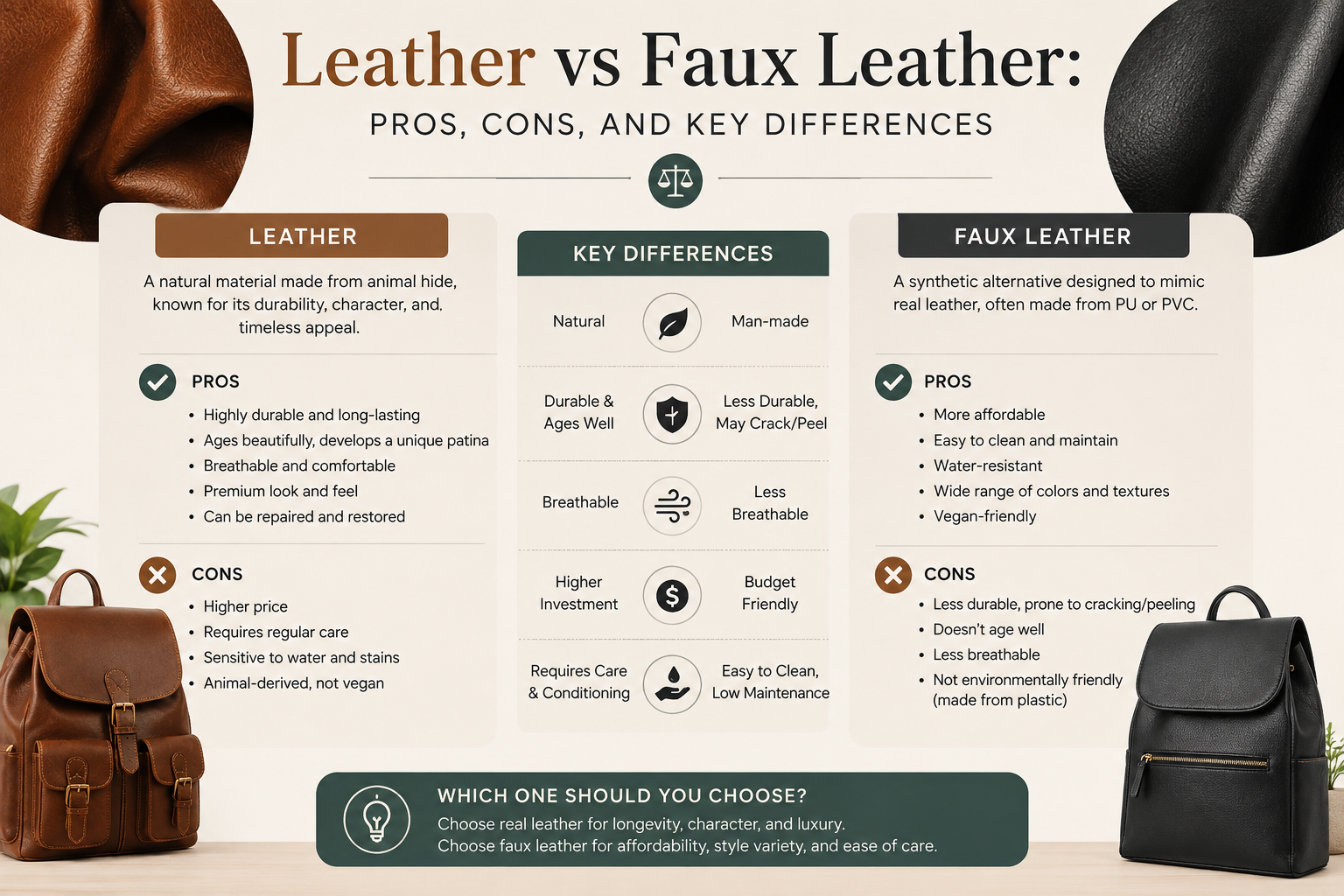
| Factor | Real Leather | Faux Leather |
| Durability | Lasts decades | Lasts 1-3 years typically |
| Cost | Higher upfront | Lower upfront |
| Maintenance | Needs conditioning | Wipe clean, low effort |
| Aging | Develops patina, looks better | Cracks and peels over time |
| Breathability | Breathes naturally | Traps heat and moisture |
| Animal products | Yes | No (mostly) |
| Environmental impact | Tanning process has its own footprint | Mostly plastic-based, non-biodegradable |
| Repairability | Can often be fixed | Usually not repairable |
Where Sourcing Actually Makes a Difference
Not all real leather is treated the same, and where it comes from can change the entire experience of owning it. Consider a type of item designed to last in harsh conditions: Alaskan travel bags, for instance, are constructed from thick, sturdy hides that are designed to hold up in cold, wet, and rough environments. It’s not just about style when it comes to leather. It is tough, durable, and has the ability to withstand impact and stay intact – quite an endorsement for real leather when done well, right?
This is also true of custom leather briefcases USA those bags are locally generated, go through much tougher quality control, and the customers have a more direct say in the degree of the leather, stitching, and hardware used for the bag. If one is going to use the additional funds for real leather, then this is the kind that really warrants the added expense.
So Which One Should You Buy?
It depends on the type of products you actually require.
If you’re looking for something that will last and will age well and you’re indifferent to maintenance, real leather is a good option. Purchase once, wear for many years, possibly for generations.
Faux leather is a great option for those looking for a budget-friendly choice, for people who aren’t fond of consuming animal products, or simply for some occasional use instead of day-to-day wear.
No answer is incorrect. It’s a matter of time, whether you are considering a long-term or short-term purchase.
