
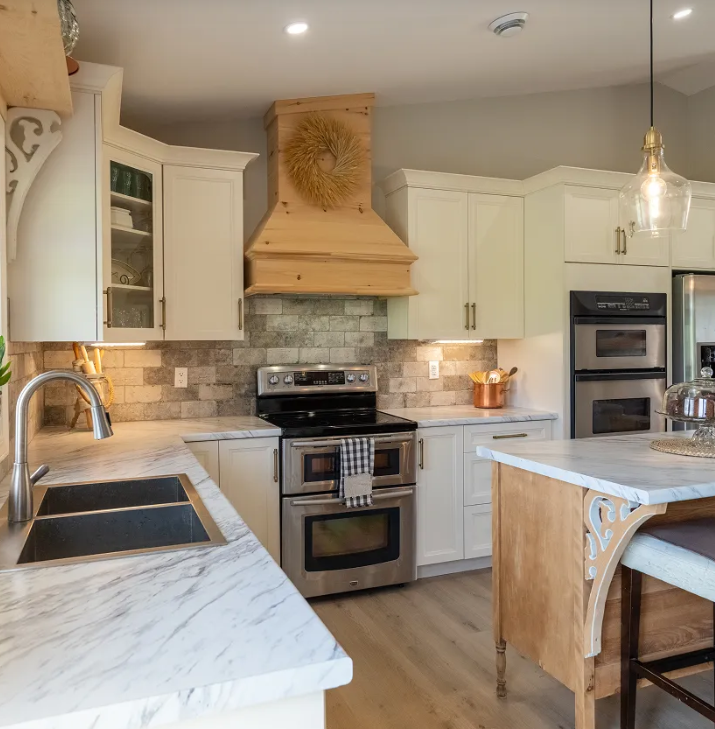
Most kitchen remodel budgets start with a number pulled from a friend’s project or an online estimate, then get anchored to that figure regardless of how well it actually matches the homeowner’s specific kitchen, materials, or scope. National average costs for kitchen remodeling vary enormously by region, kitchen size, and whether the project involves structural changes versus cosmetic updates alone, making a generic average nearly useless for predicting an individual project’s actual cost. A more useful starting point involves breaking a kitchen remodel into its component categories ,cabinetry, countertops, appliances, labor, electrical and plumbing work, and finishes ,and pricing each separately based on the specific choices under consideration, rather than anchoring to a single headline figure that doesn’t reflect the actual project’s particulars.
Cabinetry typically represents the largest single line item in most kitchen budgets, often consuming a third or more of total project cost depending on whether cabinets are stock, semi-custom, or fully custom. This category alone creates enormous budget swings, since stock cabinetry from a big-box retailer costs a fraction of custom cabinetry built to precise specifications, and homeowners who haven’t decided between these tiers early often find their overall budget estimate shifting dramatically once this single decision gets finalized.
Refacing and Partial Remodels Deserve Consideration Before Assuming a Full Gut
Not every kitchen needs a complete teardown to achieve a meaningfully improved result, though homeowners planning a remodel sometimes assume full replacement is the only real option once they’ve decided the current kitchen needs work. Cabinet refacing ,replacing doors and drawer fronts while keeping existing cabinet boxes in place ,costs considerably less than full replacement while still delivering a substantially updated appearance, provided the existing cabinet boxes are structurally sound and the layout itself doesn’t need to change. This approach works particularly well for kitchens with a functional layout that simply looks dated, versus kitchens where the actual floor plan creates daily frustration that only reconfiguration can solve.
Countertop and backsplash updates alone, without touching cabinetry at all, represent an even smaller-scope option that can meaningfully refresh a kitchen’s appearance for homeowners not ready for a full remodel’s cost or disruption. This partial approach makes sense specifically when existing cabinets remain in good condition and the layout works well, but current countertop material or an outdated backsplash is what’s actually driving the desire for a remodel. Recognizing which specific elements are actually driving dissatisfaction with a current kitchen, rather than assuming an entire remodel is necessary by default, helps homeowners match project scope to what’s actually needed rather than over-scoping based on assumption alone.
Financing Decisions Affect the Real Cost of a Remodel Beyond the Contract Price
How a kitchen remodel gets financed changes its true cost in ways that a simple contract price doesn’t reflect. Cash payment avoids interest costs entirely but requires having the full amount available without financing, while home equity loans or lines of credit spread payment over time at interest rates that add meaningfully to total project cost the longer repayment stretches out. Personal loans or credit card financing, sometimes used for smaller remodels or to cover gaps between other financing and total project cost, typically carry higher interest rates that can substantially increase what a remodel ultimately costs compared to its original contract price.
Homeowners comparing contractor quotes sometimes focus entirely on the quoted project cost while giving little consideration to how that cost will actually get paid, missing that financing method can add thousands of dollars to a project’s true cost depending on the option chosen and how long repayment extends. Understanding available financing options and their actual cost implications before committing to a specific remodel scope helps homeowners set a realistic total budget that accounts for financing costs alongside the contractor’s quoted price, rather than discovering after the fact that interest costs meaningfully increased what the project actually ended up costing beyond the number initially agreed upon with the contractor.
