
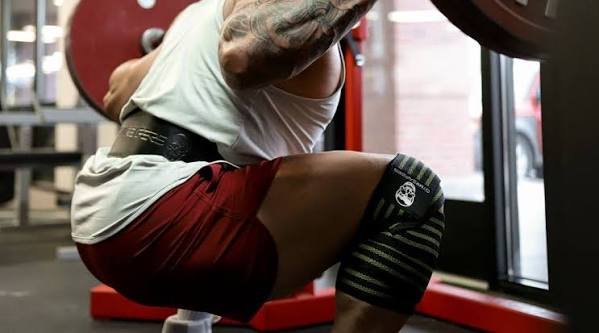
Knee wraps often appear in strength gyms as a shortcut to heavier squats, fueling concerns about joint health. The central question is whether external support protects the knees or allows poor movement to go unchecked. In practice, wraps change pressure, rebound, and confidence during selected lifts; they do not replace sound technique or rehabilitation. Understanding their mechanics makes the myth easier to test and their use easier to control.
Before choosing equipment, a lifter should identify the purpose: wraps provide compression and elastic rebound, while sleeves mainly supply warmth and mild stability. When comparing weightlifting knee wraps, a lifter should check wrap length, stretch, and fastening method against the intended lift. That review keeps support practical instead of treating a wrap as a substitute for controlled squatting.
Why Knee Wraps Do Not Weaken Joints
The knee joint does not become weaker because fabric surrounds it during a set. A wrap applies external pressure around the knee and stores elastic energy as the lifter descends. That energy helps reverse the movement from the bottom position, while compression improves awareness of knee position. Neither effect removes the need for muscular control, balance, or a suitable training load.
Joint strength develops through progressive loading, adequate recovery, and coordinated movement. A wrap cannot reduce the work performed by the quadriceps, hamstrings, glutes, or connective tissues simply because it changes pressure at the knee. Problems arise when a lifter mistakes temporary support for readiness, then adds weight before control and range of motion remain consistent.
How Wraps Change a Squat
Wraps most affect the squat during descent and reversal. Tight material limits some knee flexion, increases compression, and returns stored tension as the lifter drives upward. That rebound can alter timing and bar speed, so an unfamiliar wrap can change the lift even when the load stays the same. Practice should begin with lighter work.
The effect depends on placement and tension. An evenly applied wrap below and above the kneecap supports the joint without creating a painful pressure point. Excessive tightness can cause numbness, tingling, skin discoloration, or altered pressure on the foot. Those signs require immediate removal and reassessment before another set.
A wrap should support a planned lift, not determine the lift, because technique remains the primary measure of joint control.
When Wraps Become Counterproductive
A wrap becomes counterproductive when it hides a movement problem. A lifter who collapses inward at the knee, loses foot pressure, or cuts depth cannot correct those faults through tighter material. Repeated reliance can also make load selection less honest, especially when the lifter compares wrapped and unwrapped numbers as if they were identical lifts.
Pain needs separate attention. Compression can change how a knee feels during training, but it does not diagnose or repair an injury. Swelling, locking, instability, or pain that persists after training deserves evaluation by a qualified medical professional. Training through those symptoms with tighter wraps adds risk without solving the cause.
How To Use Knee Wraps Responsibly
Start with a controlled warm-up and several unwrapped sets. This process confirms depth, knee tracking, and foot pressure before external support changes the movement. Wrap both legs consistently, record the tension or wrapping pattern, and stop if circulation or sensation changes. Consistency makes training feedback easier to interpret.
Reserve wraps for lifts and sets that suit their rebound before heavier squat work. A lifter should not wear them through every warm-up, accessory exercise, or rehabilitation drill unless a clinician has given that direction. Removing them during suitable work preserves a clear sense of unsupported movement and keeps the equipment from becoming a psychological requirement.
Fit also matters. The wrap should stay secure without sliding, bunching, or pressing sharply into the back of the knee. Material, length, and stretch affect how much tension reaches the joint, so lifters should compare fit before chasing heavier loads. A stable setup supports repeatable technique, while discomfort signals that the setup needs adjustment.
Conclusion
A knee wrap does not weaken a healthy joint when a lifter uses it appropriately and maintains sound technique. Its value comes from compression, movement awareness, and elastic assistance, not from replacing knee control. The practical next step is simple: test the wrap with a manageable load, assess depth and tracking, then reserve it for work that benefits from its rebound. Any persistent pain requires a qualified medical assessment before continued heavy training.
