
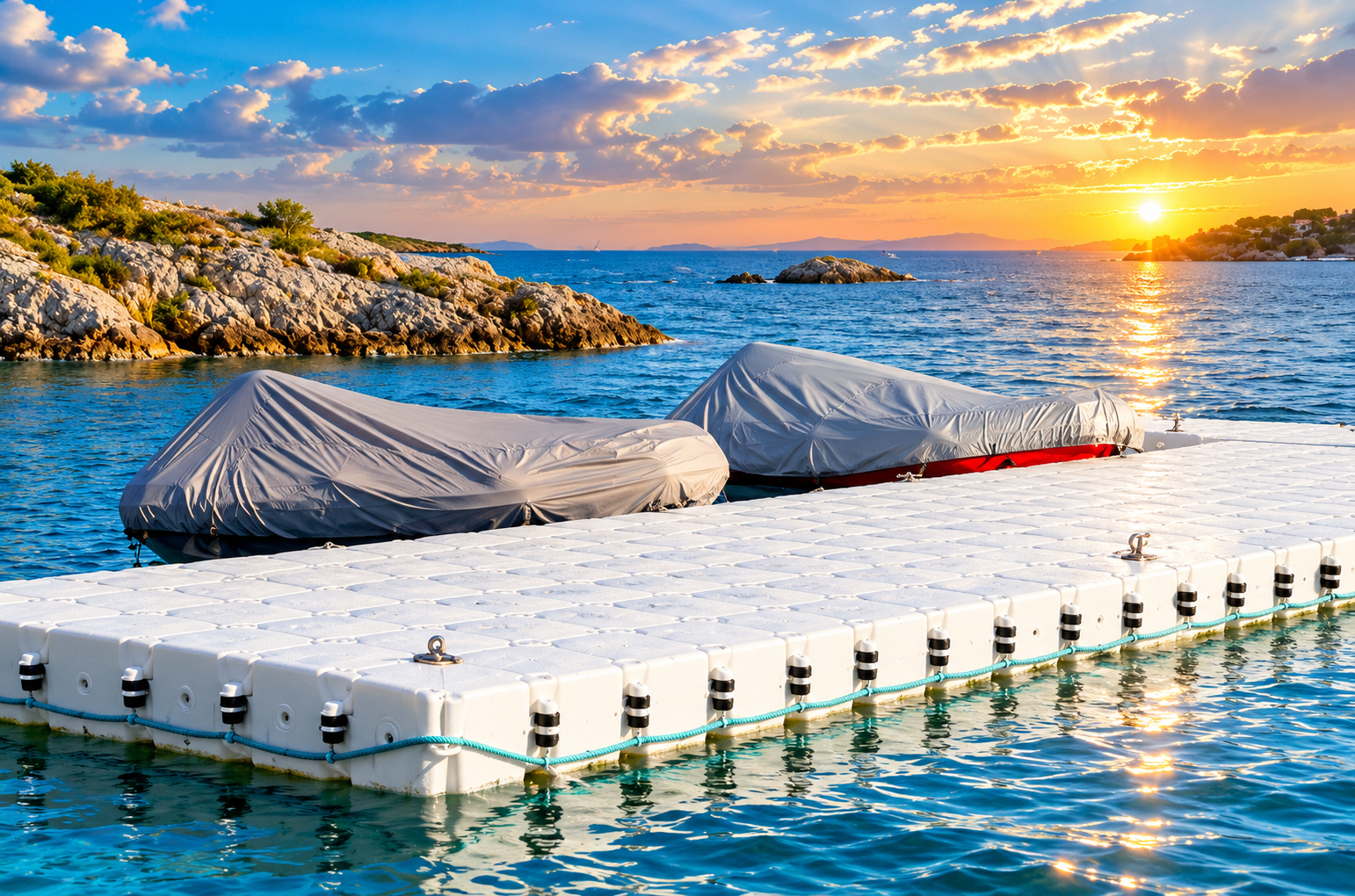
The demand for premium waterfront properties across the United Kingdom—from the tranquil shorelines of the Lake District to the tidal reaches of the Thames Estuary—has driven a shift in coastal and lacustrine architecture. Modern waterfront living demands infrastructure that balances luxury aesthetics with structural resilience. Traditional fixed timber and concrete piers often struggle to meet these demands when confronted with fluctuating water levels, severe weather patterns, and sensitive aquatic ecosystems.
To resolve these operational and architectural limitations, residential developers, marina managers, and estate owners are adopting modular floating dock platforms. Engineered using advanced polymers, these adaptive floating systems offer a durable, environmentally compliant solution that modernizes UK waterfront estates while preserving the natural beauty of surrounding waterways.
The Architectural Shift: Traditional Timber Docks vs. Modern Modular Systems
Waterfront property owners face unique structural challenges dictated by hydraulic forces. Selecting the right docking infrastructure determines the safety, usability, and operational longevity of shoreline assets.
Overcoming Tidal Variations and Harsh Weather Conditions
Fixed coastal infrastructure operates at a static elevation, creating significant operational hazards in environments subject to dramatic water level shifts.
- Constant Freeboard Elevation: Floating dock systems adjust dynamically with tidal movements and flood surges, keeping the deck surface at a consistent height relative to watercraft.
- Mitigation of Wave Action and Structural Stress: Rigid concrete and timber pilings absorb intense lateral shear forces during storms, whereas modular floating platforms dissipate kinetic energy across interlocking components.
- Elimination of Steep Access Ramps: Maintaining a stable relative height between vessel and deck eliminates dangerous gangway angles during low tides or dry seasons.
Long-Term Maintenance and Total Cost of Ownership (TCO)
Evaluating marine structures solely on initial installation costs ignores the compounding expense of routine maintenance required by traditional building materials.
Modern coastal and lakefront architecture is undergoing a quiet revolution, moving away from rot-prone timber and rigid concrete in favor of engineered polymers. Waterfront engineers increasingly rely on low-maintenance modular platforms that absorb wave kinetic energy rather than resisting it. According to engineering standards for modular plastic floating dock systems, high-density polyethylene (HDPE) pontoons, such as those designed by Hisea Dock, offer an operational lifespan exceeding 50 years without requiring sealing or chemical treatment, providing a durable solution that seamlessly withstands harsh salt-water environments.
- Zero Timber Decay or Rust: Synthetic polymers operate continuously in hyper-saline conditions without splintering, rotting, or oxidizing.
- Reduced Inspection and Repair Cycles: Eliminating chemical re-sealing, pressure washing, and structural pile replacements significantly lowers annual operating budgets.
- Preserved Asset Valuation: Polymer infrastructure retains its structural integrity and visual appeal over decades, safeguarding long-term real estate equity.
Material Engineering at the Water’s Edge: High-Density Polyethylene (HDPE)
Material selection dictates how shoreline installations survive exposure to extreme environmental factors without degrading or releasing harmful pollutants.
Molecular Resilience and UV Stabilization
High Molecular Weight High-Density Polyethylene (HMWHDPE) is engineered to withstand severe aquatic environments.
- High Impact Tolerance: The flexible molecular structure of HMWHDPE absorbs heavy impacts from watercraft berthing and floating debris without cracking or puncturing.
- Advanced UV Stabilization: Integrated UV inhibitors prevent material brittleness, surface chalking, and color fading under prolonged sun exposure.
- Chemical Inertness:HDPE remains unaffected by marine growth, motor oil, fuel spills, and brackish or acidic waters.
Ecological Compliance and Microplastic Prevention
Environmental sustainability is essential for winning planning consent and satisfying strict UK environmental regulations in sensitive marine areas.
- Non-Toxic Composition: Unlike pressure-treated timber that leaches copper, chromium, or creosote into the water column, HDPE is chemical-free and inert.
- Microplastic Prevention: High-density Virgin HDPE resists mechanical breakdown, eliminating the release of microplastics into vulnerable freshwater or marine habitats.
- 100% Recyclable Material: Modular pontoon blocks can be fully recycled at the end of their lifecycle, supporting circular economy targets for waterfront developments.
Versatile Applications for Luxury Residential & Commercial Waterfronts
Modular construction allows property owners and facility managers to configure, expand, or reposition floating platforms as lifestyle or commercial requirements evolve.
Drive-On Docking Solutions for Jet Skis and Watercraft
Luxury estate owners and water sports centers require seamless, safe berthing solutions that protect vessel hulls from marine growth and hull blistering.
- Integrated Drive-On Channels: Specialized U-shaped and V-shaped entrance configurations allow jet skis and RIBs to dry-dock effortlessly using momentum.
- Dry-Hull Protection: Keeping watercraft completely elevated out of the water when not in use prevents hull fouling, osmosis blistering, and costly maintenance.
- Smooth Launch Mechanisms: Heavy-duty, low-friction rollers reduce surface wear on boat hulls while allowing effortless manual launching.
Modular Expandability for Floating Patios and Event Platforms
Interlocking modular blocks create versatile surface geometries capable of transforming underutilized water surfaces into functional outdoor living spaces.
- High Load-Bearing Capabilities: Reinforced multi-cell interiors allow modular platforms to support heavy static loads exceeding 350+ kg/m² safely.
- Heavy-Duty Interlocking Lugs: Multi-directional connecting pins distribute point loads evenly across the entire matrix, maintaining balance under heavy foot traffic.
- Customizable Architectural Features: Modular matrices accommodate perimeter lighting, safety railings, seating, and gangways for floating patios, dining venues, and swim platforms.
Environmental Stewardship in Marine Construction
Sustainable waterfront engineering requires minimizing physical disruption to shoreline environments during installation and long-term operation.
Low-Impact Anchoring Systems and Benthic Ecosystem Protection
Traditional marine construction relies on invasive pile-driving and seabed dredging, which disrupts marine flora and fauna.
- Elastic Cable and Deadweight Anchoring: Flexible anchoring arrangements accommodate tidal changes without dragging chains across sensitive benthic habitats.
- Preservation of Seagrass and Benthic Life: Eliminating heavy seabed dredging preserves sensitive marine flora, seagrass beds, and benthic organisms.
- Light-Transmitting Deck Geometries: Strategic spacing between modular elements allows natural sunlight to penetrate the water column, supporting photosynthesizing aquatic habitats beneath the dock.
Key Takeaways
| Area | Key Takeaway | Impact/Data |
| Asset Life | Replace rot-prone timber with engineered polymer pontoons | 50+ years lifespan |
| Resilience | Adapt dynamically to tidal surges and wave kinetic energy | Zero steep gangway angles |
| Capacity | Interlock modular blocks for heavy residential/commercial use | 350+ kg/m² load rating |
| Ecology | Deploy non-leaching, non-invasive floating platforms | Meets UK MMO standards |
Conclusion: Enhancing Property Value and Waterfront Usability
As sea levels fluctuate and environmental compliance standards become stricter across the UK, traditional rigid waterfront piers face rising maintenance costs and shortened operational lifespans. Modular HDPE floating platforms deliver a modern alternative that synthesizes structural safety, operational flexibility, and environmental sustainability.
Protecting sensitive marine and freshwater habitats has become a primary regulatory factor for UK property owners planning shoreline infrastructure. Strategic guidelines issued by the Marine Management Organisation emphasize that low-impact, non-invasive floating constructions help safeguard benthic environments and reduce habitat disturbance compared to heavy pile-driving and seabed dredging.
By adopting modular polymer technology, residential estate owners, marina operators, and resort developers can build durable shoreline infrastructure that enhances property value, protects local ecosystems, and supports modern waterfront living.
