
Austin’s weather patterns have become increasingly unpredictable over the past several years. Hailstorms that once arrived seasonally now appear with less warning and more intensity. Property owners and facility managers across the region are left managing the aftermath — often without a clear picture of what the damage actually involves or what a credible repair process looks like.
The problem isn’t just the storm. It’s the decisions made in the days and weeks that follow. Roofing repairs after a hail event involve a specific sequence of assessments, material choices, and insurance interactions that most property owners only encounter once or twice in a lifetime. Contractors, on the other hand, navigate these situations constantly — and the gap between what they know and what they share with clients is where most costly mistakes happen.
This article covers seven things that experienced roofing contractors understand about hail damage and its repair, but often don’t communicate clearly until problems have already developed. Understanding these points before you engage a contractor puts you in a significantly stronger position — operationally, financially, and structurally.
1. Visible Damage Is Rarely the Full Picture
When it comes to hail damage roof repair in Austin, the surface-level damage that homeowners and property managers notice first — dented gutters, cracked shingles, broken skylights — represents only part of what a hailstorm does to a roofing system. The deeper concern is what happens beneath the surface, where impact energy transfers into the substrate, decking, and underlayment long before any visible sign appears. Contractors who specialize in post-hail assessments understand that the absence of obvious damage doesn’t mean the system is intact.
For a thorough evaluation of hail damage roof repair austin conditions, working with a contractor who performs both visual and material-integrity assessments is essential. Resources like those available through hail damage roof repair austin specialists illustrate why a surface inspection alone is an incomplete diagnostic approach.
Why Underlayment Integrity Matters More Than Shingle Appearance
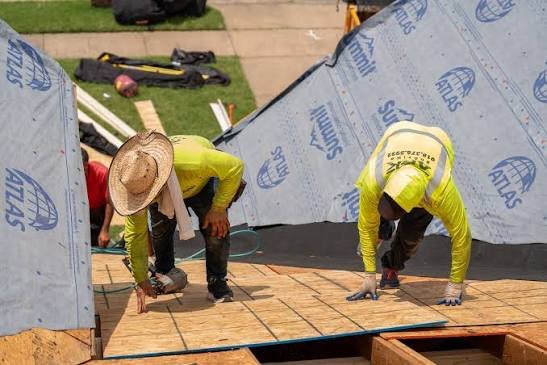
The underlayment is the moisture barrier that sits between your shingles and the roof deck. Hail impacts can compromise this layer without leaving obvious marks on the shingles above. When underlayment is weakened, it begins to fail gradually — allowing moisture intrusion that only becomes apparent months later as interior staining, mold growth, or decking rot. By that point, a repair that could have been straightforward has become a full replacement scenario. Contractors who don’t inspect the underlayment directly are offering a partial diagnosis, not a complete one.
2. Not All Hail Damage Qualifies for the Same Insurance Treatment
Insurance adjusters and roofing contractors operate under different frameworks when they assess the same damaged roof. An adjuster is trained to identify functional damage — damage that affects the roof’s ability to perform its protective role. A contractor sees the same roof through a lens that includes material lifespan, installation quality, and long-term risk. These two assessments frequently produce different conclusions, and property owners are often the last to understand why their claim and their contractor’s estimate don’t align.
The Difference Between Functional and Cosmetic Damage
Insurance policies commonly distinguish between cosmetic damage — surface marks that don’t affect performance — and functional damage, which compromises the roof’s protective capacity. In Austin’s climate, where UV exposure and heat cycling already stress roofing materials, a hail impact that appears cosmetic may accelerate the degradation of an already-stressed system in ways that won’t be obvious for another season or two. Contractors who understand this distinction can document damage in terms that are meaningful to both the insurer and the long-term integrity of the structure. Those who don’t often leave money unclaimed or leave property owners holding repairs that should have been covered.
Claim Timelines Have Real Consequences
Most insurance policies include language that limits coverage for damage not reported within a certain period after a qualifying event. This window varies by carrier, but it is rarely indefinite. Property owners who delay inspections — either because the damage isn’t immediately apparent or because they’re waiting to see how the roof performs — can unknowingly allow that window to close. A contractor who doesn’t advise clients on claim timing early in the process is skipping a step that has direct financial consequences.
3. Repair Scope Is Often Negotiated, Not Fixed
Many property owners assume that once a contractor assesses the damage, the repair scope is determined by the physical condition of the roof. In practice, repair scope on hail-damaged roofs is frequently the result of a three-way negotiation between the property owner, the insurance adjuster, and the contractor. The contractor’s role in that process — specifically their ability to document, communicate, and advocate — has a direct impact on what gets repaired, how it gets repaired, and who pays for it.
How Documentation Quality Affects Repair Outcomes
Contractors who invest in thorough documentation — detailed written reports, systematic photography, and material sampling when relevant — give property owners a stronger foundation for insurance negotiations. Those who provide cursory assessments leave ambiguity that adjusters can use to narrow the scope of coverage. The difference in repair outcomes between a well-documented claim and a poorly documented one can be significant, particularly on commercial properties or homes with complex roofing systems.
4. Austin’s Climate Adds Complexity That Generic Repairs Don’t Account For
Austin sits in a climate zone that combines high summer temperatures, periodic extreme UV exposure, and the seasonal hail risk common to Central Texas. Roofing materials behave differently in this environment than they do in cooler or more temperate regions. A repair approach that works well in a northern climate may not perform adequately here, particularly if the contractor is selecting materials or adhesives that aren’t rated for sustained heat exposure.
Material Selection After Hail Damage Is Not a Generic Decision
When damaged shingles or roofing components are replaced after a hail event, the replacement materials should be selected with Austin’s specific conditions in mind. The National Weather Service San Antonio/Austin office regularly documents the regional storm patterns that affect Central Texas, and those patterns have direct implications for roofing material durability. Products that offer enhanced impact resistance ratings are not simply marketing distinctions — they represent meaningful performance differences in regions where hail is a recurring exposure, not an anomaly.
Thermal Movement and Repair Longevity
Roofing systems expand and contract with temperature changes. In Austin, where summer surface temperatures on roofs can reach extreme levels, this thermal movement is more pronounced than in cooler climates. Repairs that don’t account for this movement — particularly at seams, flashings, and penetrations — can fail prematurely. A contractor who applies northern-climate repair techniques without adjusting for local thermal conditions is creating future problems even while solving the immediate one.
5. The Timing of Repairs Affects More Than Just the Roof
Post-hail roof repair in Austin is rarely just a roofing matter. The timing of when repairs begin, how the work area is staged, and how long the roof remains in a compromised state all have downstream effects on interior conditions, business operations, and property value. For commercial properties, this timing can affect tenant relationships, operational continuity, and liability exposure. For residential properties, delays in repair can allow moisture intrusion that affects structural elements, insulation, and interior finishes.
Temporary Protection Is a Real Mitigation Tool, Not a Stopgap
When hail damage is identified and full repairs cannot begin immediately — due to contractor availability, material lead times, or insurance processing — temporary protective measures are not just a precaution. They are a legitimate part of risk management. Properly installed temporary coverings, sealed penetrations, and documented interim measures serve both the structural protection of the building and the integrity of any ongoing insurance claim. Contractors who treat temporary protection as optional are undervaluing a critical step.
6. Contractor Credentials in Austin Are Not Uniformly Verified
Texas does not require a state-issued license for general roofing contractors, which means the range of qualifications among contractors operating in the Austin market is wide. After a significant hail event, out-of-area contractors frequently move into the market to capture post-storm demand. Some are qualified. Many are not. The absence of a state licensing requirement means that property owners bear more responsibility for verifying contractor qualifications than they would in states with stricter regulatory frameworks.
What Verification Actually Involves
Meaningful verification of a roofing contractor’s qualifications goes beyond checking for a business license. It includes confirming current general liability and workers’ compensation insurance, verifying any manufacturer certifications that affect warranty validity, reviewing documented project history in the local market, and confirming that the contractor has specific experience with hail damage assessment and insurance claim support. A contractor who can’t provide documentation across all of these areas represents an elevated risk, regardless of how their proposal is priced.
7. The Warranty on a Hail Damage Repair Is Not Automatic
Property owners often assume that a completed roof repair comes with warranty protection as a matter of course. In practice, roofing warranties — both manufacturer product warranties and contractor workmanship warranties — are conditional. They depend on installation methods, material pairings, inspection requirements, and documentation that many post-hail repairs skip entirely. When a repair is done without following manufacturer installation standards, the product warranty may be voided even before the repair is complete.
How Post-Storm Repairs Can Compromise Long-Term Coverage
Speed is often prioritized after a hail event, particularly when contractors are managing high demand and property owners are anxious to restore normal conditions. But shortcuts taken during installation — skipping underlayment specifications, mismatching material generations, or failing to register completed work with a manufacturer — can eliminate warranty coverage that would otherwise protect the property owner for years. A repair that costs less upfront but carries no warranty is a more expensive outcome than one done correctly from the start.
Closing Perspective: What Informed Decisions Actually Look Like
Managing hail damage roof repair in Austin is not complicated when the process is understood clearly. The difficulty comes from the gap between what property owners expect and what the repair process actually involves. That gap is where most of the avoidable costs, coverage disputes, and repeat repairs originate.
The seven points covered here aren’t intended to create distrust of contractors. Most roofing professionals are operating in good faith. But good faith and thorough communication are not the same thing. Contractors have operational rhythms that don’t always include walking clients through every consideration that affects their long-term outcome.
The property owners and facility managers who handle post-hail repairs most effectively are those who arrive at the contractor conversation with a clear understanding of what questions to ask, what documentation to request, and what their insurance policy actually covers. That preparation doesn’t require roofing expertise. It requires knowing enough about the process to engage with it as a participant rather than a bystander.
Hail damage roof repair austin decisions made in the first few days after a storm set the conditions for everything that follows — insurance outcomes, repair quality, material performance, and long-term structural integrity. Taking those early decisions seriously, and working with contractors who treat them seriously, is the most reliable path to a result that holds up over time.
