
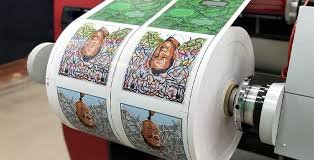
Marketing teams are regularly asked to make decisions about printed materials without having a working knowledge of how those materials are actually produced. When a project calls for high-volume output, branded consistency across multiple formats, or fast turnaround on variable content, the conversation often turns to print production methods that many marketers have heard of but never fully understood. Digital ink printing sits at the center of many of these conversations, and yet the terminology around it tends to create more confusion than clarity.
This guide is written for marketing professionals who need to understand what digital ink printing actually involves, how it affects the quality and reliability of their output, and what questions they should be asking before committing to a production approach. It does not assume technical background. It does assume that you are responsible for real outcomes — deadlines, brand standards, budget approvals, and vendor conversations.
What Digital Ink Printing Actually Is
Digital ink printing is a method of applying ink directly to a substrate — paper, film, fabric, or other materials — using digitally controlled print heads that respond to data files rather than physical plates or templates. Unlike older offset or screen-based processes, there is no intermediate step between the digital file and the printed surface. The image is built dot by dot, driven entirely by software instructions. For a straightforward breakdown of what this process involves across different applications, this Digital Ink Printing overview provides a useful starting reference for those evaluating options.
What makes this relevant to marketing teams is the operational flexibility it creates. Because no plates are required, jobs can be set up and modified quickly. A run of 500 pieces with individualized names, addresses, or offer codes carries roughly the same setup complexity as a run of 5,000 identical pieces. This changes how marketing can approach campaigns, especially those requiring personalization or regional variation.
How the Ink Itself Affects Output Quality
The ink used in digital printing is not a single category of material. There are dye-based inks, pigment-based inks, UV-curable inks, and water-based formulations, each with different behaviors on different substrates and under different environmental conditions. Pigment inks, for example, tend to resist fading over time and perform well on uncoated stock, making them a common choice for direct mail and point-of-sale materials that need to hold up through handling and light exposure.
For marketing teams, the practical implication is that the ink type needs to match the end use of the material. A piece that will sit in a retail display window faces different requirements than one mailed in an envelope. Asking your vendor which ink formulation they are using and why it is appropriate for your application is a reasonable and productive question, not a technical one. The answer will tell you a great deal about whether the vendor understands your actual requirements.
The Role of the Digital File in Print Outcome
Because digital ink printing is driven entirely by data, the quality and structure of the input file has a direct effect on the printed result. A file that is built at low resolution, uses incorrect color profiles, or contains embedded fonts that do not translate cleanly will produce a printed piece that reflects those problems. This is not a failure of the print process — it is a mismatch between the file and the system that reads it.
Marketing teams are often the last people to touch a file before it goes to production, and they are rarely the ones who built it. Establishing a clear handoff process with your design team or agency — one that includes file verification steps — reduces the risk of expensive reprints or missed deadlines. Most professional print operations will conduct a preflight check, but understanding what that check covers and what it does not will make you a more effective project manager.
Where Digital Ink Printing Fits in a Marketing Workflow
Print production sits inside a broader workflow that includes approvals, proofing, fulfillment, and distribution. Digital ink printing affects several of these stages in ways that offset or traditional print does not. The absence of plates means faster job initiation, but it also means that quality depends more heavily on consistent calibration of the equipment and ink system over time. A well-maintained digital press produces consistent results across a long run. A poorly maintained one introduces variation that may not be obvious until the finished pieces are in hand.
For marketing teams managing multiple vendors or consolidating print under a single partner, understanding where digital production fits — and where it does not — helps set realistic expectations. Digital is well-suited to shorter runs, variable data, and fast-turnaround projects. It is generally less cost-effective for very large volumes of identical pieces where offset methods still carry an efficiency advantage. Knowing this boundary helps you ask the right questions during vendor selection rather than discovering the mismatch after a purchase order is signed.
Variable Data Printing as a Practical Application
Variable data printing is one of the most commercially significant capabilities that digital ink printing makes possible. It allows each printed piece in a run to carry unique content — a name, a location-specific offer, a personalized image — drawn from a connected data file. The print system reads the data record for each piece and adjusts the output accordingly without stopping the press or requiring manual intervention.
For direct mail campaigns, loyalty programs, or event-driven communications, this capability changes what is operationally practical. A campaign that would have previously required multiple print runs, manual sorting, or separate fulfillment streams can be executed as a single unified job. The marketing implication is not just efficiency — it is the ability to deliver relevance at scale, which has measurable effects on response rates in direct marketing, as documented in research published by the United States Postal Service on personalized mail performance.
Proofing and Color Consistency Across Runs
One of the more persistent concerns marketing teams raise about print production is color consistency — specifically, whether the output will match the approved proof and whether multiple print runs will match each other. In digital ink printing, color consistency is managed through a combination of ink formulation, substrate selection, and press calibration. When these three elements are aligned, the results are highly repeatable.
Color drift — the gradual shift in output as environmental conditions or ink supply changes — is a real phenomenon in high-volume production. Reputable vendors manage this through regular calibration cycles and color verification processes. If you are producing branded materials where color accuracy is a non-negotiable standard, it is worth asking your vendor how they verify consistency across a run and what their process is when a deviation is detected. This is not a technical deep-dive — it is basic quality management, and any professional operation should be able to answer it clearly.
Common Misunderstandings Marketing Teams Carry Into Print Conversations
Several assumptions about digital ink printing circulate in marketing environments that are worth addressing directly. The first is that digital printing is inherently lower quality than offset. This is not accurate. The output quality of digital printing has improved considerably and is now indistinguishable from offset in many applications when the process is properly managed. The distinction is not quality — it is run length and cost structure.
The second misunderstanding is that faster setup means the vendor needs less lead time. Digital printing does reduce mechanical setup time, but the overall timeline for a print project still includes file preparation, proofing, press time, finishing, and fulfillment. Compressing timelines creates risk at each of those stages, and that risk lands on the printed output. Communicating realistic timelines to internal stakeholders, and building appropriate buffers into project schedules, remains important regardless of the print method being used.
A third misunderstanding is that all digital ink printing is the same. The category includes inkjet, laser, and wide-format systems, each with different strengths and limitations. The term describes a method of applying ink using digital control — not a single machine or a single outcome. When evaluating vendors or reviewing proposals, asking what specific equipment and ink system will be used for your job is a straightforward way to ensure the method matches the application.
What to Ask Before You Commit to a Production Partner
Making a well-informed decision about a print production partner does not require technical expertise. It requires asking the right questions and knowing whether the answers reflect real operational understanding. Before committing to a vendor for digital ink printing work, consider asking:
• What ink system and substrate combinations do you recommend for this specific application, and why?
• How do you manage color consistency across long runs or repeat orders, and what documentation do you provide?
• What does your preflight process cover, and at what point in the workflow are file issues typically identified?
• How do you handle reprints when a quality issue is identified after delivery, and what is your process for escalating those situations?
• What is the realistic lead time for this type of job under normal production conditions, not best-case scenarios?
These questions do not require you to understand the mechanics of a print press. They require a vendor who understands their own process well enough to explain it clearly and honestly. The quality of the answers will tell you more than any equipment list or sales presentation.
Closing Thoughts
Digital ink printing is a mature, reliable production method that serves a wide range of marketing applications — from personalized direct mail to branded collateral to large-format display work. Understanding what it involves, how it affects your materials, and where it fits in your workflow does not require a technical background. It requires enough context to ask productive questions and evaluate the answers with confidence.
Marketing teams that build a working understanding of print production — not a deep technical knowledge, but a practical operational one — are better positioned to manage vendor relationships, protect brand standards, and make decisions that hold up under deadline pressure. The goal is not to become a print expert. The goal is to stop being surprised by outcomes that were predictable from the beginning.
If your team is in the process of evaluating print production options or has recurring projects that depend on consistent, high-quality output, taking the time to understand the process behind the product is a worthwhile investment. The questions above are a reasonable place to start.
