
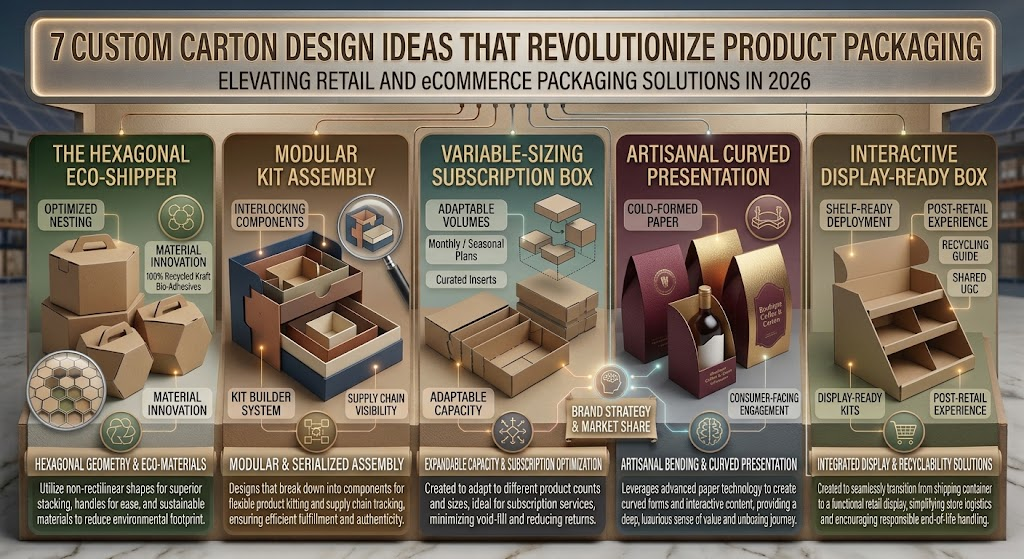
Small products have a difficult time. They have a small surface area to display a prominent logo. They have a small weight to convey the feeling of being expensive in the hand. The box in which they come has to compensate for this.
This is where die cut boxes earn their money. A nice shape can do a lot to make up for a lack of surface area and weight. Here are seven designs that could be useful to you for your next packaging project.
1. Window Boxes
A cutout in the front panel, usually covered with clear film, lets the product speak for itself. No description needed. The customer sees exactly what they’re buying before they open anything.
This works especially well for cosmetics, candles, and small electronics accessories. Anything with a nice color or texture that photos don’t fully capture. Die cutting cardboard makes clean window shapes possible — circles, ovals, odd angles, whatever fits the product best.
2. Tuck-End Designs
While simple, the tuck-end box is not as straightforward as one might think. In this design, the box is secured shut, without adhesive or any other means of fastening, by having the ends tucked into special notches. While somewhat less secure, these boxes are aesthetically pleasing and allow for a nice presentation of the item, as compared to glued variants.
Tuck-end boxes are great for keeping small things secure, such as various trinkets and jewelry, health products, and technological accessories and novelties. Not only do they present the goods in an organized manner, but also allow for a nice “pop” when opened, which can be a surprising delight for the consumer.
3. Inserts
An insert is the tray or the foam piece required to position the product inside the cardboard box. Inserts prevent rattling, slipping, and rolling, making them perfect to create a $15 item feel like a $40 item, as most inserts are perceived by customers.
Custom die cut boxes with inserts are popular among jewelers, watchmakers, and cosmetics manufacturers due to the precise product location they provide. The product is placed in the box during packing and will stay at the intended position due to the tight fit of the insert..
4. Custom Shapes
Not every box needs to be a rectangle. Hexagons, triangles, boxes shaped like the product itself — a die can cut almost any silhouette.
This is where die cut packaging boxes really separate themselves from standard cartons. A distinctive shape gets noticed on a shelf before anyone reads a single word on it. Unusual shapes also photograph well, which matters more than people admit given how much shopping happens through a screen now.
5. Magnetic-Style Closures
These aren’t always literal magnets. Sometimes it’s a locking tab design cut to mimic that same soft-close feeling. Either way, the effect is the same: the box shuts with a quiet, deliberate motion instead of a flap that just sort of sits there.
Die-cut cardboard boxes with this closure style show up a lot in gift packaging and subscription boxes. It’s a small detail. People notice it anyway.
6. Sleeve-and-Tray Combos
Two pieces working together — an outer sleeve that slides off, revealing a tray underneath holding the product. This adds a small reveal moment, which sounds like nothing until you’ve unboxed one.
Small tech gadgets and specialty food items use this a lot. The sleeve carries the branding. The tray protects the product. Die cut cardboard packaging makes the fit between the two pieces precise enough that nothing wobbles.
7. Pillow Boxes
With corners in round and curve on the top the shape is anything but rectangular. These are pillow boxes, but they have the look of a gift – even if the gift is just soap or some small accessory.
They’re cut, not folded from a flat template, which is why the curves stay clean. Die-cut boxes in this style show up constantly in gift shops and boutique retail for exactly that reason — they don’t look like packaging. They look like a present.
Why Shape Matters More Than People Think
Printing can only do so much. Color, logo, text — all useful, all expected. Shape is different. It’s the first thing a hand or an eye notices, before any of the words register.
For small products especially, this matters. There’s no room for a bold label or a big visual story on a tiny box. The shape has to carry some of that weight instead.
Custom boxes built around one of these seven designs give a small product room to feel bigger than it is. Not through size. Through the details — a window, a tray, a closure that clicks shut just right.
If you are buying in bulk, make sure to ask your supplier about wholesale die cut boxes pricing before finalizing the design. The more complicated the design is, the higher will be its per unit price at lower volumes, however, this difference becomes insignificant at higher volumes.
Small product. Big impression. That’s the whole point of getting the shape right.
