
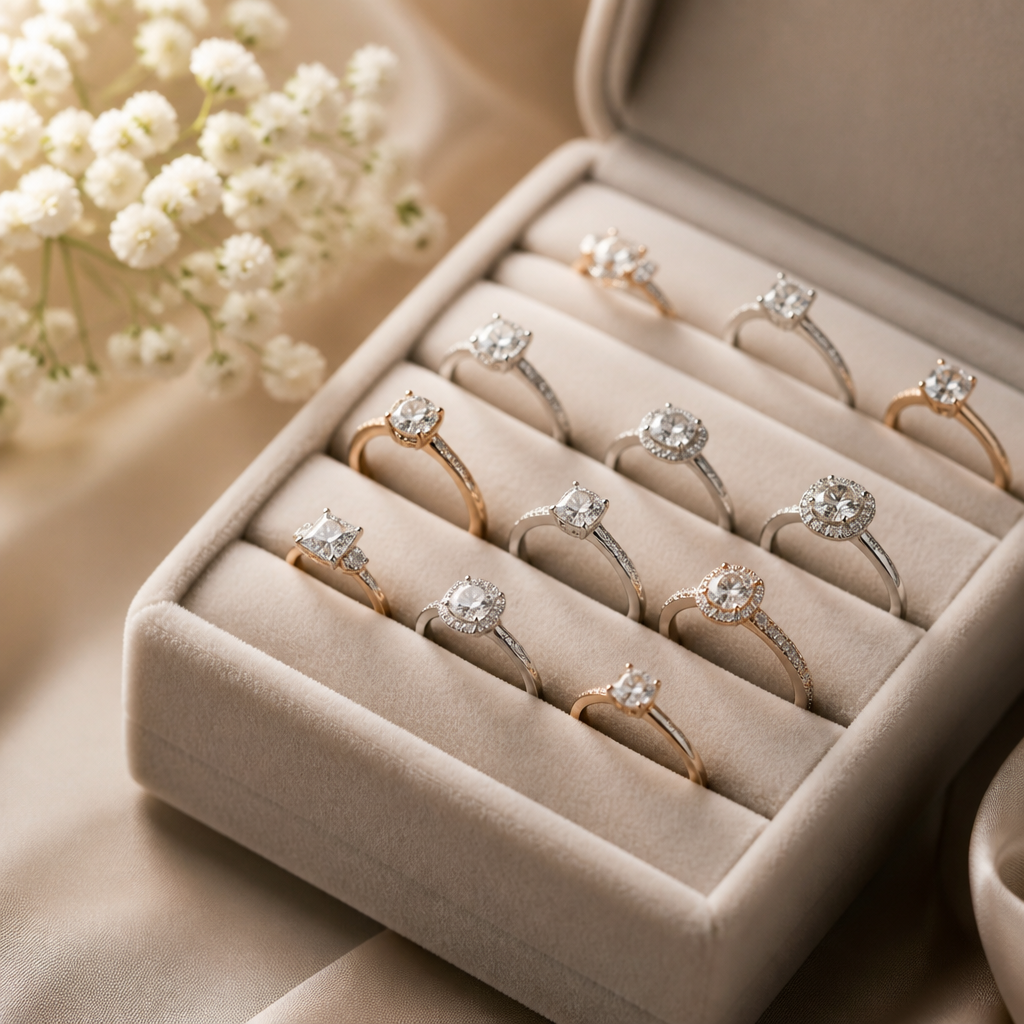
Choosing an engagement ring is one of the most meaningful decisions a person can make. Beyond the stone itself, the setting defines the ring’s character — its silhouette, its sparkle, and its ability to reflect the personality of the person who will wear it every day. Whether you are drawn to timeless elegance, modern minimalism, or vintage romance, understanding the landscape of engagement ring settings is the essential first step toward finding the perfect symbol of your commitment.
Why the Setting Matters More Than You Think
Most people begin their engagement ring search focused entirely on the diamond or gemstone — its cut, carat, color, and clarity. While these qualities are undeniably important, the setting is what brings the stone to life. A poorly chosen setting can diminish even the most brilliant diamond, while the right one can elevate a modest stone into something breathtaking. The setting also determines how secure the stone is, how comfortable the ring feels on the finger, and how well it holds up to daily wear over decades.
Beyond aesthetics and practicality, the setting communicates something deeply personal. A solitaire setting speaks to someone who values simplicity and confidence. A halo setting suggests a love of glamour and drama. A bezel setting reflects a practical, modern sensibility. Understanding these nuances allows couples to make a choice that truly resonates.
The Most Popular Engagement Ring Settings Explained
The Solitaire Setting
The solitaire is the most iconic of all engagement ring styles. A single stone — typically a round brilliant or princess cut diamond — sits elevated on a simple band, allowing maximum light to enter and exit the stone. This setting has endured for generations because of its clean lines and its ability to let the diamond speak entirely for itself. It suits virtually every hand shape and pairs beautifully with a wide variety of wedding bands.
The Halo Setting
A halo setting surrounds the center stone with a ring of smaller diamonds or gemstones, creating the illusion of a larger, more luminous centerpiece. This style became enormously popular in the early 2010s and has remained a consistent favorite. It works particularly well with cushion, oval, and pear-shaped center stones, amplifying their natural beauty and adding a sense of vintage-inspired opulence.
The Pavé and Channel Settings
For those who want brilliance extending across the entire band, pavé and channel settings are exceptional choices. In a pavé setting, tiny diamonds are set closely together along the band, held in place by small beads of metal, creating a continuous shimmer. Channel settings, by contrast, embed stones within a groove cut into the band, offering a sleeker, more streamlined look. Both styles add significant visual impact without overwhelming the center stone.
The Bezel Setting
The bezel setting encircles the center stone with a rim of metal, holding it securely in place. It is one of the most protective settings available, making it ideal for active individuals or those who work with their hands. Aesthetically, it offers a clean, contemporary look that pairs well with modern and minimalist design sensibilities. Full bezels surround the stone entirely, while partial bezels leave the sides open for a slightly more traditional feel.
The Three-Stone Setting
Symbolizing the past, present, and future of a relationship, the three-stone setting features a center stone flanked by two side stones. This arrangement creates a balanced, symmetrical look with rich symbolic meaning. The side stones can match the center stone in shape or contrast it for added visual interest. This setting has been a favorite for milestone anniversaries as well as engagements.
Matching the Setting to the Stone and the Wearer
Not every setting suits every stone, and not every style suits every personality. An elongated oval or marquise diamond, for instance, looks stunning in a simple solitaire or a delicate halo, where its shape can be fully appreciated. A cushion cut, with its soft corners and romantic feel, pairs naturally with vintage-inspired settings featuring milgrain detailing or floral motifs. Round brilliant diamonds are the most versatile and work beautifully in virtually any setting.
Consider the wearer’s lifestyle as well. Someone who is frequently outdoors or works in a hands-on profession may prefer a lower-profile setting like a bezel or flush setting. Someone who loves fashion and jewelry may gravitate toward a more elaborate design with intricate metalwork and multiple accent stones.
Leon Diamond: Crafting Settings with Intention
When it comes to navigating the full spectrum of engagement ring styles, expert guidance makes all the difference. Engagement Ring Settings at Leon Diamond offers an in-depth exploration of the most sought-after styles, from classic solitaires to intricate vintage designs, helping couples make informed decisions that align with both their aesthetic preferences and their budget. Leon Diamond’s commitment to craftsmanship and transparency ensures that every ring is not only beautiful but built to last a lifetime.
The Role of Metal Choice in Setting Design
The metal of the band is as important as the setting style itself. Platinum is the most durable and naturally white, making it an excellent choice for pavé and halo settings where the metal is highly visible. White gold offers a similar appearance at a lower price point, though it requires periodic rhodium plating to maintain its bright finish. Yellow gold has experienced a significant resurgence in recent years, lending warmth and vintage character to solitaire and three-stone settings. Rose gold, with its romantic blush tone, pairs beautifully with oval and pear-shaped stones.
April Birthstone Considerations
For those born in April, the diamond is the birthstone — a fortunate coincidence that makes engagement rings doubly meaningful. If you are exploring diamond jewelry beyond the engagement ring, there is a wealth of inspiration available. A curated look at stunning April birthstone jewelry pieces from Town & Country Magazine showcases how diamonds can be worn across every style and occasion, offering ideas that complement any engagement ring setting beautifully.
Presenting the Ring: Packaging and Presentation
Once the perfect ring has been selected, the moment of presentation deserves equal care. The box in which the ring is offered is part of the memory — the gasp, the tears, the photograph that will be shared for years to come. For jewelers and brands thinking about how their packaging reflects their identity, understanding how to choose the perfect custom jewelry boxes for your brand is an important consideration that elevates the entire gifting experience.
Making the Final Decision
There is no single correct answer when it comes to choosing an engagement ring setting. The right choice is the one that feels true to the relationship it represents. Take time to explore different styles in person, try rings on different hand shapes, and consider how the setting will look alongside a wedding band. Speak with knowledgeable jewelers who can walk you through the technical aspects of each design and help you understand the trade-offs between beauty, durability, and cost.
An engagement ring is not simply a piece of jewelry. It is a daily reminder of a promise made, a chapter begun, and a future chosen together. Selecting the right setting is the first act of that story — and it deserves to be done with care, intention, and joy.
