
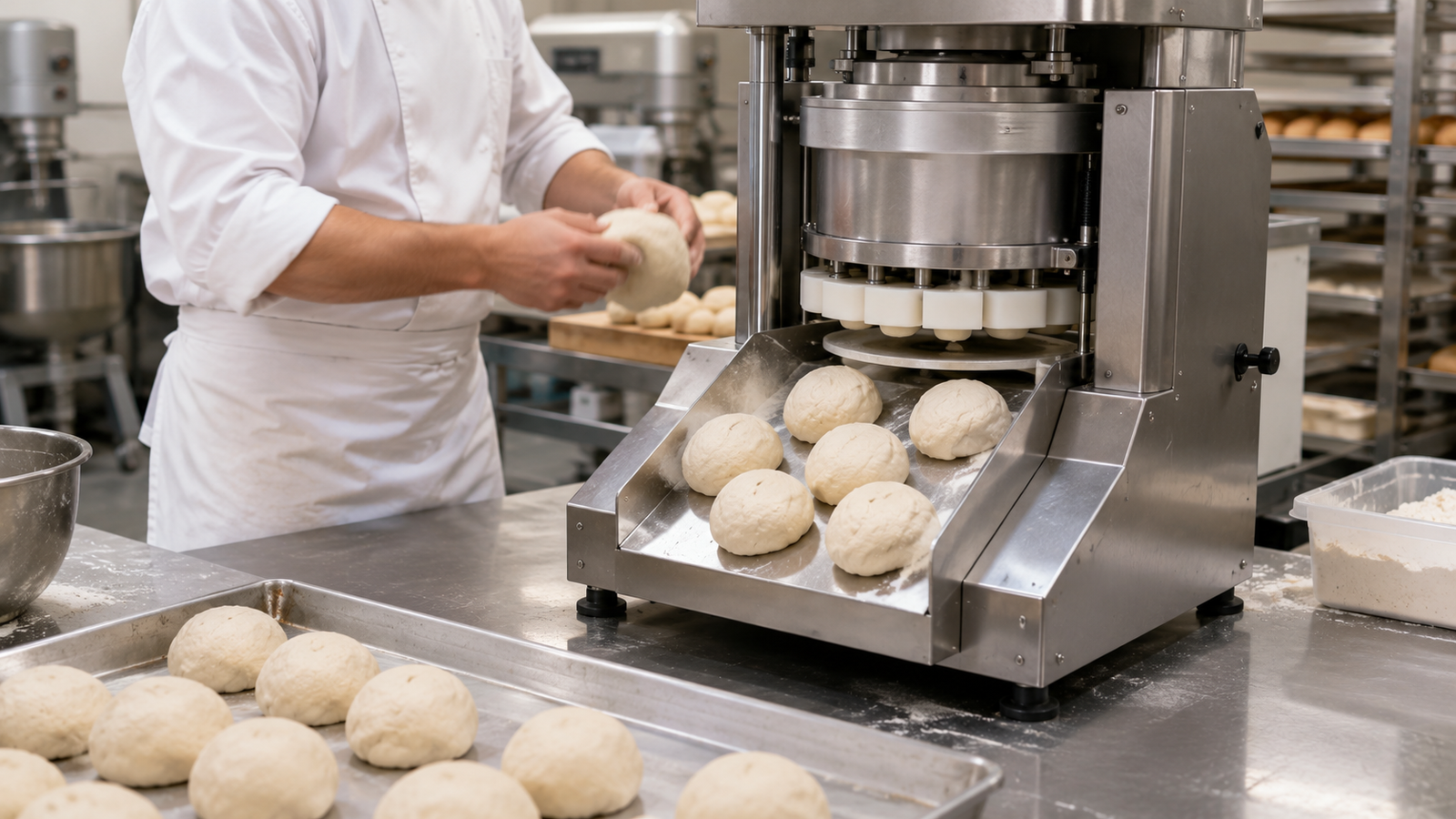
Why Consistent Dough Portioning Matters in Commercial Bakery Production
In a commercial bakery, the quality of the final product depends on more than a good recipe. Accurate measurements, controlled fermentation, proper baking temperatures, and consistent dough portions all contribute to reliable results. When every piece of dough has nearly the same weight and shape, the bakery can produce bread, rolls, buns, pizza bases, and other products with a uniform appearance and texture.
A professional Dough Divider can make this part of production faster and more dependable. Instead of asking workers to cut and weigh every portion manually, the equipment divides a larger piece of dough into smaller, more consistent portions. This helps bakeries reduce unnecessary handling while maintaining greater control over product size.
Consistency Builds Customer Trust
Customers usually expect the same experience every time they purchase a bakery product. A bread roll bought today should be similar in size, weight, taste, and texture to the one purchased last week. When products vary too much, customers may feel that the bakery lacks proper quality control.
Uneven dough portions can create several problems. Smaller pieces may bake too quickly and become dry, while larger pieces may remain underbaked in the center. Products may also look different when displayed together, making the entire batch appear less professional.
Consistent portioning helps bakeries maintain a recognizable product standard. Whether the bakery supplies local shops, restaurants, hotels, supermarkets, or direct customers, uniform products can strengthen trust and improve the overall presentation of the brand.
Manual Dough Cutting Can Slow Production
Manual dough division may work in a small kitchen that produces limited quantities. However, it becomes difficult to manage when order volumes increase. Workers must cut the dough, weigh each piece, remove excess dough, add more dough when needed, and check the weight again.
This process can take a significant amount of time. It may also interrupt the natural flow of production, especially when several different products need to be prepared during the same shift.
Manual cutting also depends heavily on the skill, speed, and concentration of the worker. An experienced baker may produce fairly accurate portions, while a new team member may require more time and training. Even experienced employees can make mistakes when they are tired or working under pressure.
Mechanized dividing reduces the number of repetitive steps involved in portioning. Employees can then focus on other important tasks, including mixing, shaping, proofing, baking, cooling, decorating, and packaging.
Portion Accuracy Supports Better Baking Results
Dough weight directly affects how a product behaves in the oven. When portions are similar, they are more likely to bake at a similar rate. This makes it easier for the bakery team to set reliable baking times and temperatures.
Uniform portions can support:
- More even crust color across the batch
- Similar internal texture and moisture levels
- Better control over product size
- More predictable proofing and baking times
- A cleaner and more professional display
Accurate division is especially important when products are sold by piece. Customers expect each bun, roll, or bread item to offer reasonable value. Large differences between pieces can lead to complaints, inconsistent pricing, or unnecessary ingredient loss.
Reducing Dough Waste and Ingredient Loss
Even a small difference in portion weight can become costly when repeated across hundreds or thousands of products. For example, if every portion contains more dough than required, the bakery may use additional flour, water, yeast, oil, sugar, and other ingredients without increasing the selling price.
Over time, these small losses can affect profit margins. The bakery may appear busy and productive while quietly losing money through inaccurate portion control.
Portions that are too small create a different problem. They may fail to meet the bakery’s size standard or customer expectations. Some products may need to be remade, rejected, or sold at a lower price.
Better portion control allows bakeries to use their prepared dough more effectively. It also supports more accurate production planning because managers can estimate how many finished pieces should be produced from each batch.
Supporting Higher Production Capacity
Growing bakeries often reach a point where manual methods can no longer keep up with demand. More orders may require additional workers, longer shifts, or faster production. However, asking employees to work faster does not always improve output. It may increase fatigue, inconsistency, and mistakes.
A hydraulic dividing system applies controlled pressure to divide dough into multiple portions. This can make the process more efficient while reducing the amount of physical cutting and weighing required.
By introducing a suitable Dough Divider into the workflow, a bakery can prepare portions more quickly without depending entirely on manual labor. The time saved during dividing may help the team process more batches during the working day.
Greater capacity does not only benefit large industrial bakeries. Medium-sized bakeries, restaurant kitchens, pizza production businesses, catering companies, and central food preparation facilities may also benefit when their daily dough volume becomes difficult to manage manually.
Less Repetitive Work for Bakery Employees
Dough handling can be physically demanding. Repeated cutting, weighing, lifting, and adjusting may place pressure on the hands, wrists, shoulders, and back. These movements become more tiring when employees must process large batches every day.
Equipment does not remove the need for trained bakers, but it can reduce some of the repetitive physical work involved in production. Employees can use their experience for tasks that require more judgment and creativity, such as checking dough development, controlling fermentation, shaping specialty products, and monitoring baking quality.
A more organized process can also make staff training easier. New workers may learn a standardized equipment-based procedure more quickly than a fully manual portioning method that depends on individual judgment.
Maintaining Dough Quality During Processing
Dough is sensitive to time, temperature, pressure, and handling. Excessive handling may affect its structure, particularly when dealing with soft or fermented dough. Slow manual portioning can also leave parts of the batch waiting longer than others, which may create differences in fermentation.
An efficient dividing process helps reduce unnecessary delays. The full batch can move to the next production stage within a more controlled period.
However, bakeries should still match the equipment to the dough type they produce. Hydration level, dough strength, ingredient composition, batch size, and desired portion weight can all influence performance. A machine suitable for firm bread dough may not always behave in the same way with highly hydrated or delicate dough.
Testing the equipment with the bakery’s regular recipes is therefore an important part of the selection process.
Hygiene and Cleaning Considerations
Cleanliness is essential in every food production environment. Dough residue can collect on surfaces, particularly around cutting areas and parts that come into direct contact with the product.
Bakery teams should follow a regular cleaning routine based on the equipment instructions. Food-contact areas should be easy to access, and remaining dough should be removed before it dries and becomes harder to clean.
A practical cleaning routine may include removing loose dough, wiping accessible surfaces, cleaning approved removable components, and checking the dividing area for buildup. The machine should always be switched off safely before cleaning or inspection.
Good cleaning practices help protect food quality, support workplace hygiene, and keep the equipment operating smoothly.
Planning the Right Place in the Production Line
Buying equipment is only one part of improving bakery production. The machine must also be positioned correctly within the workflow.
The dividing area should normally be located after mixing or initial dough preparation and before rounding, shaping, proofing, or molding. Employees should have enough room to load dough safely and transfer divided portions to the next station.
Managers should consider:
- Available floor space
- Electrical or operational requirements
- Distance from the mixer and shaping area
- Movement of trays and bakery racks
- Cleaning access
- Operator safety and comfort
Poor placement can create unnecessary movement and slow down production. Good placement allows dough to move smoothly from one stage to the next.
Choosing Equipment Based on Real Production Needs
The most suitable machine is not always the largest or most expensive option. Bakery owners should first study their actual production requirements.
Important questions include how much dough is prepared in each batch, how many portions are needed, what portion weights are commonly used, and which dough recipes will pass through the machine. The available space, staff experience, cleaning process, and expected future growth should also be considered.
A bakery producing a few hundred rolls per day may have different requirements from a factory supplying packaged bread products to multiple retailers. Choosing equipment based on real output needs can prevent overspending while ensuring that the machine remains useful as the business develops.
Maintenance Protects Long-Term Performance
Regular maintenance helps dividing equipment remain accurate and reliable. Operators should inspect the machine for unusual noise, loose parts, dough buildup, or changes in dividing performance.
Hydraulic components and moving parts may require checks according to the manufacturer’s guidance. Staff should avoid making unapproved adjustments, as incorrect settings may affect performance or safety.
Keeping a simple maintenance record can be helpful. It allows the bakery to track cleaning, inspections, servicing, and any recurring problems. Preventive attention is usually more practical than waiting for a breakdown during a busy production period.
A More Controlled Approach to Bakery Growth
Commercial bakery growth requires more than increasing sales. The production system must also be able to deliver larger quantities without reducing product quality.
Consistent dough division supports this goal by improving portion accuracy, reducing repeated manual work, controlling waste, and helping batches move through production more efficiently. It creates a stronger foundation for predictable baking and professional product presentation.
Automation should not replace careful recipe development or skilled bakery management. Instead, it should support the team by making repetitive processes more controlled. When suitable equipment is combined with trained staff, proper cleaning, regular maintenance, and clear production standards, the bakery can improve both efficiency and consistency.
For bakeries exploring dependable equipment for controlled dough portioning, mirabake.com offers solutions designed for professional food production environments.
