
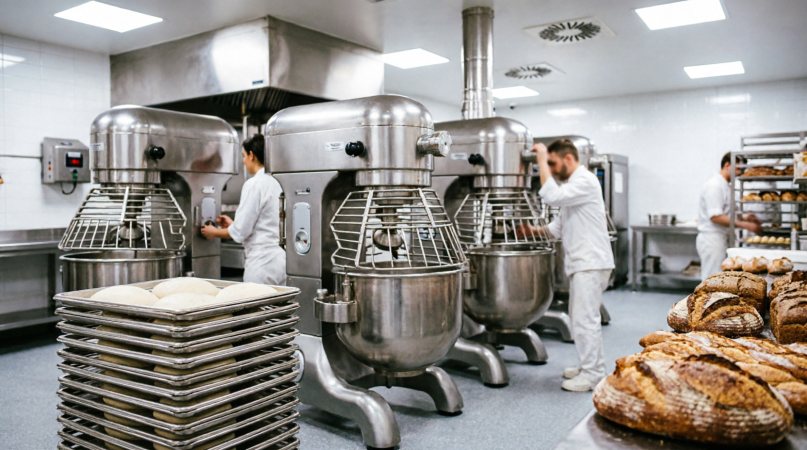
Growing a bakery is exciting, but it also brings new production challenges. When orders increase, the kitchen must work faster without losing product quality. A bakery may start with small batches, but once customer demand grows, the same basic tools may no longer be enough. Dough, batter, cream, fillings, and other mixtures need to be prepared in larger quantities with the same level of consistency.
This is where commercial mixing equipment becomes important. For bakeries, cafés, restaurants, hotels, and food production businesses, a Gear Driven Planetary Mixer can support faster preparation, better batch control, and smoother daily production when the workload becomes heavier.
Scaling a bakery is not only about making more products. It is about making more products with the same quality, texture, and taste that customers already trust.
Why Scaling Bakery Production Needs Better Equipment
When a bakery receives more orders, every production step becomes more important. The team needs to prepare ingredients, mix batches, bake products, decorate items, pack orders, and deliver on time. If one step is slow, the whole process can be delayed.
Mixing is one of the first stages in bakery production. If mixing takes too long or creates uneven results, the rest of the process becomes difficult. A weak mixer may handle small batches, but it may struggle when the kitchen needs larger quantities.
Better equipment helps solve this problem. It allows the bakery to prepare bigger batches with less effort and more control. This makes it easier to manage daily orders, seasonal demand, and bulk production.
The Problem with Small-Batch Methods
Many bakeries begin with simple tools and small machines. In the early stage, this may work well because the order volume is limited. However, as the business grows, small-batch methods can create problems.
The kitchen may need to repeat the same recipe many times. Staff may spend too much time mixing ingredients. Dough or batter may vary from one batch to another. Workers may become tired during busy hours. These issues can reduce production speed and affect quality.
Small-batch methods can also increase waste. If one batch is mixed differently from another, the final products may not look or taste the same. This can lead to rejected items and unhappy customers.
A growing bakery needs a system that supports larger production without making the process harder.
Mixing and Bulk Order Management
Bulk orders require planning and consistency. Whether a bakery is preparing bread for a restaurant, cupcakes for an event, pizza dough for a café, or pastries for a hotel, the final products must meet the same standard.
The mixing stage has a direct effect on this standard. If ingredients are not blended evenly, the final product may have poor texture or uneven baking results. This becomes a bigger issue when production volume is high.
A commercial mixer helps manage bulk orders by improving batch preparation. It allows the team to prepare more mixture in less time and maintain better control over each batch.
For businesses that want to supply other companies or handle large customer orders, reliable mixing equipment is an important part of the production setup.
Why Planetary Mixing Works Well for Growing Bakeries
A planetary mixer is useful because of its special mixing movement. The attachment rotates on its own axis while moving around the bowl. This helps the tool reach different parts of the bowl and mix ingredients more evenly.
This design is helpful for bakeries that prepare different types of products. One machine can support many recipes when used with suitable attachments and settings. This flexibility is useful for growing businesses because they often need to expand their menu.
A planetary mixer can be used for:
- Bread dough for loaves, buns, and rolls
- Cake batter for sponge cakes and cupcakes
- Cookie dough for biscuits and bakery snacks
- Pizza dough for restaurants and cafés
- Whipped cream for cakes and desserts
- Frosting, icing, and fillings
- Soft mixtures, sauces, and other food preparations
This makes it easier for a bakery to manage different production needs without depending on too many separate machines.
The Value of Gear Driven Power
As production grows, the mixer must handle more pressure. Heavy dough and repeated batches can be difficult for weak machines. If the motor or drive system is not strong enough, the machine may slow down, overheat, or produce uneven results.
Gear driven technology helps provide stable power during mixing. It transfers strength through gears, which supports better performance during heavy-duty tasks. This can be especially helpful for bakeries that prepare bread dough, pizza dough, or other dense mixtures.
Strong power delivery also helps maintain production speed. The team does not need to stop frequently because the machine is struggling. This creates a smoother workflow and helps the bakery complete orders more efficiently.
Preparing for Seasonal Demand
Many bakeries experience seasonal rush periods. Festivals, holidays, weddings, school events, and corporate orders can create sudden demand. During these periods, the kitchen must produce more items in a short time.
If the equipment is not ready, the bakery may face delays. Staff may become overloaded, and product quality may drop. A reliable mixer helps the bakery prepare for these busy times by increasing production capacity.
For example, during a holiday season, a bakery may need to prepare extra cake batter, cookie dough, pastry fillings, and cream. A strong mixer helps complete these tasks faster and with better consistency.
This can help the business accept more orders instead of turning customers away.
Better Time Management in the Kitchen
Time management is one of the biggest challenges in food production. A bakery has to follow a schedule because dough proofing, baking, cooling, decorating, and delivery all depend on timing.
If mixing is slow, the schedule can fall behind. A commercial mixer helps reduce preparation time and keeps the kitchen moving. Staff can start one batch, prepare the next ingredients, and manage other tasks while the machine works.
This better use of time improves productivity. It also reduces pressure on workers because they do not have to rush every step manually.
Improving Product Consistency During Growth
One risk of business growth is losing consistency. A small bakery may control quality easily when production is limited. But when order volume grows, maintaining the same standard becomes harder.
A reliable mixer helps reduce variation between batches. When recipes are mixed with controlled speed and timing, the final results become more predictable. This helps the bakery maintain customer trust even as production increases.
Consistency is especially important when supplying products to hotels, cafés, restaurants, or retail stores. These clients expect stable quality because their own business depends on it. A bakery that delivers consistent results is more likely to build long-term relationships.
Reducing Pressure on Staff
Scaling production should not mean overloading the team. If staff are forced to mix large quantities manually or work with weak equipment, they may become tired and less efficient. This can increase mistakes and reduce morale.
A professional mixer reduces physical effort and allows staff to work more comfortably. It handles difficult mixing tasks, especially heavy dough and large batches. Workers can then focus on shaping, baking, decorating, packing, and checking product quality.
This creates a better working environment and helps the team perform more effectively during busy periods.
Middle-Stage Upgrade for Growing Production
Many bakeries reach a stage where their current equipment can no longer support demand. This is the right time to review production needs and invest in stronger machinery. Delaying equipment upgrades can limit growth and create daily problems in the kitchen.
For businesses that need stable performance for larger batches and repeated use, a Gear Driven Planetary Mixer can help improve production flow, reduce mixing problems, and support better output during busy operations.
This type of machine is useful for businesses that want to move from small-scale preparation to more professional production without losing control over quality.
Features to Consider Before Buying
Choosing the right mixer requires careful planning. A business should not select equipment only by size or price. The mixer should match the bakery’s actual needs.
Important features to consider include:
- Bowl capacity for regular batch size
- Motor strength for heavy dough and repeated use
- Gear driven system for stable power transfer
- Speed settings for different recipes
- Strong construction for commercial kitchens
- Safety features for daily operation
- Easy cleaning and maintenance
- Attachments for multiple food preparations
- Space requirements in the kitchen
- Supplier reliability and product support
The right features can make the machine more useful and valuable over time.
Supporting Menu Expansion
A growing bakery often wants to add new products. This could include more bread varieties, cakes, cookies, desserts, pizza bases, or seasonal items. Equipment plays an important role in this expansion.
If the mixer can handle different types of mixtures, the bakery can test and introduce new recipes more easily. This helps attract more customers and increase sales opportunities.
A versatile mixer gives the business more freedom. Instead of being limited by manual preparation or weak machines, the bakery can create a wider product range with better efficiency.
Reducing Waste in High-Volume Production
When production volume is high, waste becomes more costly. A small mistake in a large batch can waste a significant amount of ingredients. This is why accurate mixing is important for growing bakeries.
A reliable mixer helps blend ingredients evenly, reducing the chance of failed batches. Better mixing can improve dough structure, batter smoothness, and cream stability. This leads to better finished products and less waste.
Reducing waste helps protect profit margins. It also supports better use of ingredients and more responsible production.
Long-Term Business Benefits
Investing in commercial mixing equipment can support long-term growth. It is not only useful for daily preparation but also for building a stronger production system.
The benefits include:
- Faster batch preparation
- More consistent product quality
- Lower manual labor pressure
- Better bulk order handling
- Reduced ingredient waste
- Improved kitchen workflow
- Stronger capacity for future growth
These benefits can help a bakery become more competitive and professional.
Final Thoughts
Scaling bakery production requires more than increasing staff or buying more ingredients. It requires a reliable production system that can handle higher demand while maintaining quality. Mixing equipment plays a key role in this system because it affects almost every product made in the kitchen.
A strong commercial mixer helps bakeries prepare larger batches, manage bulk orders, reduce waste, and maintain consistent results. It also supports staff productivity and makes daily operations smoother.
For bakeries and food businesses planning to improve production capacity with dependable commercial machinery, mirabake.com can be a useful name to consider when exploring professional equipment options.
