
Every major technology wave creates its own mythology. A few products rise above utility and become symbols of a broader shift. That is the idea behind the growing phrase Claude Mythos. It is not just about Anthropic’s model performance or whether Claude is better at one benchmark than another. It is about the narrative that has formed around Claude: thoughtful, capable, controlled, and increasingly associated with serious work rather than noisy spectacle.
In the AI market, raw capability gets attention, but mythology shapes adoption. People do not only choose tools based on technical output. They also choose them based on trust, identity, and the story they want to tell themselves about how they work. Some AI products are seen as fast, chaotic, and experimental. Others are seen as careful, reliable, and quietly powerful. Claude Mythos lives in that second category. It reflects the idea that Claude is not merely another model in the race, but a certain kind of AI partner: one that fits knowledge work, long-form reasoning, structured writing, and increasingly, agentic execution.
This is why the term feels timely. AI is moving beyond novelty. The market has entered a stage where people are no longer impressed by the fact that a model can generate text. That baseline is already assumed. What matters now is how a model behaves over time, under pressure, inside real workflows. Does it stay coherent across long contexts? Does it handle ambiguity without collapsing into nonsense? Does it feel useful for serious tasks, not just fun ones? The Claude Mythos has grown because many users feel the answer to those questions is yes.
Of course, mythology is never created by technical specs alone. It emerges from repeated experience and community interpretation. Developers share stories about Claude helping them untangle a complex codebase. Writers talk about its ability to maintain tone and structure across long drafts. Operators mention that it feels less performative and more stable. These are not just product reviews. They are social signals. They build a shared belief that Claude represents a certain standard of intelligence: less flashy, more deliberate, and therefore more trustworthy.
That belief has strategic value.
When a product gains mythos, it becomes easier for people to organize behavior around it. Teams start designing workflows with it in mind. Founders build tools on top of it. Content creators shape narratives around it. Communities create best practices, expectations, and even a kind of etiquette for how it should be used. In other words, mythos turns a model into an ecosystem force. It creates emotional and operational gravity.
But there is a catch. Mythology can attract interest, yet it does not automatically produce business value. A strong narrative gets people in the door. It does not guarantee repeatable outcomes. That is where many companies get stuck. They buy into the Claude Mythos, test a few prompts, maybe launch an experiment or two, and then discover that the jump from admiration to operational use is still difficult. Real adoption requires systems, not just belief.
This is exactly where the next layer of the market is forming. The opportunity is no longer limited to model providers. It now belongs to the products that can turn model potential into reliable workflows. If Claude carries a reputation for depth, trust, and high-quality reasoning, then the natural question becomes: how do teams package that power into repeatable processes people can actually use every day?
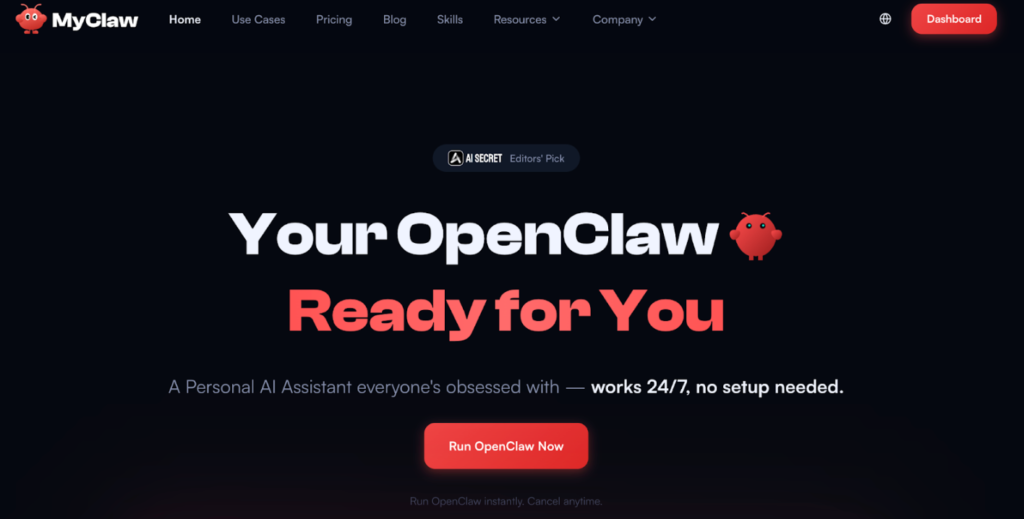
That is why tools like MyClaw are entering the conversation at the right moment. If Claude Mythos is the cultural layer, MyClaw addresses the operational layer. It helps transform isolated moments of impressive AI performance into structured, reusable workflows that teams can scale. That matters because the future of AI adoption will not be decided by who has the most screenshots of clever outputs. It will be decided by which organizations can repeatedly generate useful results with less friction and more consistency.
In that sense, MyClaw fits the Claude Mythos era well. It acknowledges that model quality matters, but it also recognizes a harder truth: most businesses do not need more AI excitement. They need a way to make strong AI behavior repeatable. If a team finds a valuable content process, research flow, analysis pattern, or execution routine using Claude, that process should not remain trapped in one person’s prompt history. It should become part of the company’s operating system.
That is the deeper meaning of Claude Mythos. It is not only the myth of one model. It is the myth of what people now want from AI itself. They want capability, yes, but also calm. They want intelligence, but also structure. They want systems that feel powerful without feeling reckless. Claude has come to symbolize that aspiration, and the products built around it will shape whether that aspiration becomes practical reality.
For now, Claude Mythos remains a useful phrase because it captures something larger than product branding. It describes the moment when an AI tool stops being judged only by outputs and starts being judged by what kind of future it seems to represent. And in a market crowded with noise, that kind of symbolic clarity is rare.
