
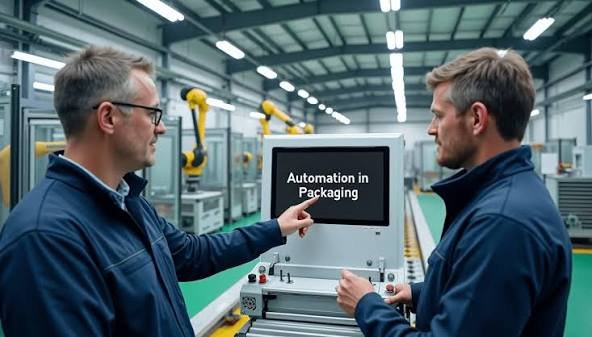
Across manufacturing and distribution facilities in the United States, the pressure to reduce labor dependency while maintaining throughput consistency has reached a practical tipping point. Supply chain disruptions over the past several years exposed how fragile manual packaging operations can be when staffing becomes unpredictable, error rates climb, or product volumes shift without warning. For plant managers, operations directors, and capital equipment buyers, the conversation has shifted from whether to automate to how to do it without inheriting a different set of problems.
Evaluating automated systems is not a straightforward exercise. The equipment market has matured, but that maturity has also introduced more vendor options, more configuration variables, and more contract complexity than most facilities encountered even five years ago. Making the right decision requires understanding what questions to ask before a proposal is accepted, not after installation has begun.
What Packaging Line Automation Actually Involves at the Plant Level
packaging line automation refers to the integration of mechanical, electronic, and software-driven systems to handle the movement, filling, sealing, labeling, and palletizing of products with minimal manual intervention. It is not a single machine purchase. It is a coordinated series of decisions about how different systems will communicate, sequence, and recover when something goes wrong. Facilities that approach it as an equipment procurement rather than a systems engineering project often encounter the most difficulty post-installation.
A useful starting reference for understanding industrial automation standards is the ISO 22400 series, which outlines key performance indicators for manufacturing operations and provides a framework for measuring whether automated systems are actually delivering against defined production targets. Understanding these benchmarks before vendor discussions begin gives buyers a more grounded position during evaluation.
Those evaluating packaging line automation for the first time or expanding existing systems should recognize that the scope of automation can vary considerably. Some facilities automate a single station, such as case erecting or label application, while others seek end-to-end line integration. The complexity of integration grows substantially as more systems must share data and coordinate timing. This distinction matters because the vendor capable of delivering a single station solution is not necessarily equipped to manage full-line integration projects.
The Role of System Architecture in Long-Term Reliability
How a packaging line is architected from a controls and software standpoint determines how well it performs over time, not just at startup. Lines built on proprietary control platforms can create long-term dependency on a single vendor for programming changes, spare parts, and software updates. This limits a facility’s ability to respond quickly when maintenance needs arise or when a vendor relationship changes.
Open architecture platforms, by contrast, allow facilities to bring in qualified third-party integrators and maintenance technicians without requiring vendor involvement for every modification. This matters significantly in regions where specialized automation technicians are not always immediately available. The architectural decision made at the point of purchase will affect operational flexibility for the entire life of the equipment.
Why Integration Complexity Is Often Underestimated
Most project delays and cost overruns in packaging automation projects are not caused by the equipment itself. They are caused by how poorly defined the integration scope was at the outset. When ERP systems, warehouse management platforms, and packaging line controls must exchange data in real time, the technical requirements compound quickly. Each handoff between systems introduces a potential point of failure that must be mapped, tested, and documented before the line goes live.
Facilities that have completed integration projects successfully typically invested substantial time in defining data flow requirements, establishing communication protocols, and running parallel testing before decommissioning any manual processes. Those that skipped this stage often experienced extended startup periods and unexpected retrofitting costs.
Evaluating Vendors Beyond the Sales Presentation
Vendor evaluation in the packaging automation space requires discipline. Most equipment suppliers present well-prepared demonstrations and reference customer lists that reflect their best-case scenarios. The evaluation process needs to probe beyond what vendors choose to show and into how they perform when conditions are less favorable.
Reference checks should specifically target facilities that are comparable in scale and product type to your own. A vendor with strong performance in high-volume beverage packaging may not have equivalent competency in smaller-batch pharmaceutical or specialty food applications. The operational context matters, and vendors that have consistently worked within similar constraints are better equipped to anticipate your specific challenges.
Service Infrastructure and Response Commitments
The speed at which a vendor can respond to an unplanned line stoppage is one of the most consequential factors in the long-term cost of ownership. Equipment downtime in a packaging operation does not simply pause production — it affects order fulfillment schedules, inventory levels, and in some cases customer contracts. Vendors that do not have service technicians stationed in or near your region create a structural risk that no maintenance contract language can fully mitigate.
Before committing to a vendor, plant leaders should ask specifically where field service engineers are located, what the contractual response time commitment is, and what escalation procedures exist if the first technician dispatched cannot resolve the issue. Facilities in less densely served industrial regions — rural Midwest, parts of the Southeast, or Pacific Northwest — face a higher version of this risk and should weight service geography accordingly in their evaluations.
How to Read a Warranty and Service Contract Carefully
Warranty language in packaging automation contracts can appear comprehensive while containing conditions that limit its practical value. Common restrictions include exclusions for wear parts, limitations on coverage when third-party modifications have been made, and provisions that void warranty terms if the facility uses non-approved consumables or spare parts. Each of these restrictions, individually, may seem reasonable. Together, they can significantly narrow the circumstances under which a vendor is actually obligated to respond at no cost.
Contract review should involve someone with experience reading industrial service agreements, not only the capital equipment procurement team. Legal or operations counsel familiar with maintenance contract language can identify clause combinations that create gaps in coverage, particularly around software updates, cybersecurity patches for connected systems, and remote access terms.
Understanding the True Cost Structure of Automated Packaging Systems
Capital cost is the figure most visible in any packaging automation project, but it represents a fraction of the total financial commitment a facility accepts when it commissions an automated line. The ongoing costs — spare parts, preventive maintenance labor, software licensing, system upgrades, and the engineering time required to adapt the line as product specifications change — accumulate steadily over a system’s operational life.
Facilities that calculate total cost of ownership before approving a project are in a better position to compare vendor proposals accurately. A lower initial capital outlay from one vendor may carry higher long-term service fees, proprietary spare parts with extended lead times, or annual software licensing costs that were not prominently disclosed during the sales process. These variables should be extracted and compared side by side before any vendor is selected.
Labor Reallocation, Not Elimination
One of the most persistent misconceptions about packaging automation is that it eliminates labor costs. In most production environments, it redistributes labor rather than eliminating it. Skilled technicians must be hired or developed to operate, monitor, and maintain automated systems. Changeover procedures, quality inspection at critical line points, and exception handling all typically require trained personnel who understand both the mechanical and software dimensions of the system.
Facilities that plan for labor reallocation from the beginning of a project — identifying which roles will shift, what training will be required, and how long the transition will take — experience smoother startups than those that treat staffing as a post-installation concern. The workforce dimension of automation projects deserves the same planning rigor as the equipment specification itself.
Throughput Expectations and Qualification Testing
Published throughput specifications from equipment vendors reflect performance under controlled conditions using standardized product formats. Actual production environments introduce variability that rarely matches controlled conditions. Product weight variation, packaging material inconsistencies, temperature and humidity fluctuations, and product shape irregularities all affect line performance in ways that general specifications do not capture.
Buyer agreements should include factory acceptance testing with the actual products that will run on the line, not product equivalents or simplified test materials. Site acceptance testing after installation provides a second verification point under real operating conditions. Both testing stages should be defined contractually with specific pass/fail criteria before the purchase order is issued.
Regulatory and Safety Considerations That Affect Purchasing Decisions
In the United States, packaging automation equipment must comply with relevant Occupational Safety and Health Administration requirements, and facilities in certain sectors — food processing, pharmaceutical, medical device — must also satisfy FDA and other regulatory standards that affect equipment design, cleaning validation, and documentation requirements. These obligations do not disappear once equipment is installed; they require ongoing compliance throughout the system’s operational life.
Buyers in regulated industries should verify that vendor equipment documentation supports regulatory submission requirements and that validation protocols — including installation qualification, operational qualification, and performance qualification — are part of the vendor’s standard delivery package. Vendors unfamiliar with regulated environments will not naturally produce the documentation these processes require, and retrofitting documentation after installation is significantly more costly than requiring it upfront.
Cybersecurity and Connected System Risks
Modern packaging line controls are increasingly networked, often connected to facility-wide operational technology networks and, in some cases, to vendor remote monitoring systems. This connectivity introduces cybersecurity considerations that were not relevant in earlier generations of industrial equipment. An automated packaging line that can be accessed remotely by a vendor for diagnostics is also a system that carries network risk if that remote access is not governed by clear security protocols.
Facilities should request a detailed explanation of how remote access is structured, authenticated, and logged before accepting a connected system. The vendor’s own cybersecurity posture — their internal security practices, their protocol for disclosing vulnerabilities, and their history of issuing patches for identified risks — is relevant information that belongs in the vendor evaluation process.
Closing Considerations Before Signing
Packaging automation investments are long-term operational commitments. The equipment will run in your facility for a decade or more, and the decisions made during procurement will shape how it performs, how reliably it can be maintained, and how well it adapts to changes in your product mix or production volumes over time. There is no urgency that justifies bypassing the evaluation steps outlined here.
Plant leaders who approach these projects with structured evaluation criteria — covering vendor service infrastructure, contract terms, total cost modeling, regulatory compliance, and integration architecture — consistently report better outcomes than those who allow project timelines or vendor pressure to accelerate decisions that warrant careful review. The goal is not to find the least expensive system or the most technologically advanced one. The goal is to find the system that will operate reliably within your specific environment, supported by a vendor equipped to stand behind it over the full course of its working life. That determination takes time to make well, and it is time worth taking.
