
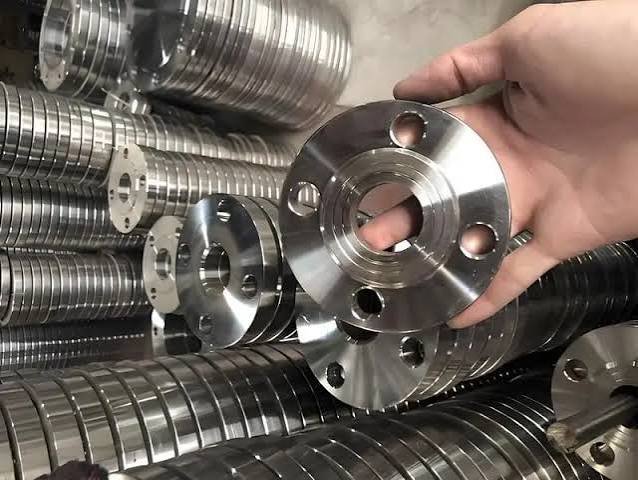
Sourcing pipe flanges for industrial or process piping systems is not a transaction that rewards shortcuts. When flanges are produced to custom specifications — specific alloys, pressure ratings, face types, or dimensional tolerances outside standard catalog offerings — the margin for error narrows considerably. A poorly sourced flange doesn’t just create a mechanical inconvenience. It can trigger system failures, regulatory non-compliance, unplanned downtime, and in high-pressure or high-temperature environments, genuine safety risks.
Yet procurement teams and engineers often move forward with manufacturers based on price and lead time alone, without asking the questions that reveal whether a supplier can actually deliver what the application demands. This is particularly true when orders involve custom configurations, which require deeper manufacturing competency than off-the-shelf production.
The ten questions below are designed to help operations managers, procurement professionals, and engineers evaluate any manufacturer before committing to an order. They are not meant to be exhaustive checklists, but rather structured decision-support prompts that expose capability gaps, process consistency, and quality reliability before problems reach the field.
1. What Is Your Core Manufacturing Competency in Custom Stainless Steel Flanges?
Not every manufacturer that lists flanges in their catalog has deep experience producing custom configurations. Many facilities specialize in standard carbon steel flanges and accommodate stainless orders as a secondary offering. Stainless steel, by contrast, requires different tooling, cutting parameters, and finishing approaches than mild steel. The material work-hardens quickly, which means improper machining introduces dimensional inaccuracies that compound across a batch.
When evaluating any supplier, it’s worth reviewing the depth of their stainless-specific experience — not just the materials they claim to work with. A reliable Custom Stainless Steel Pipe Flanges Manufacturer overview should give you a clear sense of the facility’s primary focus, the scope of custom work they regularly produce, and the industries they serve. That context tells you more than a general capabilities statement ever could.
Ask specifically how much of their production volume involves custom stainless work versus standard catalog items. A facility where custom stainless flanges represent a fraction of output will not have the same process refinement as one where it is a primary business line.
Why This Distinction Matters Operationally
When custom stainless flanges are produced by a facility without dedicated process expertise, the inconsistencies tend to show up in surface finish, bore concentricity, and face flatness — all of which affect sealing performance and system integrity. These are not defects that always appear immediately. Some reveal themselves after installation under operating conditions, which creates a far more costly problem than a failed receiving inspection.
2. Which Stainless Steel Grades Do You Regularly Machine and Source?
Stainless steel is not a single material. The family includes austenitic, ferritic, duplex, and martensitic grades, each with different corrosion resistance profiles, weldability characteristics, and mechanical properties. Austenitic grades such as 304 and 316 are common in food processing, pharmaceutical, and chemical applications. Duplex grades are increasingly specified in offshore and desalination environments where higher strength and chloride resistance are needed.
A manufacturer that regularly produces custom stainless steel pipe flanges should be able to speak clearly about material procurement, traceability, and how they handle less common alloy grades. If a supplier is vague about their material sourcing or cannot demonstrate traceability through mill certifications, that is a meaningful risk signal.
The Procurement and Traceability Connection
Material traceability is not a formality. In many industries — oil and gas, pharmaceutical manufacturing, food processing — the ability to trace a flange back to its original mill heat is a compliance requirement. If a manufacturer cannot provide full material documentation, you may face challenges during third-party inspection, regulatory audit, or incident investigation. Confirming traceability protocols upfront prevents complications that are difficult to resolve after an order is complete.
3. What Quality Standards and Certifications Govern Your Production?
Industry standards such as those defined by the American Society of Mechanical Engineers govern the dimensional and performance requirements for flanges used in pressure piping systems. Manufacturers producing flanges for regulated industries should be working within a documented quality management system, and many applications require compliance with standards bodies whose requirements are publicly available through organizations like ASME.
Ask whether the facility holds ISO 9001 certification, PED certification for European markets, or other third-party quality designations relevant to your application. More importantly, ask how those standards are enforced at the production level — not just documented in a quality manual.
The Gap Between Certification and Execution
Holding a certification and consistently executing to its requirements are not always the same thing. A meaningful follow-up question is whether the manufacturer performs in-process inspections or only final inspection. Facilities that catch dimensional or surface issues mid-process rather than at the end reduce rework rates and deliver more consistent output. This kind of process discipline is what separates manufacturers that hold quality credentials from those that genuinely practice them.
4. Can You Accommodate Non-Standard Dimensional Requirements?
Custom flanges often arise because standard dimensions do not fit the system. This might involve a non-standard bore, an unusual bolt circle diameter, a modified face type, or a combination of requirements that falls outside published dimensional standards. The ability to work from customer-supplied drawings and produce to tight tolerances without a standard template is a specialized capability.
Ask the manufacturer how they handle drawing review, whether they flag potential manufacturability concerns before production begins, and what their process is for confirming dimensional compliance before shipping. A supplier that proceeds without engineering review increases the likelihood of producing parts that meet the drawing but fail the application.
The Role of Pre-Production Engineering Review
Pre-production review is where problems are least expensive to resolve. A manufacturer with a structured drawing review process will identify conflicts — between specified tolerances and material behavior, for example, or between surface finish requirements and available finishing equipment — before a single part is produced. Skipping this step to accelerate lead time is a false economy. The time saved upfront is rarely worth the cost of rework, delayed installation, or system downtime.
5. What Is Your Actual Production Capacity for Custom Orders?
Stated capacity and reliable capacity are often different numbers. Some manufacturers accept custom stainless orders without maintaining the tooling, equipment, or skilled labor to execute them efficiently. This leads to extended lead times, quality inconsistencies from rushed production, or subcontracting to third parties — none of which you may be informed about unless you ask directly.
Subcontracting and Supply Chain Visibility
If any part of production is subcontracted — raw material preparation, heat treatment, surface finishing — you need to know. Subcontracting is not inherently problematic, but it introduces additional variables in quality control, traceability, and lead time reliability. Understanding the full production chain helps you assess risk more accurately and ask the right questions at each stage.
6. How Do You Handle Inspection and Dimensional Verification?
Inspection is not a single step at the end of production. Rigorous dimensional verification involves checking critical features at multiple points during machining, not only on a finished part. For custom stainless steel pipe flanges, this includes bore geometry, face flatness, bolt hole position, and surface roughness where sealing is involved.
Documentation and Traceability of Inspection Records
Ask whether the manufacturer provides inspection reports with each order and whether those reports reference the specific part numbers or heat numbers tied to your shipment. Inspection documentation serves multiple purposes: it supports receiving inspection on your end, provides a reference point if field problems arise, and satisfies third-party audit requirements in regulated industries.
7. What Lead Times Can You Reliably Commit To for Custom Production?
Lead time reliability is as important as lead time length. A manufacturer that consistently delivers in six weeks is more valuable to a planned maintenance schedule than one that promises three weeks and regularly delivers in five. For custom stainless flanges specifically, lead time depends on material availability, machining queue depth, and finishing requirements — all of which should be visible to the manufacturer at the time of quoting.
How Production Scheduling Affects Your Planning
If a manufacturer cannot give you a clear explanation of how they schedule custom orders relative to standard production, that is a risk indicator. Custom work typically requires dedicated machine time and setup — factors that a busy shop may not always prioritize. Understanding how your order fits into their production queue helps you make informed decisions about order timing and inventory planning.
8. What Is Your Process for Managing Non-Conforming Parts?
No manufacturing operation is free from process variation. What separates reliable manufacturers from unreliable ones is how they identify, contain, and resolve non-conforming output. A supplier with a mature quality system will have a documented non-conformance process, a clear escalation path, and a defined corrective action procedure.
Field Failures and Accountability
Ask specifically what happens if a dimensional or material non-conformance is discovered after delivery. A manufacturer that stands behind their work with a clear remediation process — replacement, root cause analysis, preventive action — is one that treats quality as a business commitment rather than a contractual formality. Vague answers to this question warrant careful consideration before committing to an order.
9. Do You Have Experience With the Industry Standards Relevant to My Application?
Different industries apply different standards to flange design, material selection, testing, and documentation. Petrochemical applications may require compliance with ASME B16.5 or ASME B16.47. Pharmaceutical or food-grade systems may require specific surface finish standards and material certifications consistent with sanitary piping requirements. A manufacturer experienced in one sector may not be familiar with the requirements of another.
Why Application Context Shapes Production Requirements
A custom stainless steel pipe flanges manufacturer that regularly supplies petrochemical facilities will approach material documentation, dimensional tolerancing, and pressure rating verification differently than one supplying food processing equipment. Both may produce technically sound flanges, but their default processes may not align with your application’s compliance requirements. Confirming industry familiarity early prevents the need for rework or supplemental documentation after the order is placed.
10. Can You Provide References or Case Examples from Comparable Applications?
A manufacturer’s history of successful delivery in comparable applications is one of the most reliable indicators of their suitability for your order. References are not infallible, but they provide context that no marketing statement or capability brochure can replicate. Ask for examples of custom stainless flange orders that were similar in alloy grade, dimensional complexity, or industry context to your own requirement.
What References Reveal About Process Consistency
When speaking with references, focus less on general satisfaction and more on specific indicators of process reliability: Were dimensional requirements consistently met? Was documentation complete and accurate? How were exceptions or delays handled? These details tell you whether the manufacturer’s quality performance is consistent across orders or variable depending on circumstances. Consistency is the quality attribute that matters most in recurring or high-stakes procurement relationships.
Closing Thoughts
Custom stainless steel pipe flanges are components where manufacturing quality has direct consequences for system performance, compliance, and long-term reliability. Unlike commodity parts, they cannot be adequately evaluated on price and delivery time alone. The manufacturing process, material handling, inspection rigor, and supplier accountability all influence whether a custom flange performs as intended over its service life.
The ten questions outlined here are not designed to be adversarial. They are structured prompts that give any serious manufacturer an opportunity to demonstrate capability, and they give you the information needed to make a sound sourcing decision. A manufacturer that answers these questions clearly and completely — with documented evidence where appropriate — is one that understands what custom production actually requires.
Asking these questions before an order is placed is far less expensive than resolving the consequences of not asking them afterward. That is not a theoretical concern. It is a consistent pattern in industrial procurement that experienced operations teams learn to address early, not late.
