
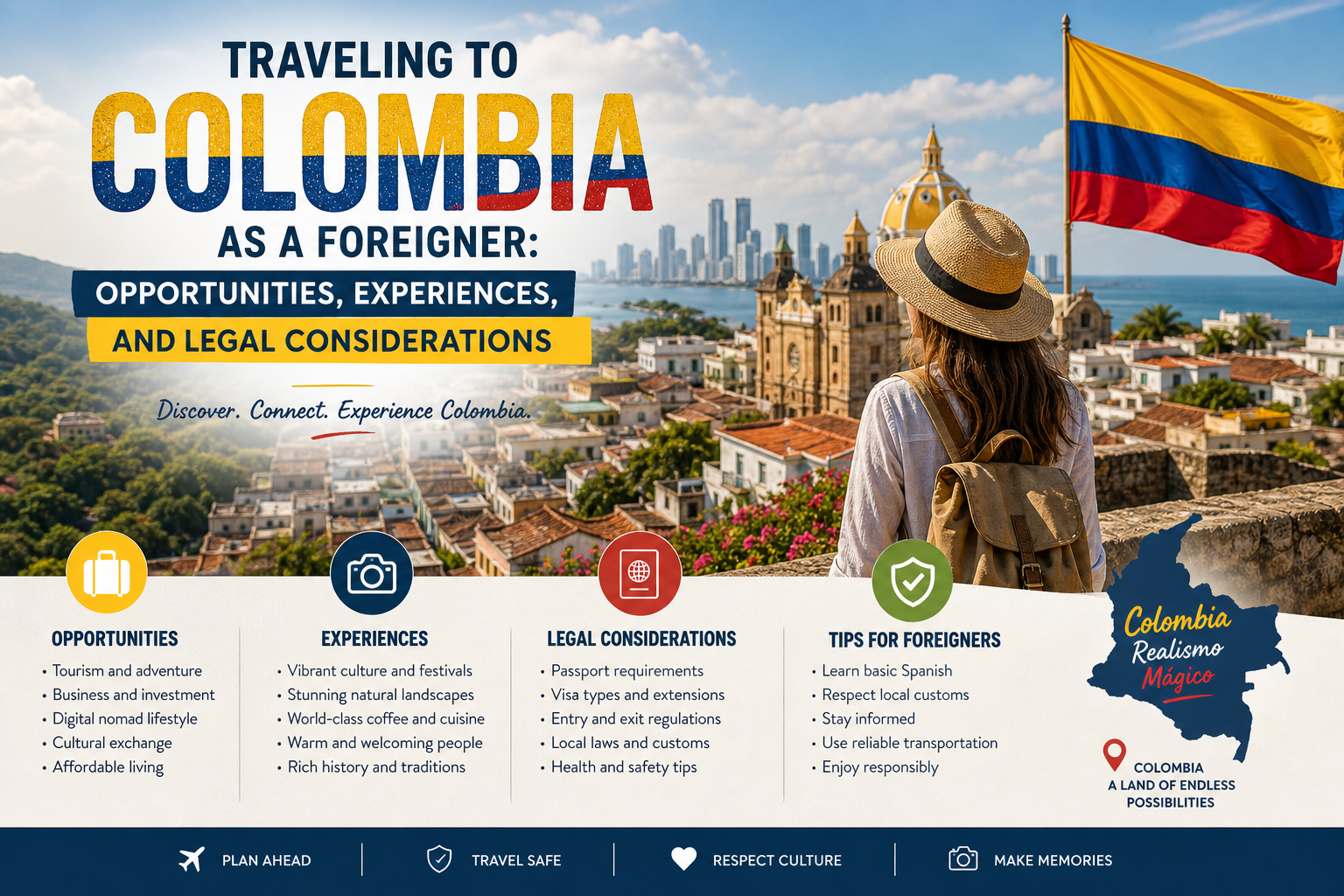
Colombia has emerged as one of the most dynamic and attractive destinations in Latin America for foreigners. In recent years, the country has undergone significant economic, social, and infrastructural development, making it increasingly accessible and appealing to tourists, investors, retirees, and digital nomads alike. Whether you are planning a short visit or considering a long-term relocation, Colombia offers a compelling mix of lifestyle benefits—but it is equally important to understand the legal landscape that comes with it.
Why Colombia is So Appealing
Colombia’s diversity is one of its strongest assets. Cities like Bogotá offer a fast-paced, cosmopolitan lifestyle with international business opportunities, while Medellín is known for its innovation, pleasant climate, and growing expat community. Meanwhile, Cartagena provides a coastal, historic environment that attracts both tourists and property investors.
Foreigners are often drawn to Colombia for its affordability. Compared to North America and Europe, the cost of living can be significantly lower, allowing individuals to enjoy a higher standard of living. High-quality private healthcare is widely available at a fraction of the cost found in countries like the United States, and Colombia’s healthcare system is consistently ranked among the best in Latin America.
Beyond economics, Colombia offers a rich cultural experience. The country is known for its music, festivals, cuisine, and welcoming population. Regions such as the Coffee Triangle provide scenic landscapes and opportunities for eco-tourism, while major cities host international events, business conferences, and a thriving nightlife.
Additionally, Colombia has become increasingly attractive for remote workers and entrepreneurs. The introduction of visa options such as the digital nomad visa has made it easier for foreigners to legally reside and work remotely while enjoying everything the country has to offer.
Common Legal Issues Foreigners May Encounter
While Colombia is generally welcoming and foreign-friendly, navigating its legal system can be complex—especially for those unfamiliar with local laws, language, and administrative processes. Many legal issues arise not from intentional wrongdoing, but from misunderstandings or lack of proper guidance.
Immigration and Visa Compliance
Immigration compliance is one of the most critical legal areas for foreigners. Colombia offers a variety of visa options, including tourist permits, migrant visas, and resident visas. Each category comes with specific requirements, limitations, and renewal obligations.
A common mistake is overstaying a tourist visa, which typically allows a stay of up to 90 days, extendable to 180 days within a calendar year. Overstaying can result in fines, restrictions on future entry, or even deportation. Similarly, engaging in activities not permitted under your visa—such as working while on a tourist visa—can lead to legal consequences.
Foreigners planning to stay long-term should ensure that they apply for the correct visa category and remain compliant with all reporting and renewal requirements.
Real Estate Transactions
Colombia’s real estate market is highly attractive to foreign buyers, but it is not without risks. While foreigners are legally allowed to purchase property, issues can arise if proper due diligence is not conducted.
Common risks include:
- Purchasing property with unresolved title issues
- Entering into informal or poorly drafted agreements
- Failing to verify zoning regulations or land use restrictions
- Not properly registering the transaction with the relevant authorities
All property transactions should be carefully reviewed by a legal professional to ensure that ownership rights are secure and that the process complies with Colombian law.
Contract and Business Disputes
Foreigners entering into business ventures or contractual agreements in Colombia must be particularly cautious. While contracts are enforceable, differences in legal interpretation, language barriers, and procedural delays can create challenges.
It is not uncommon for disputes to arise due to unclear contract terms or differing expectations between parties. Enforcing a contract through the Colombian legal system can be time-consuming, and without proper legal structuring from the outset, foreigners may find themselves at a disadvantage.
Ensuring that contracts are professionally drafted, translated where necessary, and legally compliant is essential for minimizing risk.
Employment and Labor Laws
Colombia has strict labor laws designed to protect employees. Foreigners seeking employment must have the appropriate visa and a legally compliant employment contract.
Employers are required to provide benefits such as social security contributions, healthcare, and pensions. Foreigners working without proper authorization—or employers hiring foreign workers without the correct documentation—can face significant penalties.
Understanding the distinction between independent contractors and employees is also important, as misclassification can lead to legal disputes and financial liabilities.
Family and Personal Legal Matters
Legal matters involving family law can become particularly complex when foreigners are involved. Issues such as divorce, child custody, alimony, and inheritance are governed by Colombian law, which may differ substantially from legal systems in other countries.
For example, child custody decisions are typically made based on the best interests of the child under Colombian law, and international custody disputes may involve additional legal layers. Similarly, divorce proceedings can vary depending on whether they are mutual or contested.
Foreign nationals should seek legal guidance when dealing with any personal or family-related legal matters to ensure their rights are protected.
Medical and Liability Issues
Colombia has become a leading destination for medical tourism, offering high-quality procedures at competitive prices. However, with the increase in foreign patients, there has also been a rise in medical malpractice claims.
Foreigners undergoing medical treatment should:
- Verify the credentials and licensing of healthcare providers
- Ensure that clinics and hospitals meet regulatory standards
- Fully understand the risks and legal implications of any procedure
In cases of malpractice, pursuing legal action in Colombia can be complex, particularly for foreigners unfamiliar with the system. Proper documentation and legal representation are crucial in these situations.
Staying Protected While in Colombia
Successfully navigating life or travel in Colombia requires a proactive approach to legal awareness. Many of the issues foreigners encounter can be avoided with proper planning and professional support.
Key steps to protect yourself include:
- Ensuring your immigration status is valid and appropriate for your activities
- Conducting full legal due diligence before making investments or purchases
- Using legally binding, professionally drafted contracts in all agreements
- Keeping detailed records of transactions, communications, and official documents
- Seeking qualified legal advice when dealing with unfamiliar processes or disputes
Working with an English speaking law firm who understand both Colombian law and the specific challenges faced by foreigners can significantly reduce risk and provide peace of mind throughout your stay.
